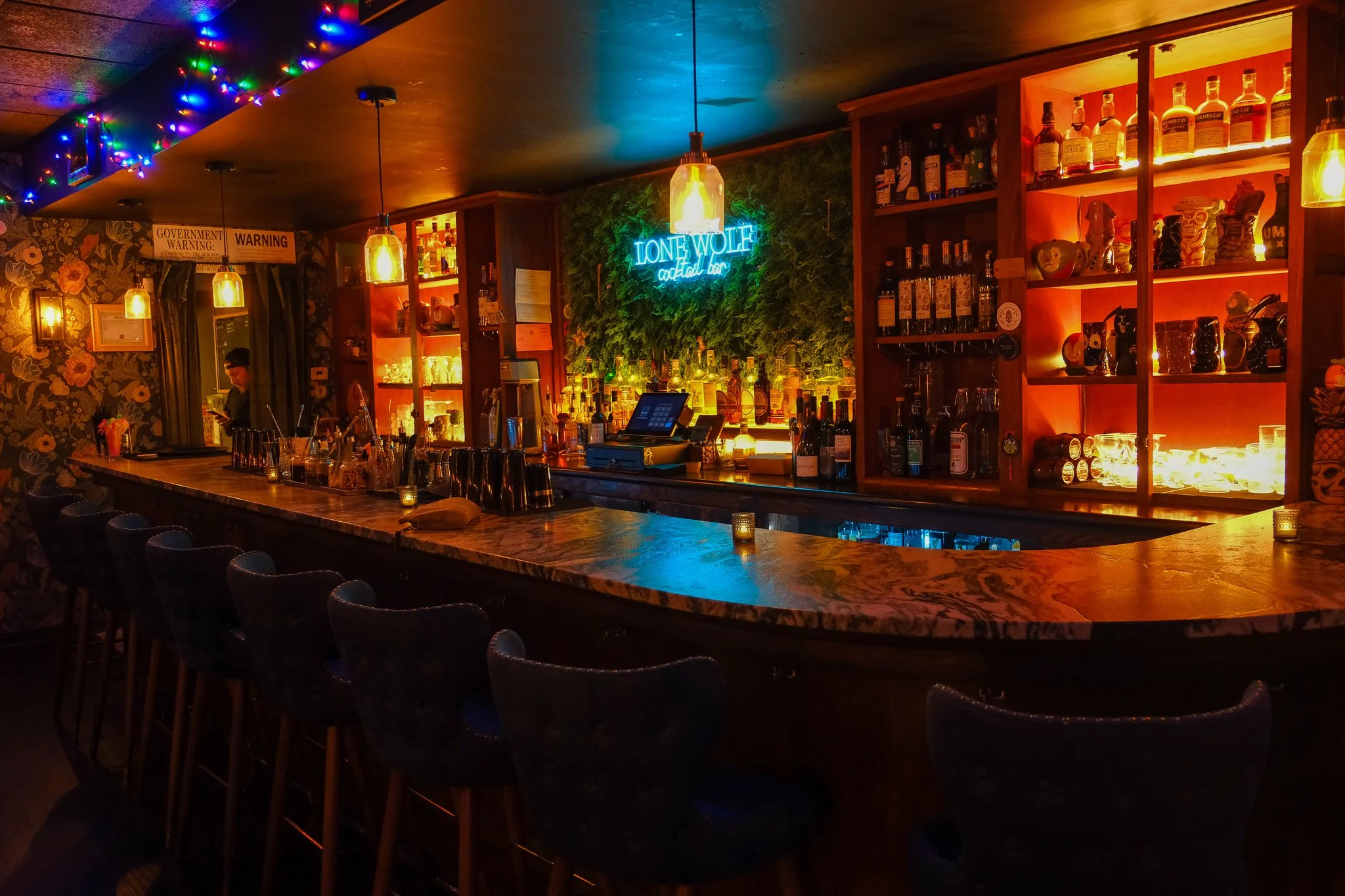
GUEST SHIFT: ANTON KINLOCH, Lone Wolf, Kingston
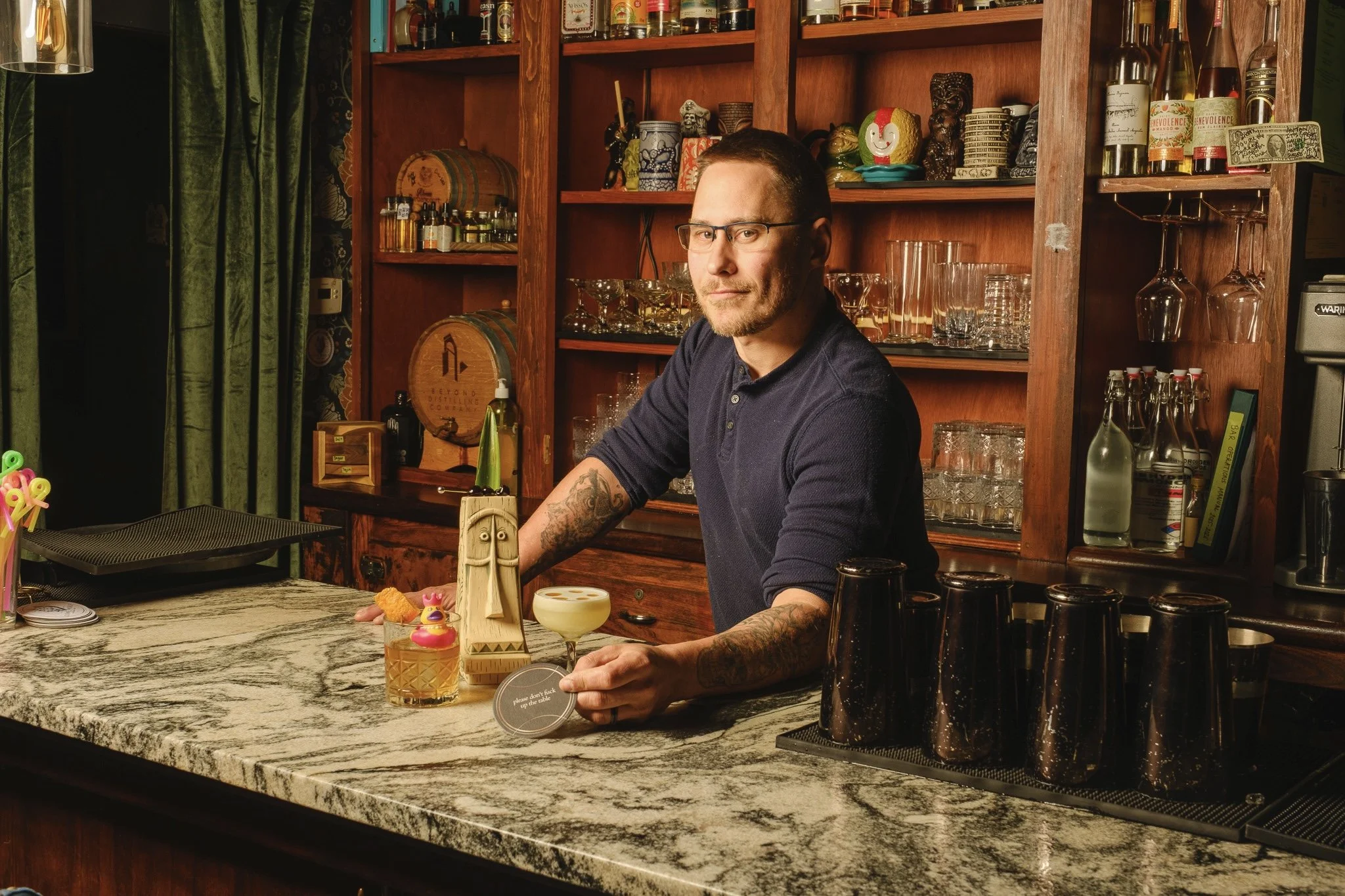
Anton Kinloch, owner-bar director of Lone Wolf in Kingston, talks tiki, industry education + the pursuit of excellence—including his recent Bar Star Award.
Interview: Susie Davidson Powell
Photos: Victoria Sedefian/The Dishing
Location: Lone Wolf, Kingston, N.Y.
Read about Anton’s featured cocktail here.
Tastemaker: Anton Kinloch | IG: @something2drinkabout
Business: Lone Wolf, Kingston | IG: @lonewolfkingston | website: www.lonewolfkingston.com
Hometown (born/raised): St. Petersburg, Russia → New Paltz, NY
Current city: Highland, NY
Personal style (at home/work): At home I’m always in dark wash jeans and boots ready to tackle the next gardening project, while at work it’s dark wash jeans, dress shoes, a button-down shirt and blazer
Listening to (at home/at work): El Michel’s Affair in the background on vinyl or Charle’s Bradley in the kitchen on full blast. Music is instrumental in my creative process when I’m developing food, cocktails or simply trying to unwind.
Favorite spirit: Rum
Favorite classic cocktail: Mai Tai
Favorite bar or venue ever: The Polynesian in Time Square
Biggest cocktail influence: Brian Miller (Pegu Club, Death & Co)
Drink trend that should end: Calling anything a -tini that isn’t a classic Martin!
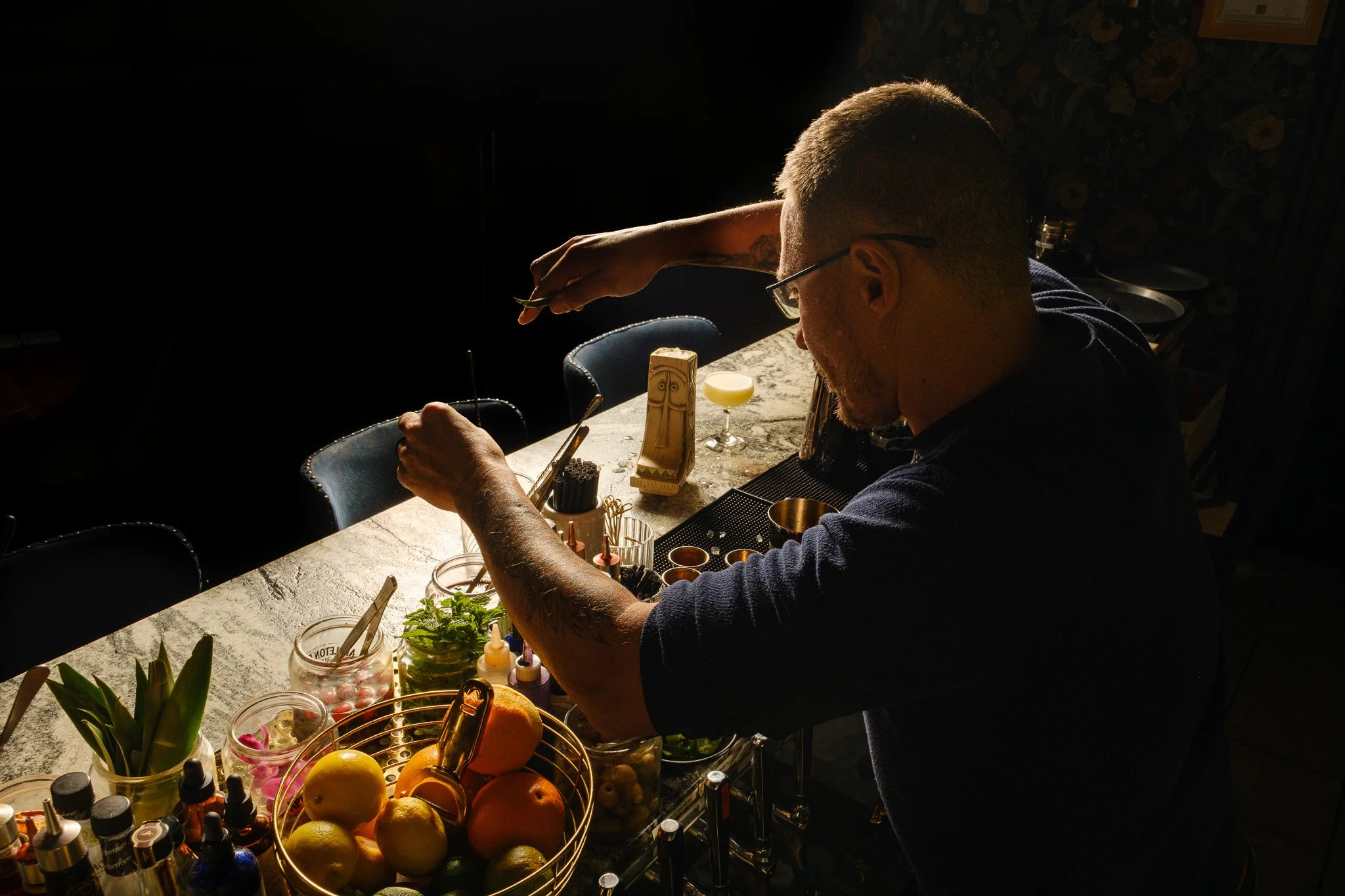
“Welcome to The Dishing’s Quick Serve interviews where we talk with tastemakers in the hospitality industry and trailblazers at the intersection of food, culture and art. Today we’re talking with Anton Kinloch, owner-bar director of Lone Wolf in Kingston, N.Y. about running a bar, his approach to hospitality, and all things tiki.
Hey, Anton, thanks for talking to The Dishing! Let’s get into it. Before we delve into your backstory, let’s talk about some recent nods. In 2024, Lone Wolf earned a best new bar award and in 2025 you were personally recognized with a Bar Star Award during New York Bartender Week. Can you talk about the bar star award and whether this feels like some sort of validation of your path?
The Bar Star Award was completely unexpected, and honestly, it’s probably the highest level of validation I’ve ever received in my 25 years in this industry. A big part of that is who it came from. Hanna Lee Communications is one of the most respected PR firms in hospitality. Their team represents bars, restaurants, and hotels all over the world, and their clients routinely land in places like Forbes, The New York Times, Esquire, and has helped their clients get under the lens of the 50 Best and Michelin Guides. That kind of recognition isn’t casual and doesn’t come for free.
What makes it hit even harder is that my path into this industry has never been traditional. I didn’t work my way up from barback to bartender to bar manager. I graduated from the CIA in Hyde Park fully convinced I was going to live my life in kitchens, travel the world, work at Michelin Star kitchens and eventually return home to open my own place. Instead I landed a job at a casino, and immediately found myself in a managerial role overseeing resort-wide beverage operations with hundreds of employees reporting to me, many of whom had been in the industry and behind the bar longer than I’d been alive. I had zero practical bartending since the CIA did not have any sort of beverage program at the time. I ended up doing what made the most sense, I taught myself. I read obsessively from this black book titled Death & Co. I watched videos. I practiced in my tiny apartment starting in 2014, replicating techniques and recipes late at night. I wasn’t particularly good at bartending, but I was determined to understand it enough to earn the respect of my staff and hopefully the guests. Every role I held after the casino leaned heavily toward operations and leadership rather than hands-on bar work, which left me wondering if I’d skipped some steps in my career and if I’ll be found out as some kind of a fraud for not following the right path.
To be the scrappy kid from New Paltz who didn’t have a traditional upbringing in the industry and didn’t bartend at incredible venues in major cities and somehow caught the attention of one of the most powerful PR companies in our industry feels pretty incredible! It’s the proverbial pat on the back that I’ve needed to know I’m doing something right.
You and your wife, Lisa Dy, originally opened Fuchsia Tiki, a tiki bar in New Paltz in 2019. In 2024, after the lease wasn’t renewed, you reinvented the business as Lone Wolf in Kingston. How did you handled that + what it has meant for the identity of your bar?
Losing Fuchsia Tiki Bar wasn’t in the cards for us. Our goal was to keep Fuchsia in its location and open a second concept from the ground up and build out slowly (January 2024 opening). Instead, the rug was pulled out and we were forced to advance the entire timeline. We were unceremoniously given a month to depart at the end of September 2023, so my wife and I went full steam ahead on our new concept, going as far as to rename it to Lone Wolf. Keep in mind that the entire venue was assembled (food menu, drinks menu, aesthetics, permits, equipment, training of staff) in just two—two!-months! For anyone who has been part of opening a venue, the timeline seems improbable for the amount of moving parts—coordinating contractors, furniture, inspections, lawyers, staff, product logistics. Yet by some miracle—working 100+ hour weeks for 8 weeks straight—paid off.
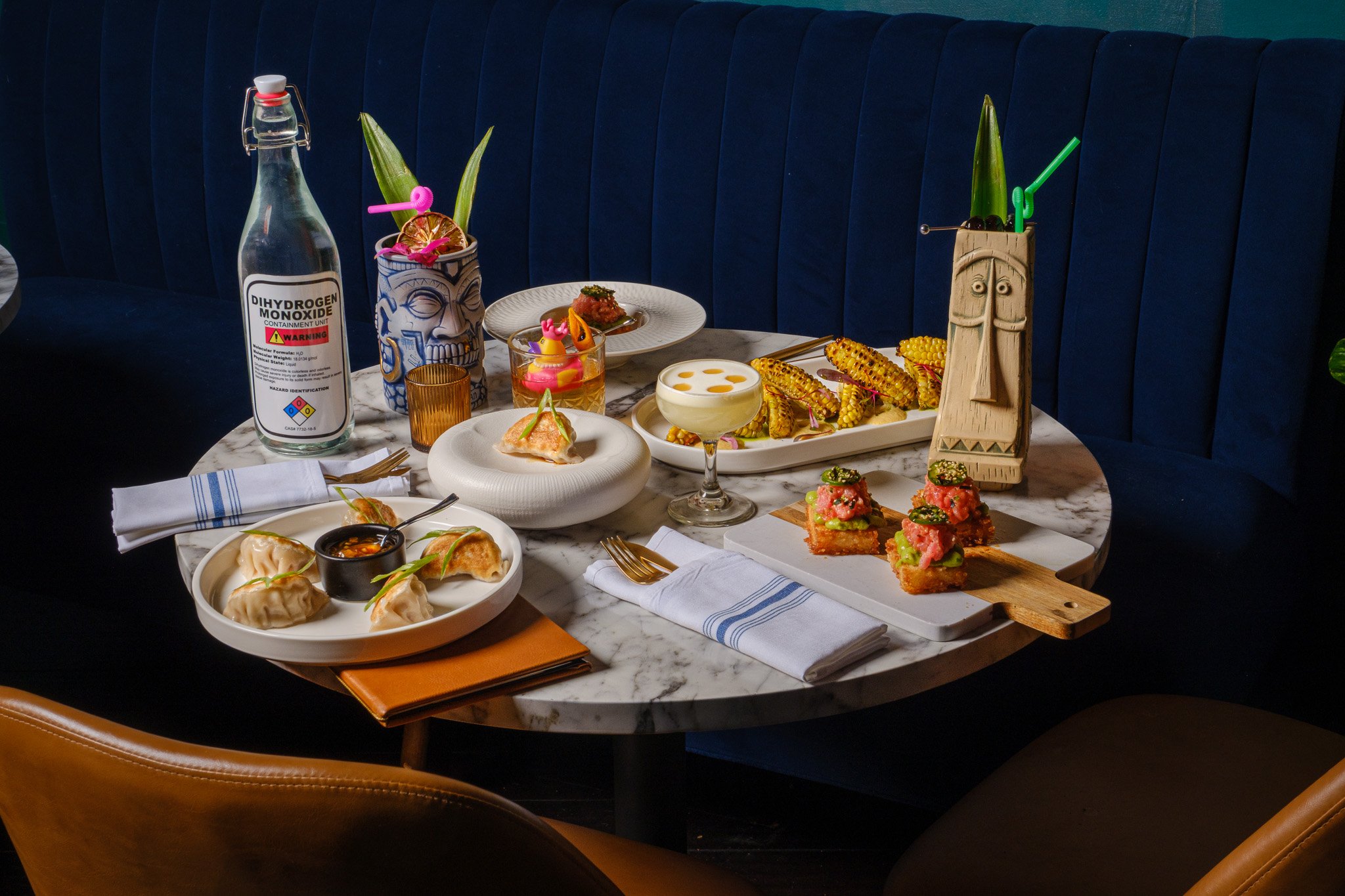
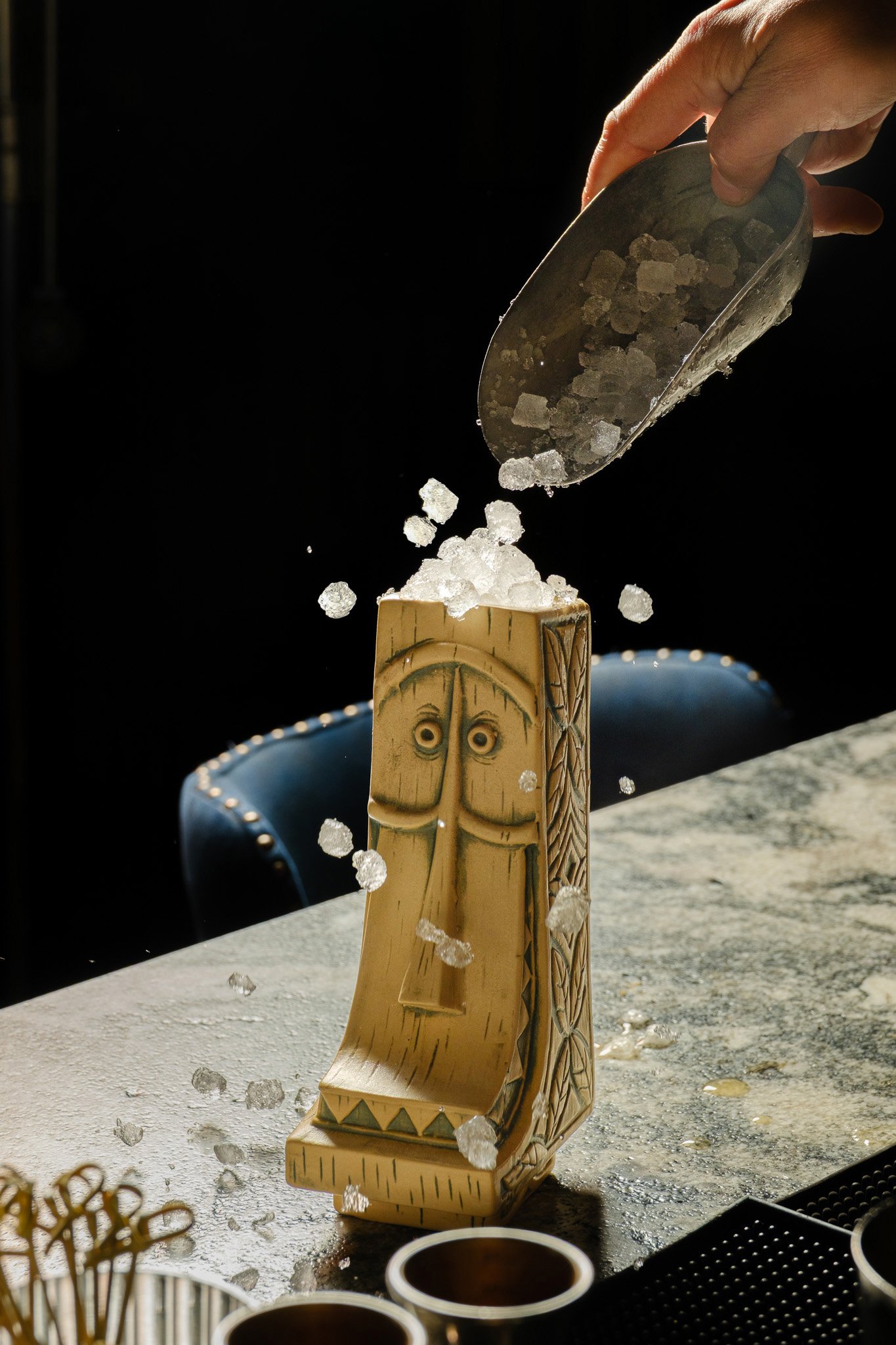
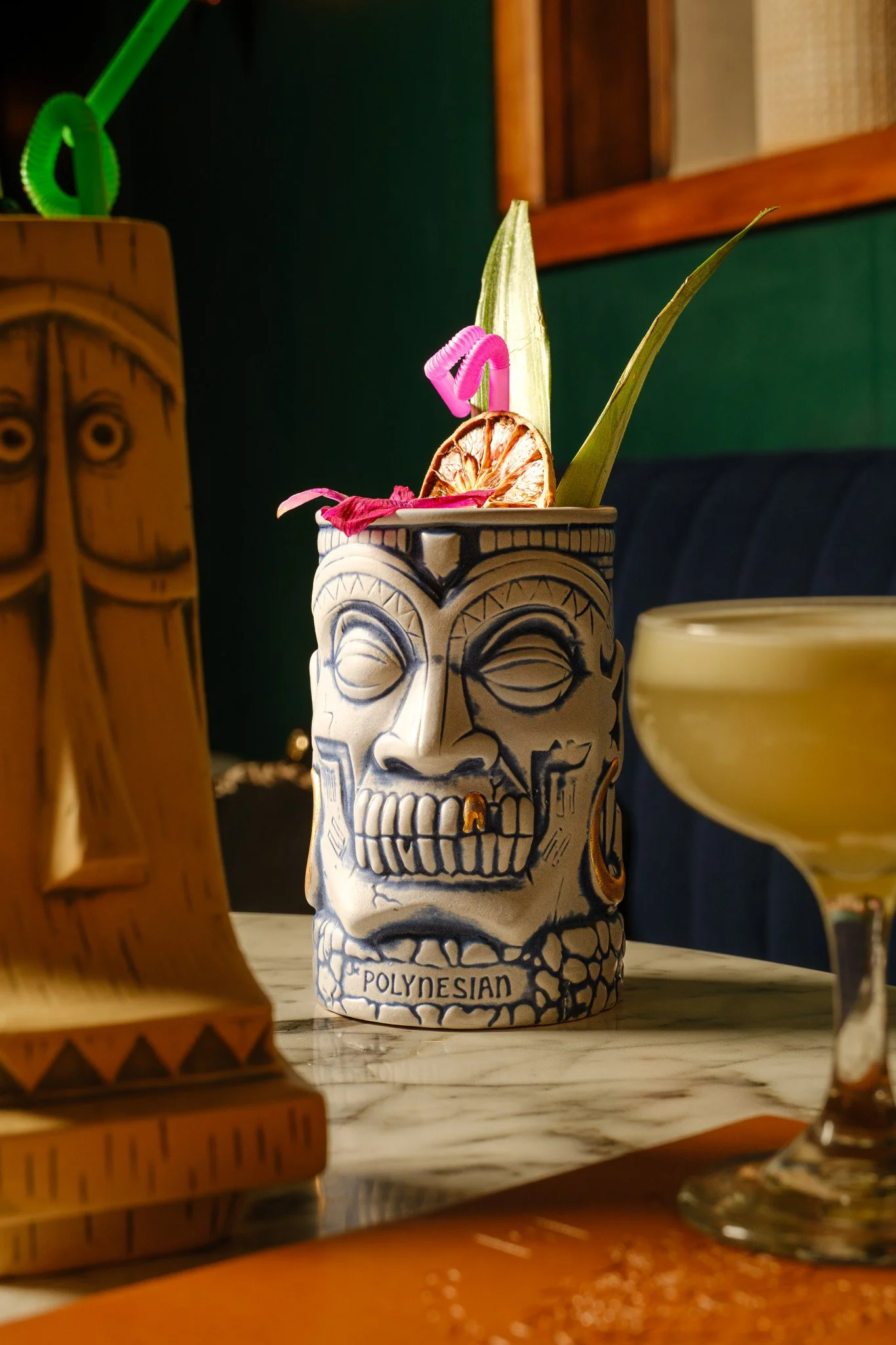
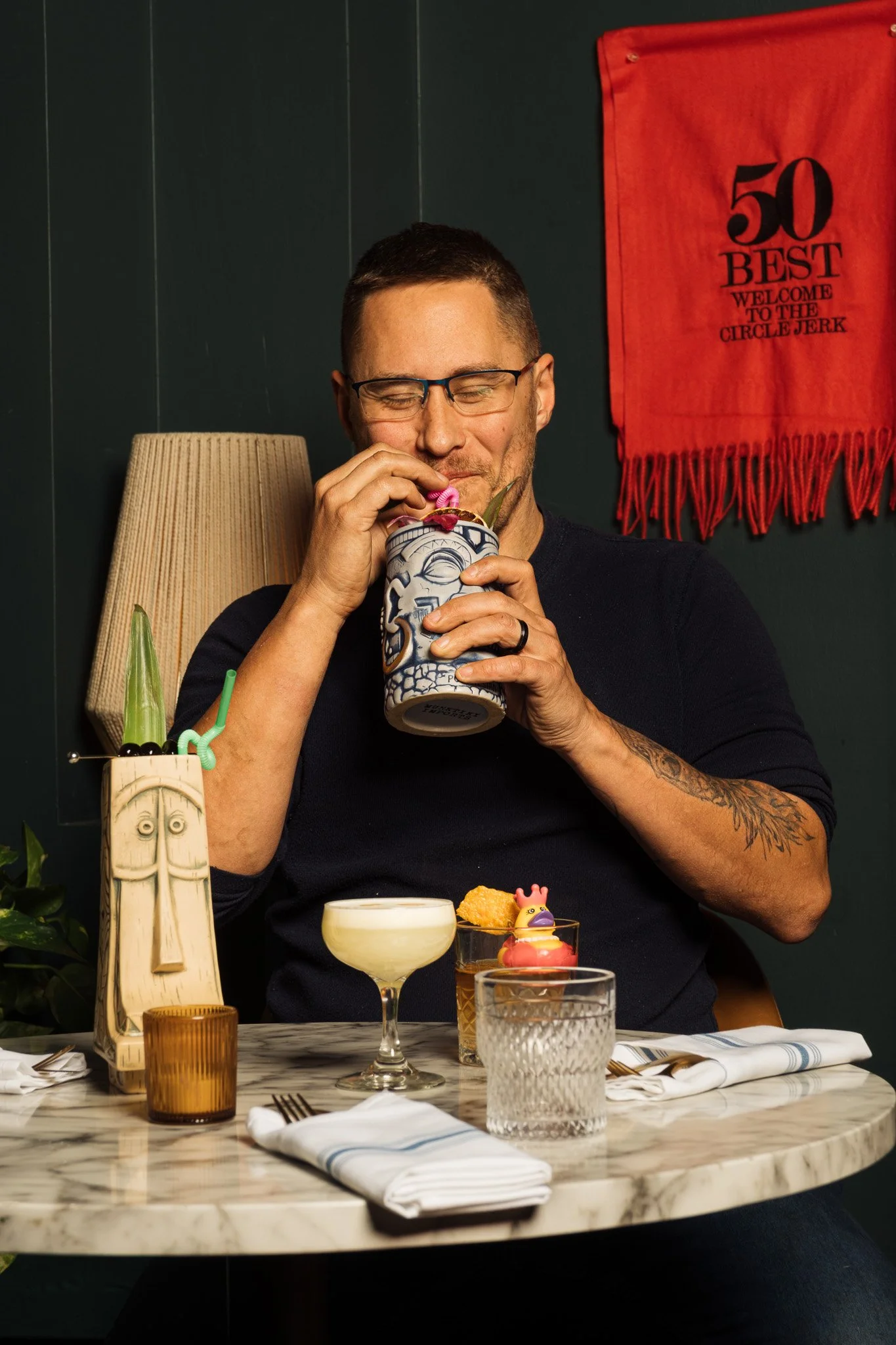
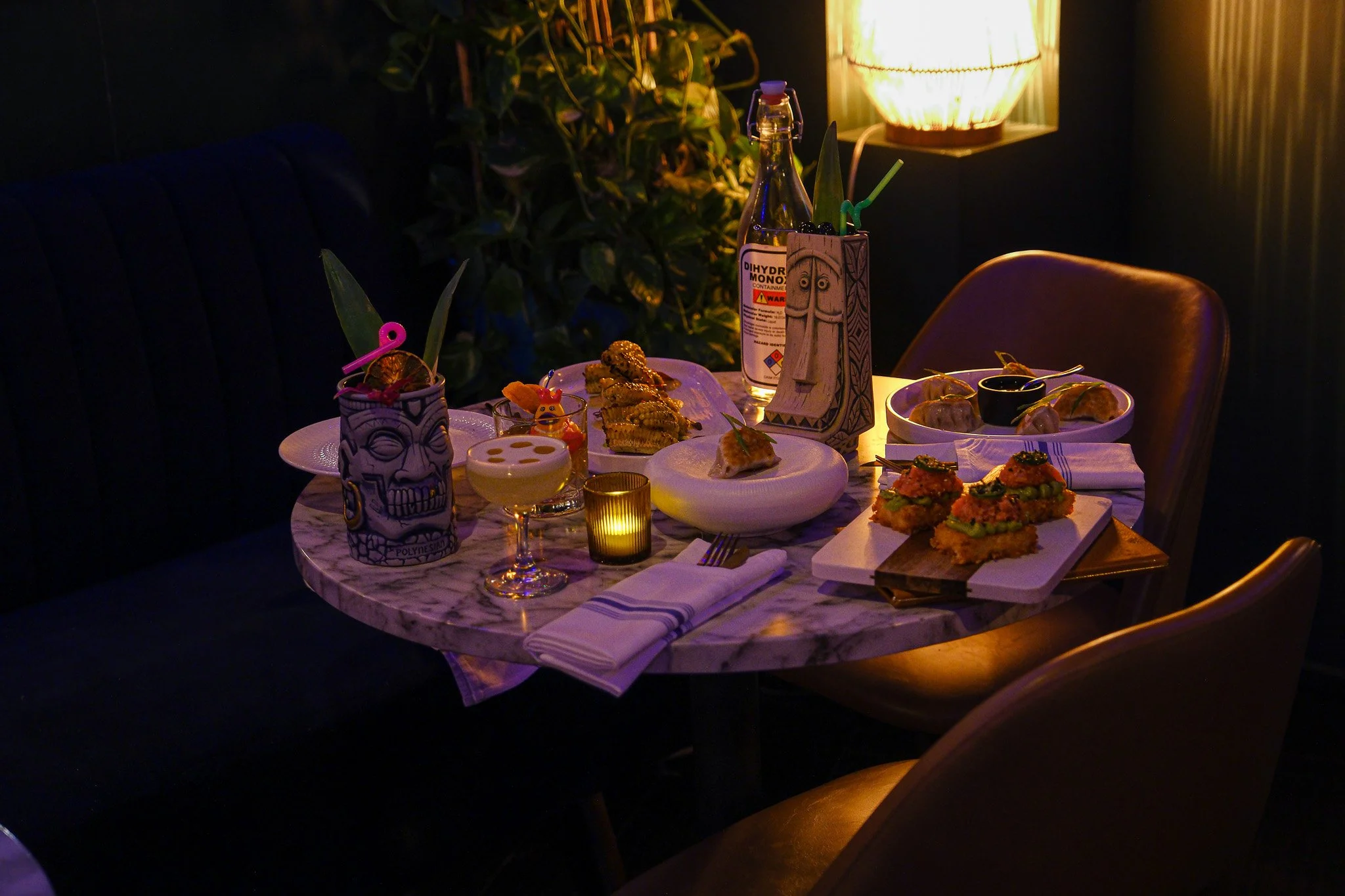
It was our goal to be recognized as more than just the “tiki people,” but as serious cocktail and spirits enthusiasts. As such Lone Wolf was meant to draw various elements from some of my favorite cocktail bars in the city, PDT, Death & Co, Milk & Honey (Attaboy) and bring them under one roof. It meant expanding our cocktail selection to feature more than just rum, it meant we had to feature whiskey, agave, brandy and various other modifiers. So to ensure that Fuchsia Tiki Bar was not cast into the shadows, we created Fuchsia Tiki Sundays as a way to showcase the 5 years of work we had put in at New Paltz, every single week. In tandem with opening menu of Lone Wolf, I curated the tiki menu and made a point of pulling out my favorite tiki mugs to adorn the shelves. They became talking points for guests sitting at the bar who were not aware of Fuchsia previously, or had never heard of the tiki genre before.
Offering tiki style cocktails in the Hudson Valley has given us a unique opportunity to continue to educate guests on the intricate details and the balancing act of ingredients. The phrase “what one rum can’t do, four can” is particularly true here since on any given day my Mai Tai rum batch is a combination of four different rums from different countries. Unlike traditional cocktails, most tiki drinks have about 12 ingredients, minute amounts of syrups and bitters and elaborate garnishes. This results in a balancing act of flavors and requires a more in depth knowledge of the rum category than most people have patience for. I’m just fortunate that there are people out there who love these drinks as much as we do, and want to learn more about them.
What’s the story behind “Anton Kinloch’s Zombie” on the cocktail menu?
Don the Beachcomber was the man who created the Zombie originally in 1934. A potent blend of rums, Don’s Mix (cinnamon and grapefruit which wasn’t deciphered till the early 2000’s), grenadine, lime, absinthe and angostura. When Punch Drink Magazine tapped me on the shoulder for my submission to their Ultimate List, I submitted the recipe I had been making since 2020 at Fuchsia Tiki Bar, as my proprietary blend of rums and house-made grenadine. The recipe was touted the best out of a dozen competitors who are also legends in the beverage industry. That led to me putting it on the menu for posterity, though it may come off, who knows.
Like many expert mixologists, you have a culinary background having attended the CIA, but also a degree in business management, and you were previously the beverage director at Turning Stone casino. How does that blended background help with menu development (kitchen + bar), running your business + your approach to hospitality?
I’ve found that having a culinary degree has been an asset to me because I was fortunate to learn about flavor combinations and culinary techniques that can be adapted behind the bar. The casino presented its own unique set of challenges and my role evolved daily to encompass anything from scheduling and training to recipe development and inventory control and programming whilst maintaining a high level of interdepartmental communication. In short, it also meant that creativity was restricted due to skill level of staff, scalability of a process and of course guest expectations vs reality.
I always had flavor combinations in my head that simply made sense, however getting approvals from the high management teams often was difficult and time consuming. By the time a product was approved or recipe was approved the moment was gone. So I started to dissect my work, my processes and started to present the management team with solutions before they had an opportunity to shoot down a concept. Having a contingency plan in place for when they would inevitably say “no” to something.
Unfortunately, not all ideas made it past the first or second round, however the experience of working at scale forced me to start thinking about the small details of how guests interact with a space, with their food, with their drinks. I began to implement the same level of methodical questioning that the VPs of the resort applied to me to my own work product when I started my own venues. Since the casino, I’ve gone further to incorporate this way of thinking into my hospitality consulting business when working 1:1 with operators who need a small “boost” be it staff training, recipe development, costing or full scale build outs with design in mind and logistics of space. All of it has only helped me think more objectively about what guests subliminally want rather than they say they want!
You’re super honest on social media about the unglamorous aspects of running a bar from mechanical breakdowns to replacing floor tiles. Do you have a typical day or is there no such thing?
I’ve received a fair amount of flack for being “too direct” or “too open” about the not-so-pretty aspects of running an F&B business. Perhaps it's because I have grown tired of people romanticizing entrepreneurship as something glamorous and that things will magically fall into place if you work hard enough. Though the reality is that hospitality is an industry where we are expected to take care of others but rarely do we take care of ourselves. So we have normalized the days when we have no guests, lose money on payroll and fixed expenses, when we’re short-staffed and frantically running around making mistakes, when we have mechanical failures and have to find an immediate solution… We have been conditioned to compartmentalize our feelings, frustrations and negative emotions for fear of breaking the illusion of a bar/restaurant/hotel being “fun” and “exciting.”
But there’s truly no such thing as a typical day. I feel when we start having more open and honest conversations with the world about what goes on behind the curtain, maybe guests will move their dollars from corporate chains to small businesses owned and operated by people in their communities.
Lone Wolf stands by itself in a part of town where there are few bars, hence its name. What do you think you have created that feels so welcoming for your guests, but also appeals to other industry people?
Before my wife and I opened Lone Wolf, we spent time traveling to different bars and restaurants throughout the Hudson Valley and the city. The ones that we gravitated toward had several commonalities: great food, great drinks and memorable experiences.
I’ve found that guests go out these days in hopes of an experience. Because dining out or getting a cocktail in many places still feels transactional, so our goal has always been to make sure our guests feel “seen.” It’s in the smallest of details that I agonize over that perhaps makes it appealing. Offering “unreasonable hospitality” has been pillar of what Lone Wolf stands for.
In our region I’ve found collaboration is a relatively novel concept and many bars and restaurants stick to their lane rather than promoting each other. It costs me nothing to say a good word about a venue I believe in; it builds trust when a guest visiting from out of town knows they can trust our recommendation. Other industry people receive the benefit of our suggestion and are now inclined to do the same for us. The constant promotion of other exceptional venues is what helps raise the bar for each other.
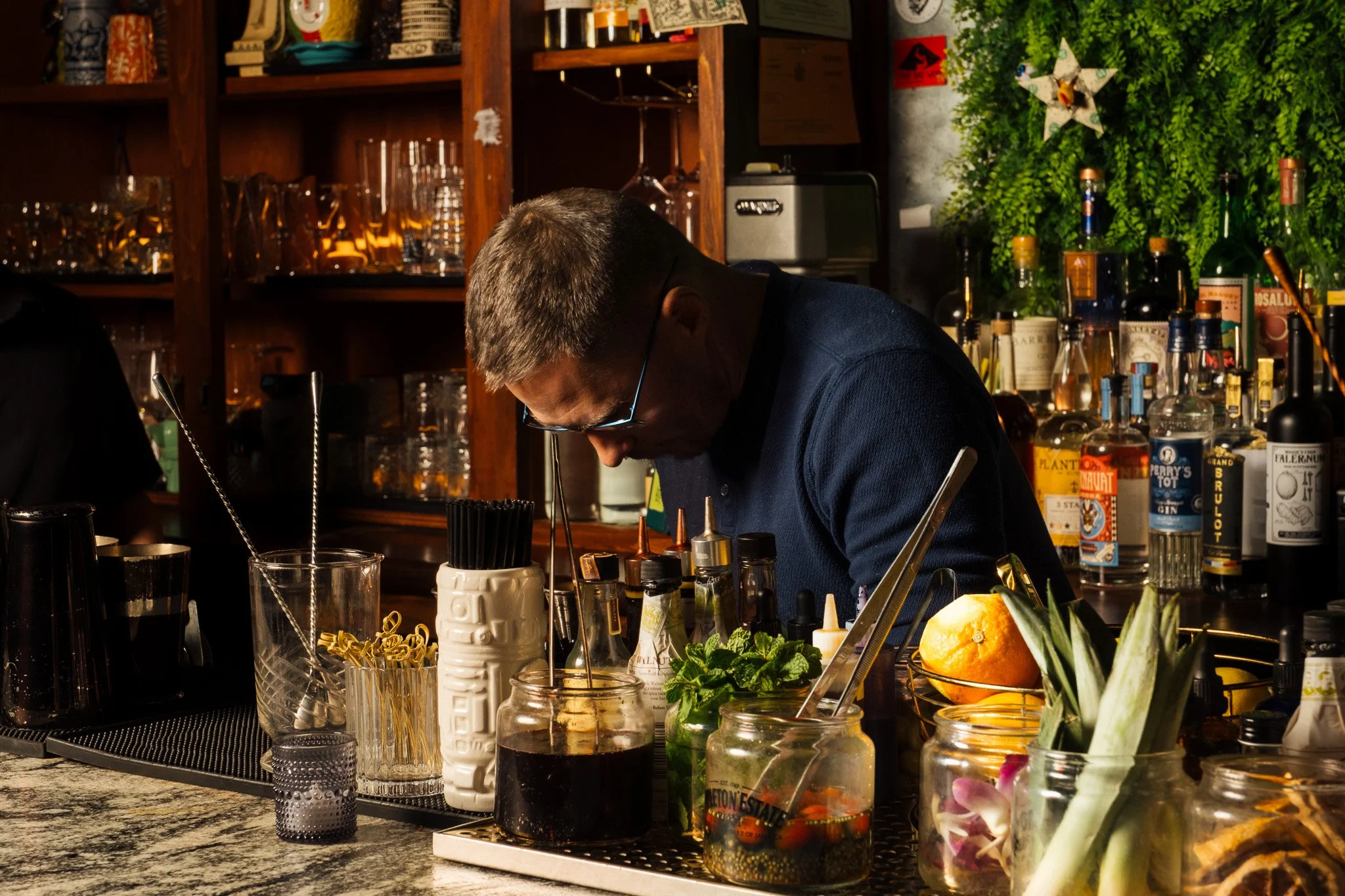
You’re also pretty vocal about the industry, local politics and maintaining mixology standards. What are some of the biggest hurdles facing bars – or the restaurant industry more broadly?
I’ve never been one to shy away from an unpopular opinion, predominantly because adversity and challenging the norm is what helps to shape the industry for the better and dispels myths and beliefs that no longer serve us. Rarely does the public know about what forces the hospitality industry is up against. We talk about inflation, tariffs, cost of goods and insurance which have skyrocketed during this administration while spending has dwindled. And one of our most important resources—talent—has never recovered.
During the pandemic-induced hiatus, many people saw it as an opportunity for an introspective moment to assess the viability of their hospitality business and careers, so people at all levels ended up quitting and going into other fields. General managers, bar managers, bartenders, servers all quit. What was left were often people who got pushed into roles they weren’t ready for: A bar back who has 3 months of experience is now a bartender. A novice bartender is magically now the bar manager or beverage director. The server who has barely been with the company a year is now the GM and inevitably burns out months later because they’re not trained properly. The result is poor guest experience, few repeat guests, and owner/operator is panic because fixed costs are fixed and financial goals begin to collapse. This is where mixology standards began to falter and guest behavior was altered as a result. Guests now come to some venues only on certain nights because “this one bartender knows how to make my drink correctly and nobody else does.” The obvious fact is a lack of proper training and systems. The direct result is that the hospitality culture in a town or city remains stagnant because nobody has stopped to challenge the notion of why you don’t shake Manhattans.
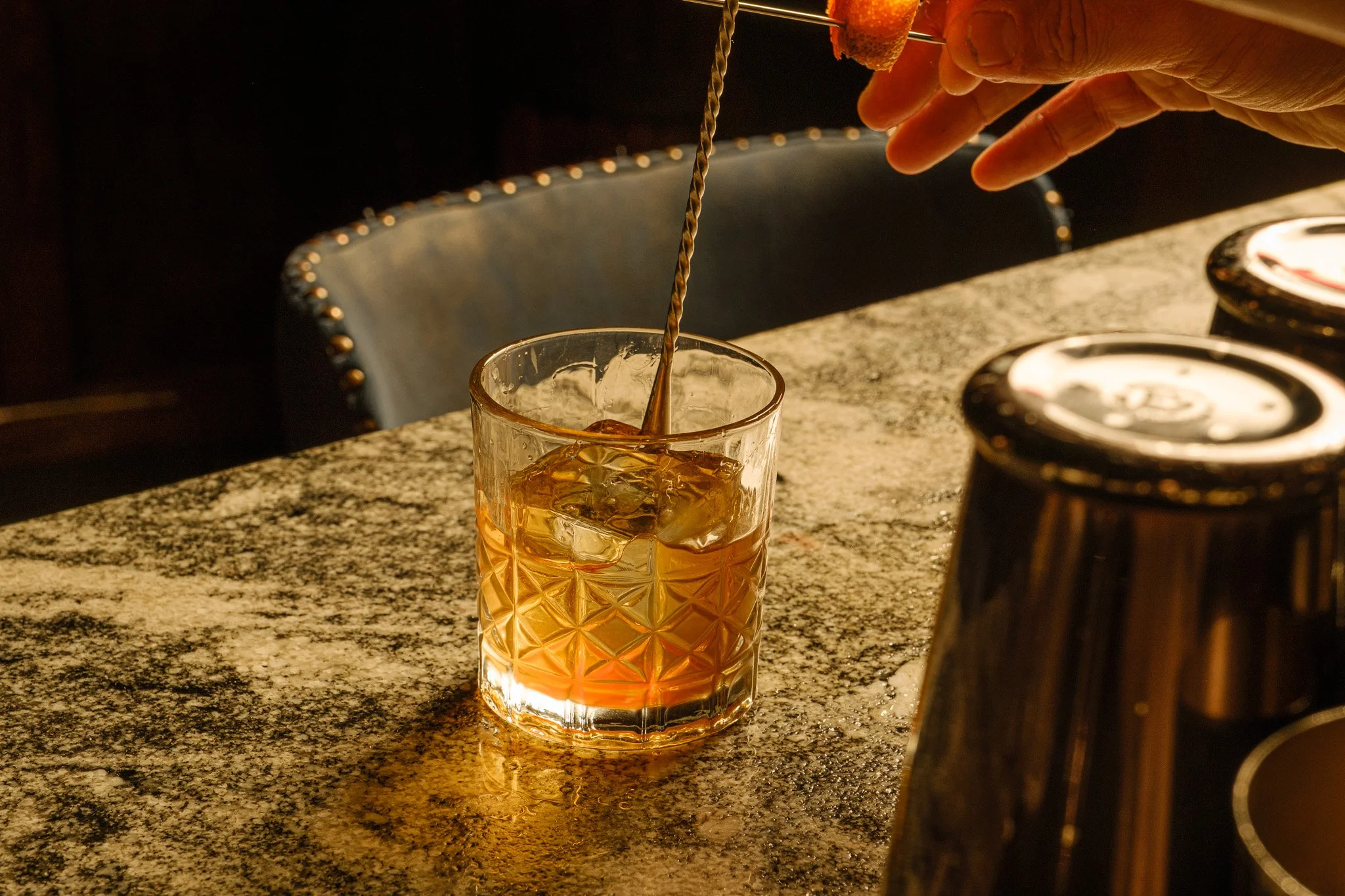
You’re passionate about ongoing education and you offer classes for industry workers on Monday nights. Is this something you do because you benefited from industry training or because you want to raise standards or share techniques? What drives you?
Knowledge is not just power, it’s also inspiration, creativity, collaboration. I believe in collaborative efforts and raising standards, sharing techniques and ideas. Some of my best ideas or inspiration came from the most unlikely of sources. Certainly bartending conventions like BCB or Tales of the Cocktail are great sources for that, but having a community of people in our own backyard of spirits “nerds” is awesome because it means we can challenge our guests to try new and exciting things.
I’ve found that guests appreciate staff that is passionate and knowledgeable about the products they carry. I feel like the hospitality industry is the one where you have so many opportunities to go into adjacent fields like working with a singular brand, working for a distributor, or simply educating others. In short, hospitality is merely the transfer of enthusiasm and when it comes to education, seeing people’s eyes light up when we cover something that inspires them is all I ever need.
You make most of your syrups, infusions and tinctures in house, along with many fermented and housemade ingredients on the food menu. I know your heritage is Russian and your wife’s heritage is Cambodian. Can you talk about how that influences the menu or techniques, or how your scratch kitchen connects to the Asian-influenced menu and bar?
Effectively everything is made in house from the food menu to the cocktail ingredients. My wife very specifically wanted to feature Khmer ingredients on the menu to showcase her childhood memories. For me, I wanted to take simple food and elevate it beyond what she envisioned. The kitchen & bar program both aspire to be waste-free as much as possible by purchasing only what we need for the week and that’s it. Utilizing peeled citrus for garnishes (notice how we don’t use fresh fruit garnishes), withering mint leaves are repurposed for syrups and much more. The same applies to the food portion with extensive cross-utilization and using the entire animal. For our duck legs, we use everything including bones for stock; we butcher our beef in-house and render the fat for cooking.
For my wife and I, closing the loop on our usage and waste is acknowledgement of our childhoods, neither of us grew up with much and had to learn to utilize whatever we had on hand and be creative. Now that we’re “adults” those habits are engrained in us.
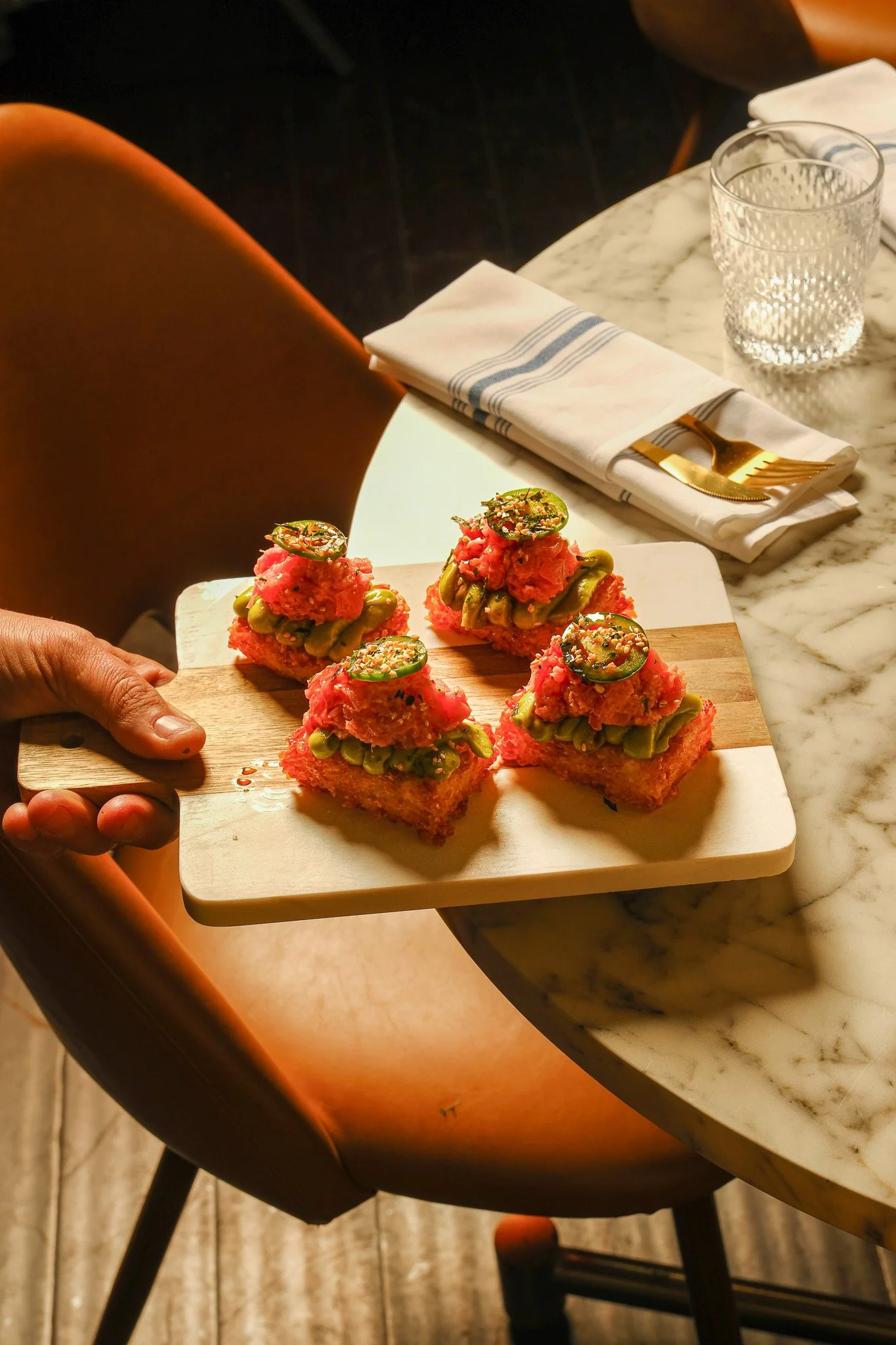
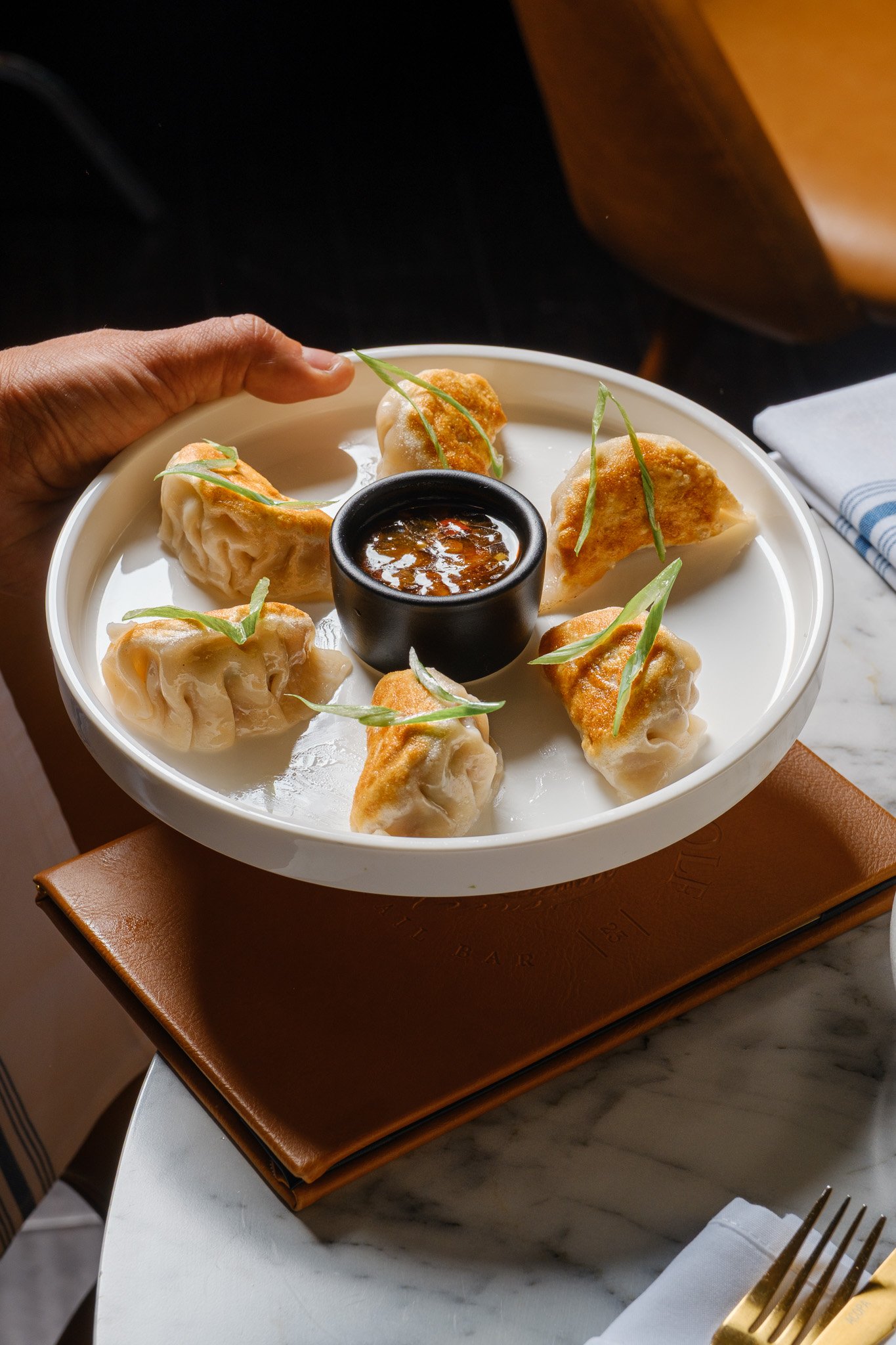
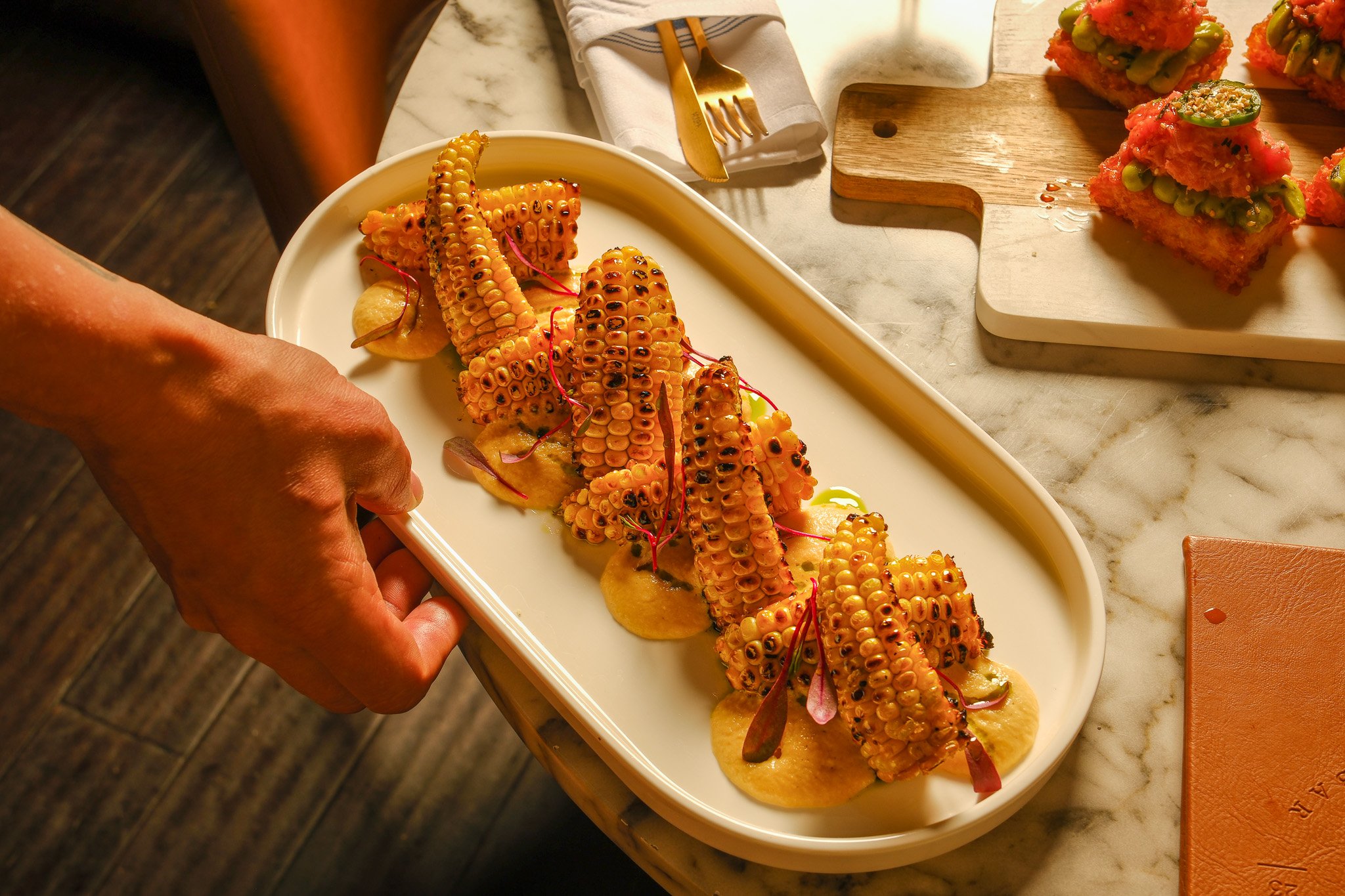
Lone Wolf is a cocktail bar first with an elevated but small food menu. You’re on, I believe, your fifth menu since opening so it’s not seasonal or annual. What goes into the menu updates and the process for developing new cocktails?
Indeed it’s our 5th and soon to be 6th menu. The first four were just myself and my wife coming up with the food and drinks menus and the logistics behind every single item, however the next iteration will include my team more heavily. Typically there’s an open-call for the team to pitch ideas and R&D things on an ongoing basis. It keeps them motivated knowing if the cocktail “doesn’t suck” it may end up on the menu! And the goal of each menu flip is to inch a little bit closer to my wife’s Cambodian heritage with the food since that’s a cuisine that isn’t available in the Hudson Valley, while I steer the cocktail program into more unique territory with flavor combinations and techniques that haven’t been explored yet.
We know restaurants/bars are still seeing less foot traffic and have less of a drinking crowd whether that’s health or related to the rise of edibles/THC products. What do you envision as the future of bars?
I believe that bars will always be around; we’re a third space that is not work or home where you can unwind. Unlike coffee shops where you know what you’re getting and you can sit quietly without conversing with others, bars are places you deliberately go to converse and be communal with others. While some may lean into edible and THC products, there will always be a demand for human interaction on a level that cannot be replicated otherwise. I do hope that we see a rise in listening bars, a genre that is overlooked presently but is making a rise in major cities. In the end I think bar programs will merely shift to offer more low alc and N/A options for the sober curious and that’s not necessarily a bad thing.

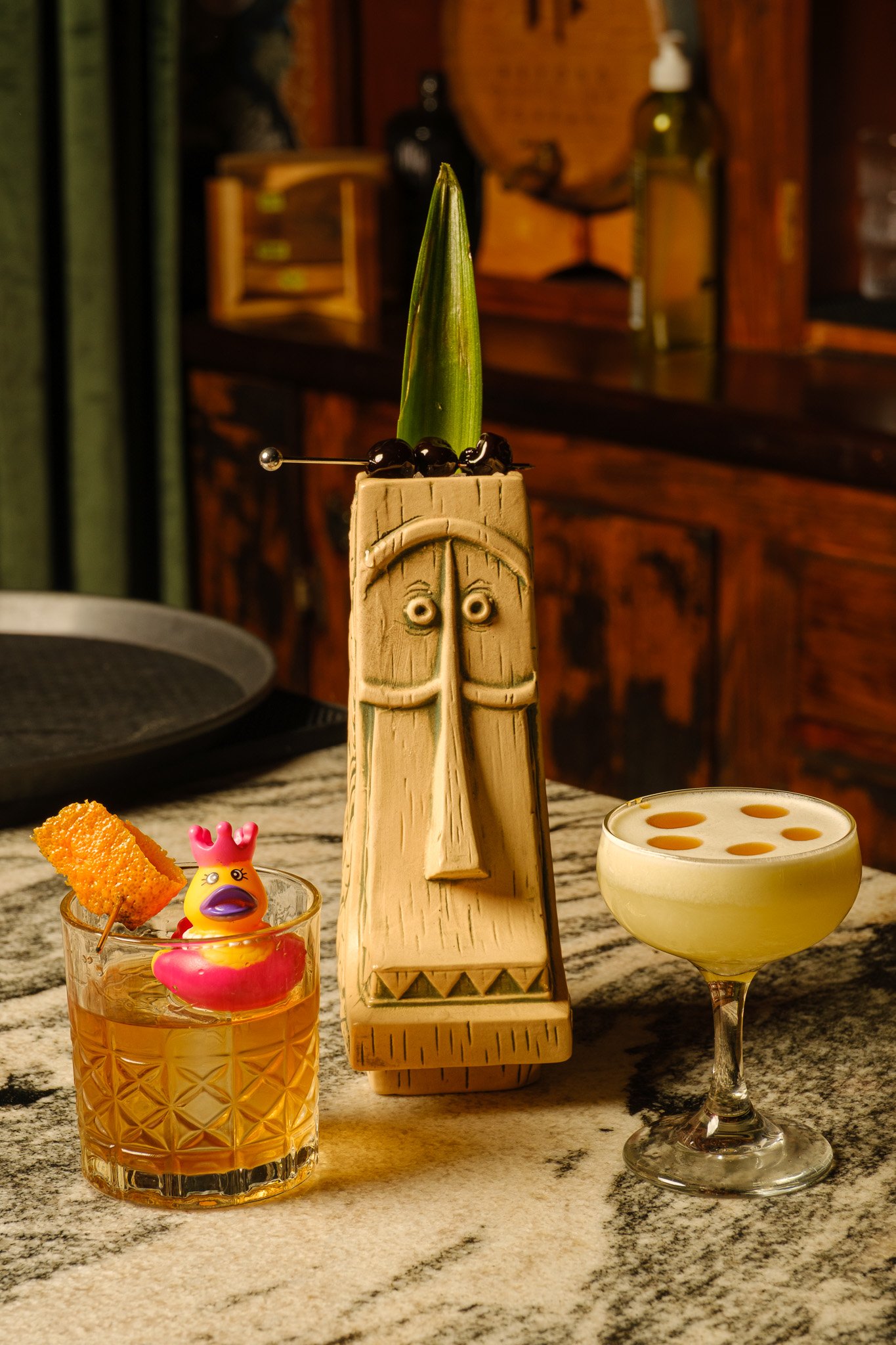
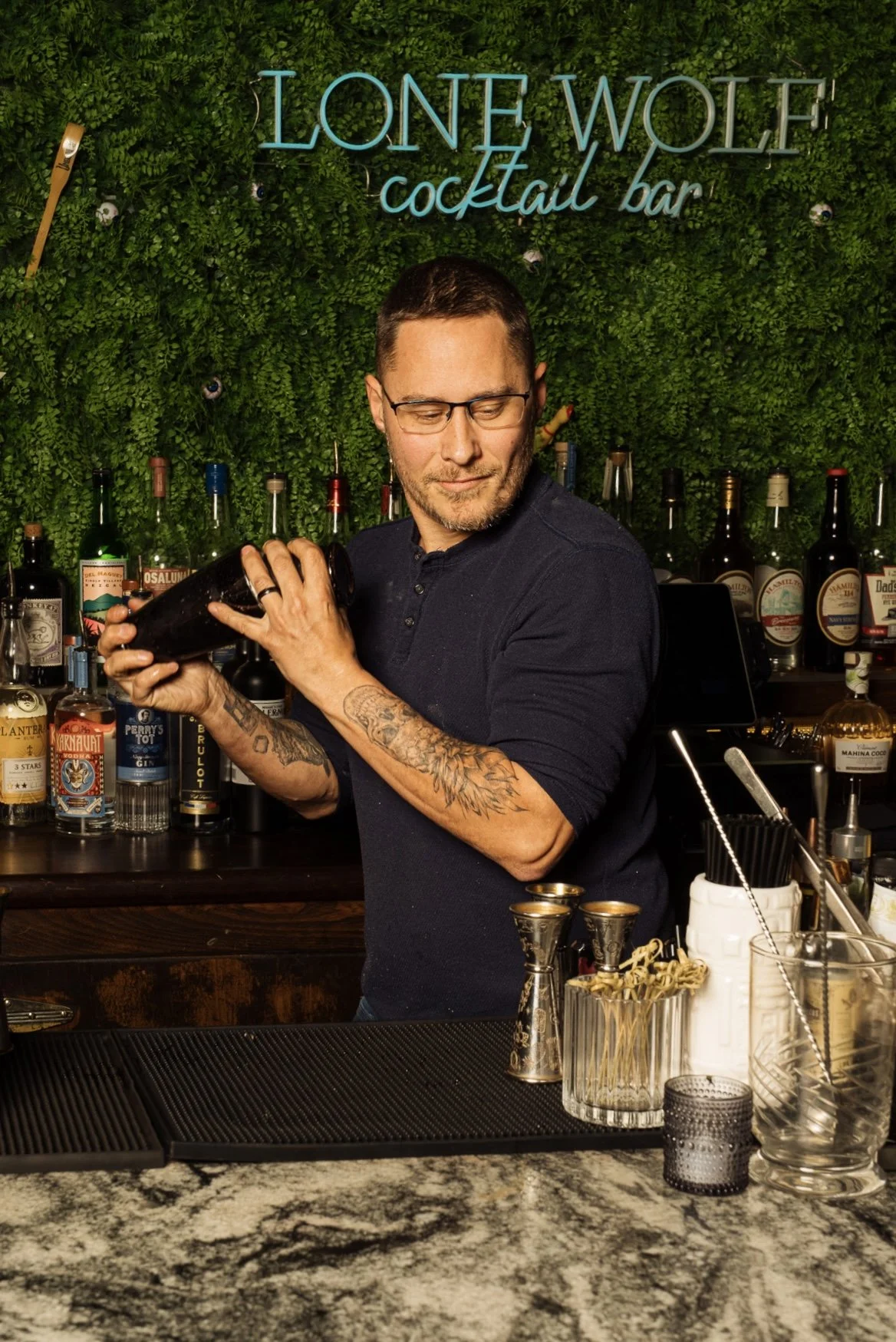
A quarter of your cocktails are zero-proof and they are as complex as their boozy counterparts. How important is it to showcase low or non-alc drinks (not only in January!) + how do you go about it at Lone Wolf?
N/A options are incredibly important because going out for cocktails is more than just practice. It’s a ritual for some. If there’s one thing I cannot stand is when a table gets a round of shots and then the one person who isn’t partaking is stuck sipping water. I distinctly recall back at Lone Wolf I just received a bottle of N/A bourbon and we had a bachelor party of 9 guests. One person was not drinking and I wanted to do something for the table. Sending them all out a round of whiskey on us and then the last person got the N/A bourbon. He thanked me afterwards saying how good it felt to be part of it without any pressure or awkwardness. Moments like that are what drive us to create memorable, unique N/A cocktails. People deserve to feel good about themselves.
What cocktail are you most proud of to date + what’s something that you haven’t yet made yet but you’d love to figure out?
My award winning Zombie is perhaps my most proud moment, since it is the epitome of what tiki cocktails are and to be recognized by people who I look up to feel incredible. I haven’t quite unlocked the power of making textured cocktails but I am getting close. Applying culinary science to my beverage program is the next step including liquid nitrogen and other esoteric ingredients.
Let’s throw it way back: What are your childhood memories of cooking/eating at home or dining out?
Dining out was a rare occasion reserved for once a month or every two if we were lucky. The one place that stood out for me was Barnaby’s in New Paltz. A staple steakhouse that felt incredibly upscale to me at a young age (8). When I got older (14) I ended up getting a job there as a busser and worked my way up to be a line cook there. That was the place where I also saw myself working in hospitality long term. I wanted to do something meaningful and back then I thought that the hospitality industry was fun and exciting. Although many of my best memories were in those formative years, I worked long hours, got cut, burned, scratched and scraped along the way, but I also remember eating incredible home made Oaxacan food made by the cooks there. I guess because going out to eat was such a coveted occurrence, it felt special to go somewhere and to be served. Perhaps that’s why I leaned into the hospitality scene, because I enjoyed the notion of taking care of others and making them feel special.
When friends come to visit, where are 3 favorite spots that you like to take them in the Hudson Valley or Capital Region for breakfast, lunch and dinner?
As a creature of habit, the Plaza Diner in New Paltz was a staple in my family as a once a month breakfast spot that I’d gone to since I was seven. I appreciate the simple food but kind service. For lunch, I have soft spot for the folks at Bangkok Cafe in New Paltz. Authentic Thai food made by hand from owners who traveled from Thailand to make a life for themselves here in the United States. It’s comfort food in the best way possible. As for dinner, one of the best meals I’ve had was at End Cut in West Park. Chef Jordan knows his way around beef and boasts (rightfully) that his wine list is curated by Kevin Zraly.
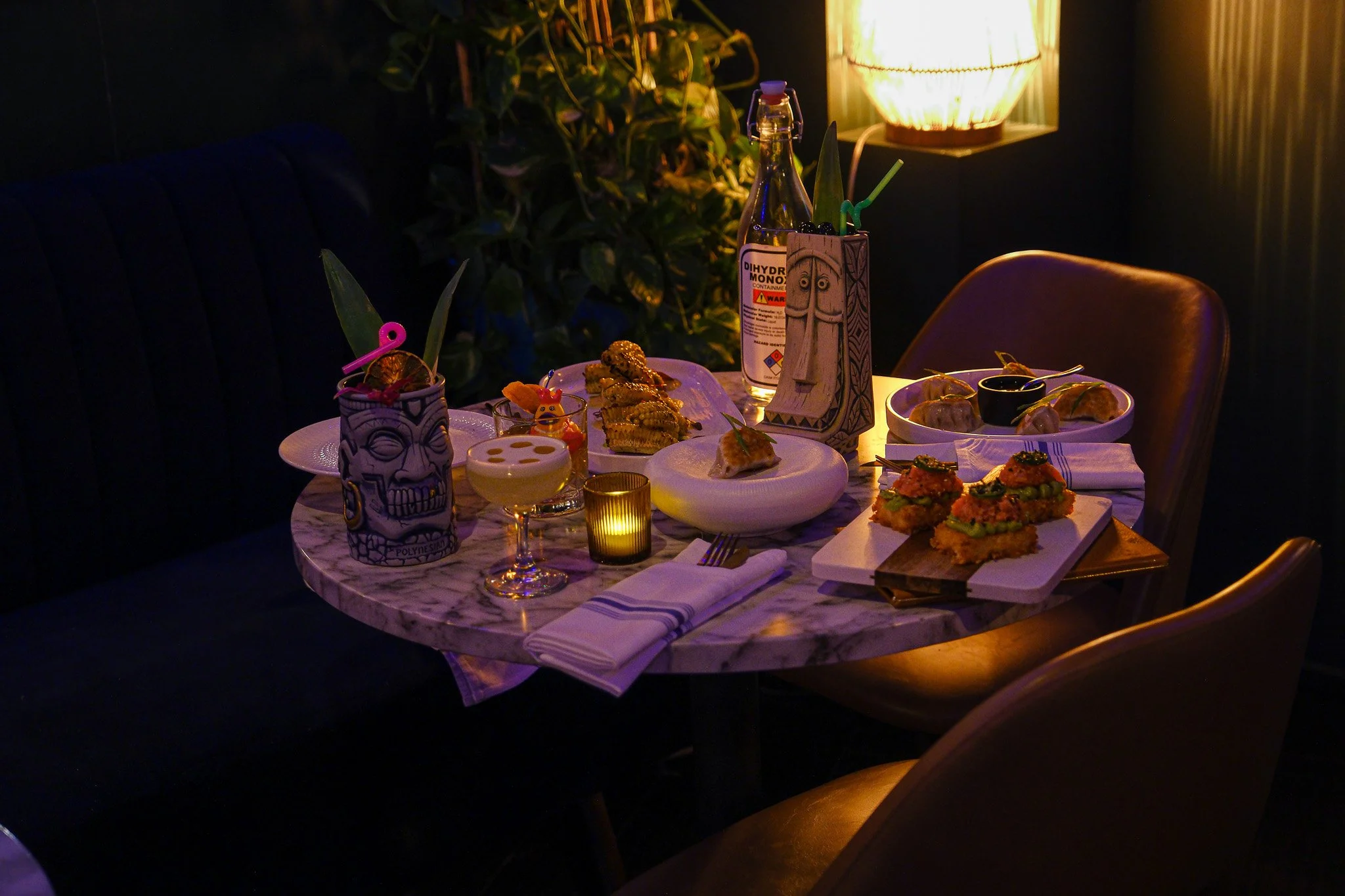
Imagine your own ideal day or night out. If you could go anywhere with no limits on costs or reservations, where would you go and how would your day or night unfold?
An ideal night out would likely be back to NYC, however I’d have an Uber or Lyft take me from the West Side to the East Village and wrap up in Brooklyn. Likely starting the evening off at Dante on the West Side, then making my way to PDT in the East Village before hitting Attaboy and wrapping up the evening at Gage & Tollner in Brooklyn for a steak, climbing upstairs to Sunken Harbor Club for my tiki fix and get a nightcap at Clover Club with the namesake cocktail.
We know a lot about burnout in the industry. You have a young family, and a good staff, but how do you manage the work/life balance? What do you do to relax or prioritize your mental health?
Burnout is real and I’m not necessarily sure that I can (or do) have a work/life balance. Because I’m constantly “on” and don’t know how to shut “off.” Being present is hard, relaxing makes me feel guilty if that makes any sense. Because if I’m not dealing with a proverbial dumpster fire at my business, then something is inherently “wrong.” Though I do my best to be present with my family whenever we do go anywhere. Fortunately my wife is incredibly forgiving of the challenges of this industry & sees the amount of time and effort I put into Lone Wolf. Admittedly I’ve been getting “better” at relinquishing control to my staff because I have always had a fear that I’ll burn them out by asking for too much. They’ve had to literally chase me out the door and tell me to go home because they can handle things without me. Perhaps that’s the true sign that I’m doing something right.
If your time on earth was up, what would be your last call cocktail and why?
A daiquiri. It’s simple and complex. A three legged stool of rum, lime and sugar. Too much of any ingredient and it’s too sweet, too sour, too boozy. The proverbial litmus test of a good bartender. I made my very first daiquiri in my apartment back in 2014, it was the easiest cocktail to make at the time so it’s got some sentimental value.
What’s next? Where do you see yourself in 5 years?
In 5 years, likely opening another concept, maybe two. I constantly strive to stay busy and creating new spaces is exciting for me. I’d love to be involved in more projects with other operators to help design their spaces. I am not leaving the industry any time soon!
Thanks for talking to us, Anton! We appreciate your insight and we’re looking forward to continuing these important industry conversations in our in-person industry talks this year.