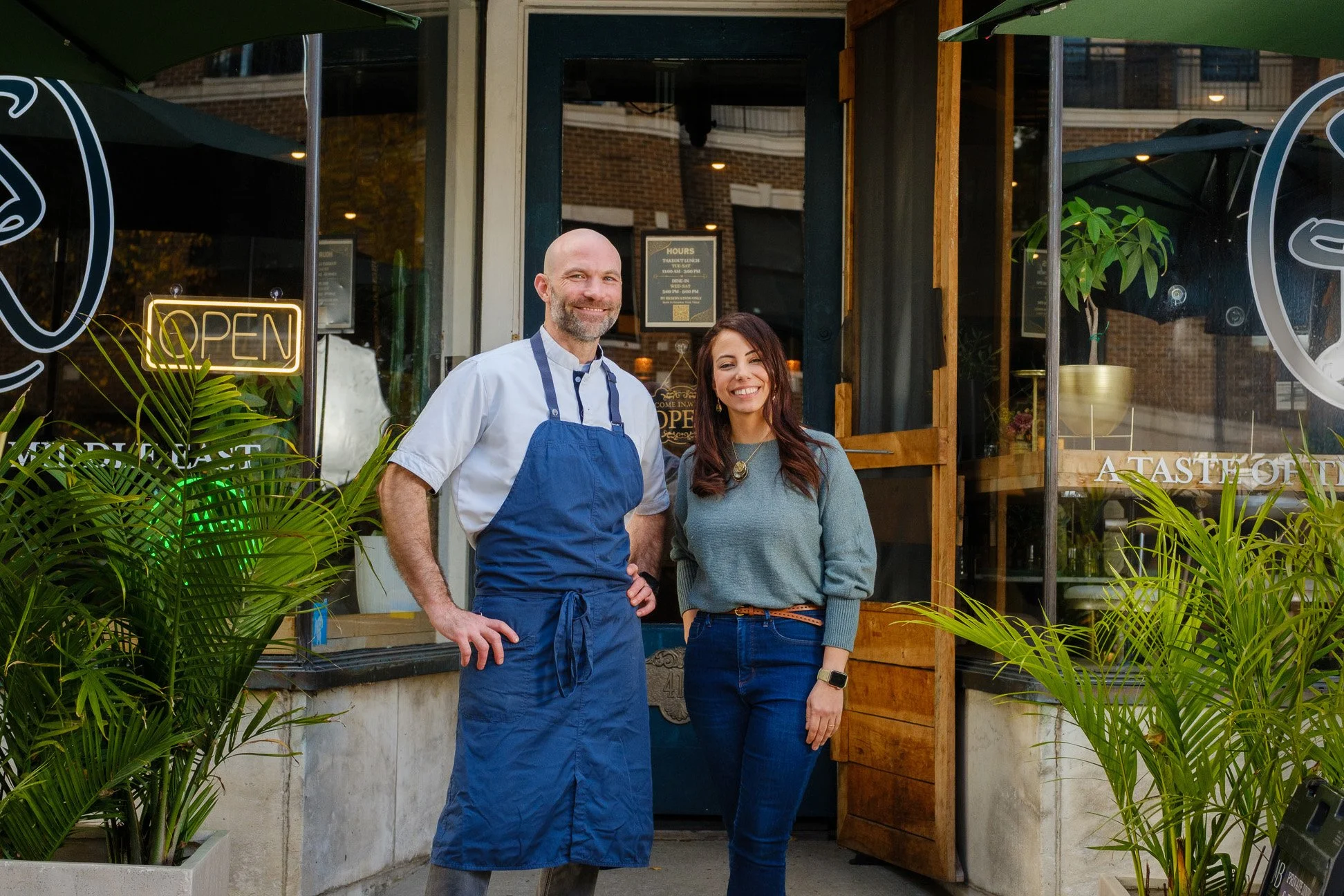
INDUSTRY TALKS: The Hi-Note is open in Saratoga so we dropped in for the early scoop.
Interview: Susie Davidson Powell
Photos: Victoria Sedefian/The Dishing
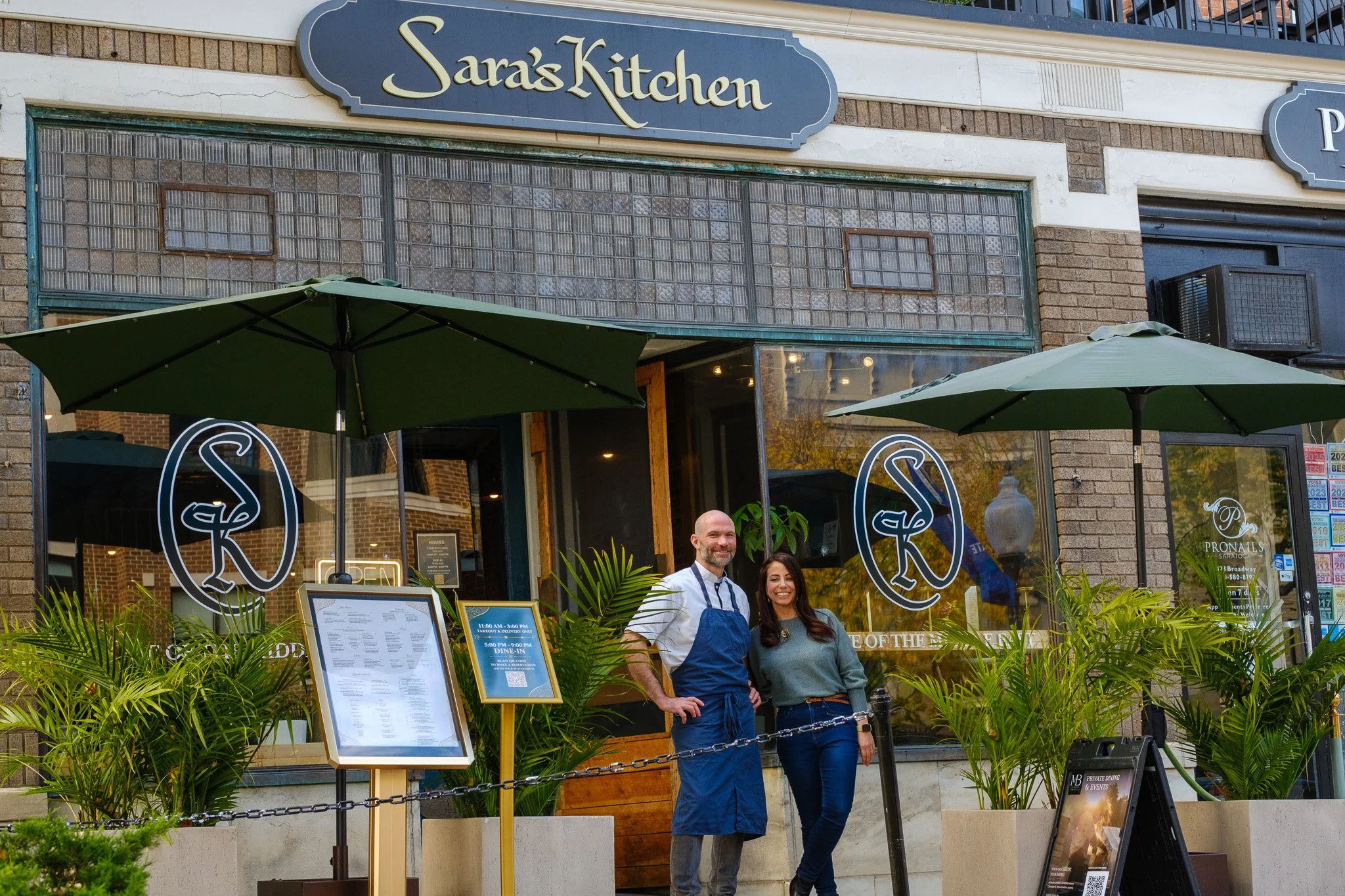
Location: Sara’s Kitchen, Saratoga Springs, N.Y.
[November 2026]
In the aftermath of the devastating pandemic shutdown, conversations around living wages and better work/life balance have dominated the hospitality industry followed by revised tip laws and an increasingly common supplemental ‘cost of living’ percentage added to guest bills. But high rent, the soaring costs of utility, labor, and food, and razor thin profit margins, is leaving virtually no money–or the ability to take time off– for restaurant owners. If the cost of running a business is consumed by operating costs, is it sustainable or even worth it?
In this series of industry conversations, The Dishing talks with restaurant and bar owners about what works.
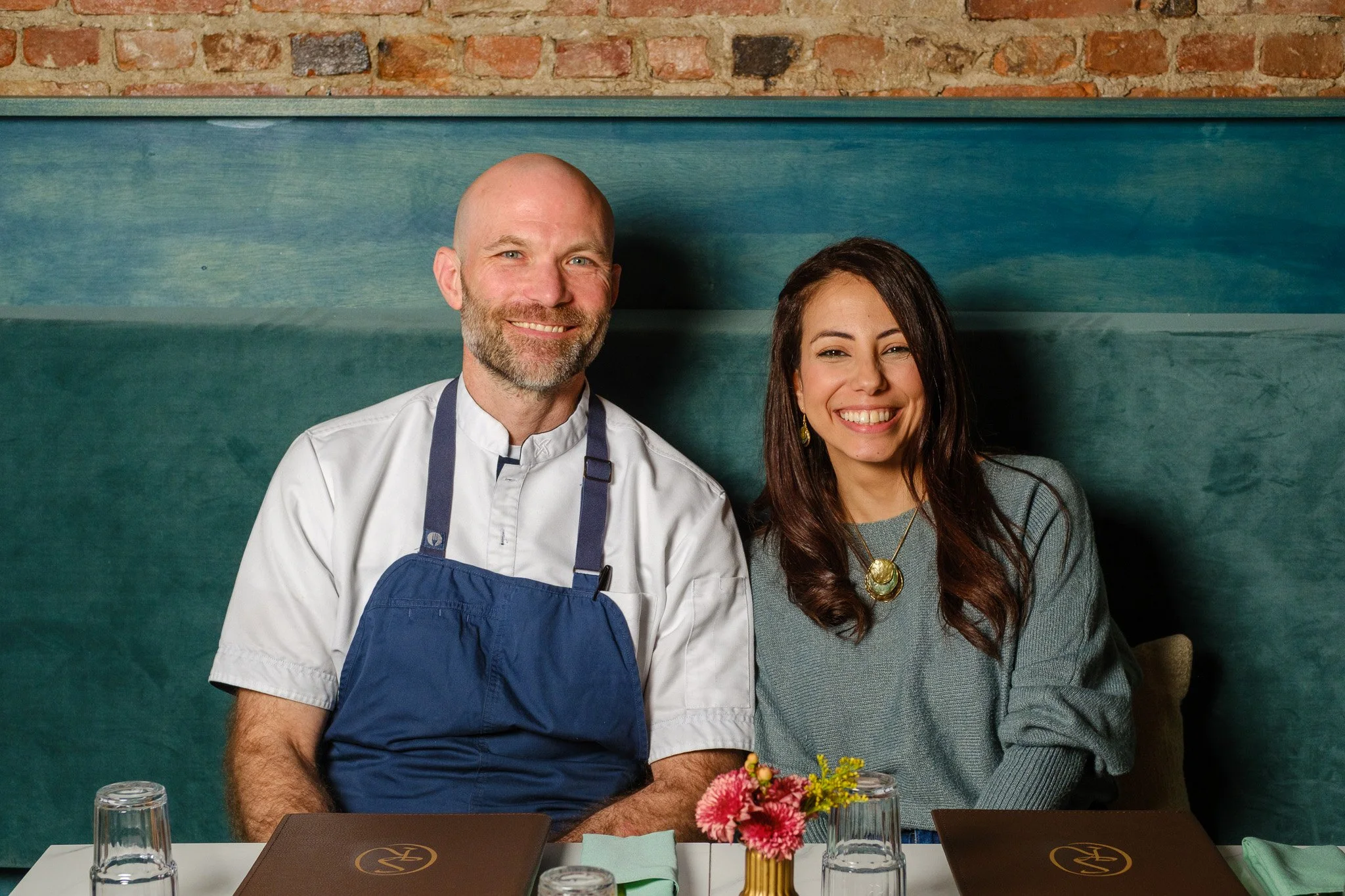
For Sara Ali, founder of Sara’s Kitchen, and her partner, Chef Michael Blake, their marriage in May 2026 united their two young families just as a longtime babysitter left during Saratoga’s high summer season. Operating Sara’s Kitchen in a relatively small downtown space on high traffic Broadway presents its own capacity hurdles for lunch-through-dinner service, while staff turnover compounded their ability to plan around coverage. While thinking critically about a more sustainable business model and manageable operating structure, their focus on “unreasonable hospitality” and optimizing the customer experience stayed at the fore as the driving force.
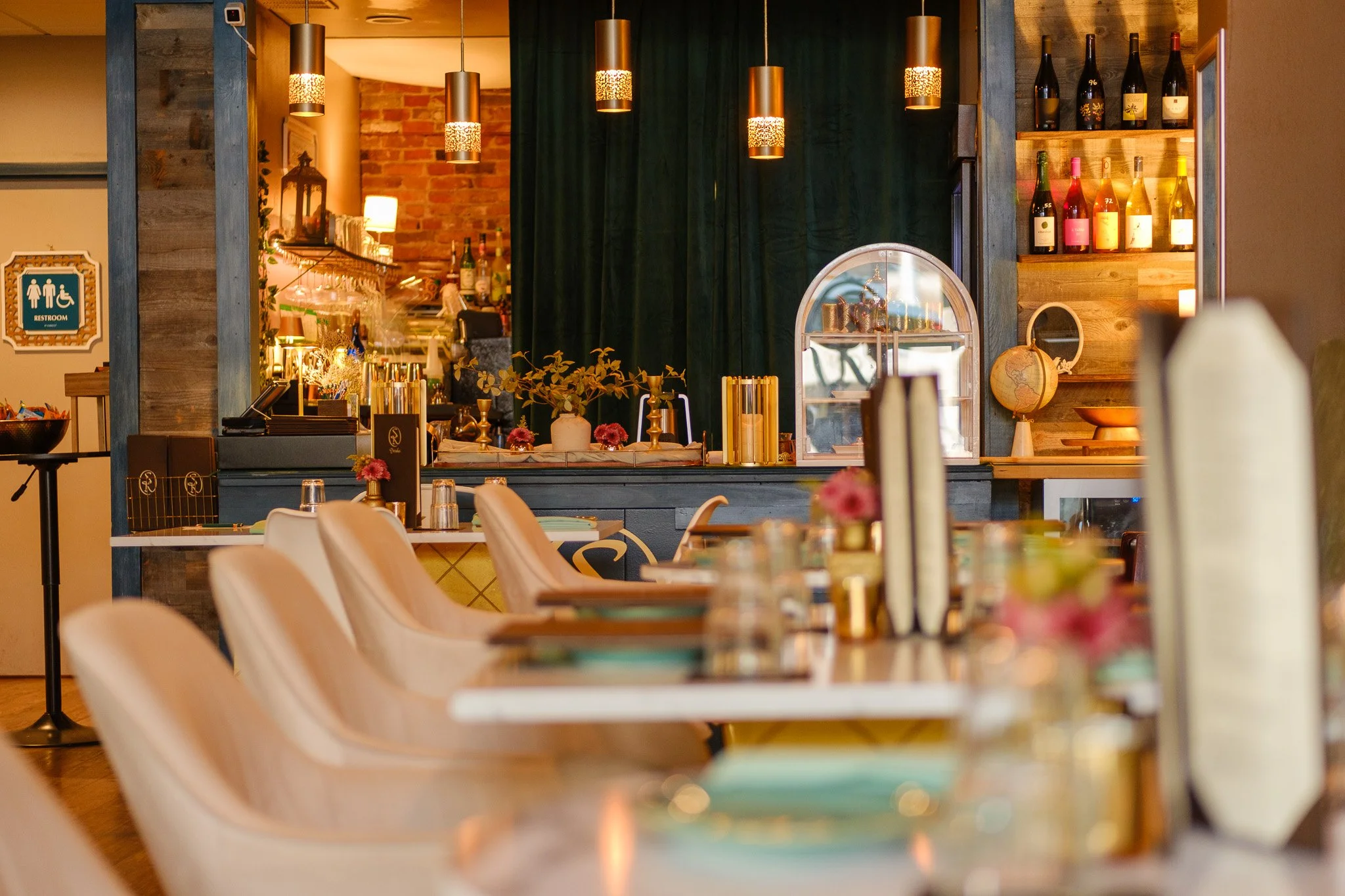
By design, the owner-operator couple now run both front and back of house while combining several revenue streams which give the business flexibility to withstand the fluctuations of slow days and peak weeks in a tourist town. While turning tables faster to accommodate more guests is common, their new approach caps the dining room service at a max-capacity of 30 seats via time-controlled Resy bookings. During peak hours, the dining room stays manageable for Ali to engage personally with customers, describing and recommending their Egyptian and Lebanese dishes, while Chef Blake is able to both cook and bring the dishes out to tables, interacting directly with guests. Summing it up, Ali’s goal is for “guests to feel as if they are eating in my home,” while Blake describes their model as “an upscale mom-and-pop restaurant with elevated dine-in service.”
The Dishing chatted with Sara and MIchael to learn about the new model Sara’s Kitchen.
It’s great to talk with you both. Before we get into the changes you’ve made, can you explain what led you to consider an alternative operating model?
MB: We’ve actually been challenging the conventional restaurant model for some time. For more than a year, we operated successfully with a three-person, team-based service structure rather than traditional servers assigned to individual tables. That experience taught us that thoughtful organization and clearly defined responsibilities could create a better guest experience without following the usual industry playbook. We began looking at the business more broadly: We were generating revenue, but the demands of operating across multiple service periods, combined with rising expenses and the unpredictability of Saratoga’s market, weren’t producing the financial return or quality of life we wanted. We realized that we could apply the same creative thinking we’d brought to dining room service to the entire operation.
SA: With four children, finding a balance between family and work is important and I wanted to preserve what makes Sara’s Kitchen special: Welcoming people into our space, sharing our food and culture, and making them feel genuinely cared for. We needed a business structure that supported those things rather than competing with them.
Your restaurant model takes the front and back of house roles and streamlines them into an operation the two of you now manage together. It sounds more time-consuming than less. Why does it work?
MB: We started by working backward from our financial needs. We examined our fixed expenses, food and labor costs, and the revenue necessary to operate profitably while compensating ourselves appropriately. From there, we determined what volume of business we could comfortably manage without compromising hospitality.
Today, we have several complementary revenue streams: our reservation-based dining room experience, delivery and takeout, a substantial amount of catering business, and restaurant buyouts that we already have on the calendar. Each serves a different purpose. The dining room is where we offer our most personal experience, while delivery, takeout, and catering allow us to generate additional revenue without depending entirely on available seats. Sara and I handle the cooking and hospitality directly, with limited support for dishwashing and cleaning.
The Resy system helps us manage the pace of service; the other revenue streams give us flexibility. And the financial results have been encouraging. We’ve reduced operating expenses considerably and improved our ability to pay ourselves. But the real measure of success is that we’re delivering an experience we’re proud of while operating a healthier business.
SA: I can now spend my time doing what I enjoy most: Welcoming guests, sharing the stories behind our Lebanese and Egyptian dishes, and making people comfortable. I want guests to feel as though they’re coming into my home. The restaurant should feel warm, generous, and personal, not transactional.
What is it about Saratoga as a tourist town that makes sustainability hard or is it pervasive throughout the hospitality industry?
MB: Saratoga’s seasonality creates a particularly challenging environment for independent restaurants. During track season, demand can be extraordinary, but quieter months bring a very different reality. Even in the same week, business can be unpredictable. The problem is that fixed expenses remain constant regardless of how many people come through the door. Labor adds another layer of uncertainty because you’re scheduling employees based on anticipated business, which doesn’t always materialize.These challenges exist throughout the industry, but they’re amplified in a seasonal market.
Our current model allows us to adapt without constantly adjusting staffing levels or relying on high-volume dining room service. Having multiple revenue streams also helps us navigate fluctuations in demand. It’s about building a restaurant that works consistently throughout the year, not just during its busiest weeks.
You’ve said, “Doing less can actually be better for business.” That flies in the face of an industry norm to turn as many tables as possible, expanding hours, or doing more. What is it about your realization that “small is beautiful.”
MB: I think the restaurant industry has traditionally placed too much emphasis on gross revenue as a measure of success. We’re conditioned to believe that growth means more seats, more employees, longer hours, and higher sales. But revenue and profitability are two very different things. What we’ve discovered is that being more selective about how we operate gives us the freedom to be more generous with our hospitality. That’s an important distinction. We’re not trying to do less for our guests. We’re creating a business that allows us to do more for them.
SA: One of the most meaningful outcomes of these changes is that we’re enjoying the restaurant more than ever. We’re able to focus on what originally drew us to hospitality: preparing wonderful food, welcoming people, and creating experiences that make them want to return. Our goal isn’t to become the busiest restaurant in Saratoga. It’s to become a place where people feel genuinely at home, where the hospitality is memorable, and guests feel that their visit mattered. We believe a successful restaurant should be good for its guests but also sustainable for the people who operate it.
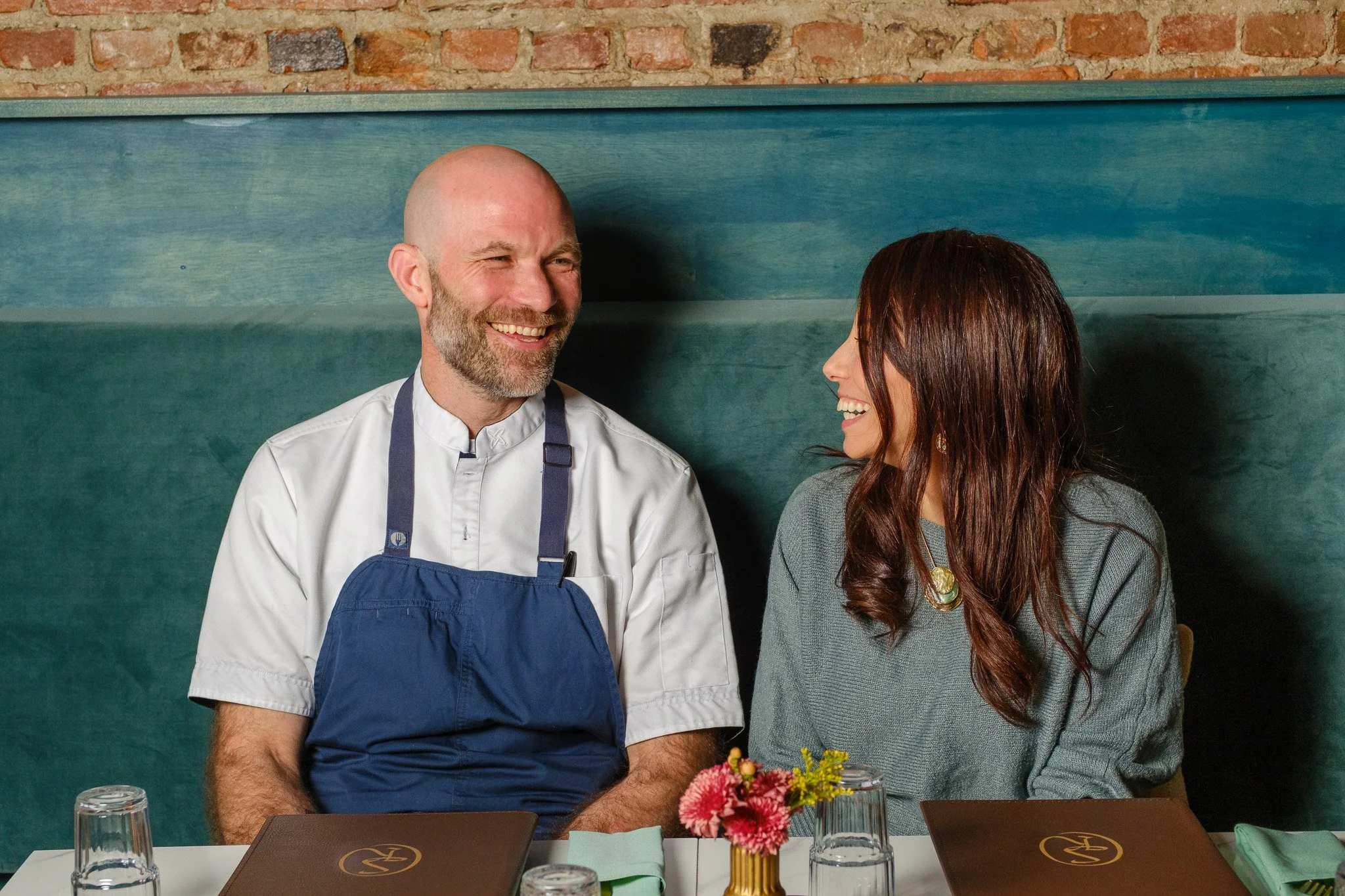
Chef Mike, you’ve worked as a chef across Boston, Portland, Seattle and NYC, and you mentioned that in Portland in the early 2000s people were rethinking restaurant concepts to “Kill the restaurant” and lean into supper clubs. Today, people are again clamoring for intimate dining experiences like pop ups and supper clubs. Do you both feel as if a revised, smaller model where you both interact with customers is meeting that need?
MB: Absolutely. Earlier in my career, particularly while working in Portland, I encountered chefs and restaurateurs questioning traditional restaurant structures and experimenting with supper clubs, pop-ups, and more intimate dining formats. SoI think there’s a growing appreciation for experiences that feel personal and authentic rather than standardized and at Sara’s Kitchen, we live and die by the philosophy of unreasonable hospitality. The food is obviously essential–a beautifully prepared meal is something a good restaurant should be able to provide–but our real product is how people feel while they’re with us and what they remember afterward. What elevates the experience is genuine human connection, anticipating someone’s needs, or small gestures that turn an ordinary evening into something memorable.
We’re not trying to recreate formal fine dining. I describe what we’re doing as an upscale mom-and-pop restaurant with elevated service. We take our food and hospitality seriously without taking ourselves too seriously.
SA: For me, hospitality means treating people as guests in my home. I want them to feel comfortable asking questions, trying something new, or simply enjoying an evening without feeling rushed or intimidated. The Lebanese and Egyptian traditions behind our food are rooted in generosity and sharing. I want that same spirit to be felt throughout the entire experience.
How do you sequence the flow of your reservations?
MB: We use Resy to stagger reservations throughout the evening, limiting the number of guests arriving during each half-hour period. This creates a steady rhythm rather than overwhelming the kitchen and dining room with simultaneous arrivals. We plan around a 90-minute dining experience, which is common in many restaurants, particularly in larger dining markets.
The intention isn’t to rush anyone. It’s to ensure that we’re prepared for each reservation and can provide attentive service from beginning to end.
We require a credit card to secure reservations for parties larger than two. No-shows have a disproportionate impact on small restaurants because an empty table represents a meaningful portion of the evening’s potential revenue when capacity is deliberately limited. While reservations are our primary approach, we also welcome walk-ins when there’s an available table and room within the corresponding seating time slot. The goal isn’t to turn people away unnecessarily, but to ensure that every guest receives the same level of attention, whether they reserved ahead or stopped in spontaneously.
SA: We want guests to feel expected and welcomed… Having a predictable flow means we’re not distracted by trying to manage too many things at once.
Mike, you also have a consulting company, MB Culinary Concepts, where you travel internationally on USDA Trade Missions doing cooking demonstrations and dinners to showcase American food exports. That means closing the restaurant during those windows, but does that add to the work/life balance?
MB: MB Culinary Concepts allows me to pursue private dining, culinary research and development, and restaurant systems consulting alongside operating Sara’s Kitchen.
Earlier this year, I traveled to Cairo as a chef ambassador for a U.S. agricultural trade mission, showcasing American seafood products to chefs and industry professionals. I’m also looking forward to an upcoming trade mission in Casablanca, Morocco, which will provide another opportunity to work internationally and share my culinary expertise. It allows me to draw on a broader range of my experience, collaborate with other professionals, and continue developing as a chef. I think it’s important for chefs to continue growing professionally. The restaurant is a major part of my career, but it doesn’t have to be the entirety of it. The experiences I gain elsewhere ultimately influence the creativity and perspective I bring back to Sara’s Kitchen.
And one advantage of our current business model is that we can temporarily close without having a large payroll to maintain.
Thanks so much for sharing how you have recalibrated your business formula to work for your guests and your family. To reserve a table for Sara’s Kitchen, visit resy.com.