
🫒EXCLUSIVE: CHEF RICHARD LYMAN LEAVING THE ROOSEVELT ROOM FOR CELEBRATED BOSTON KITCHEN
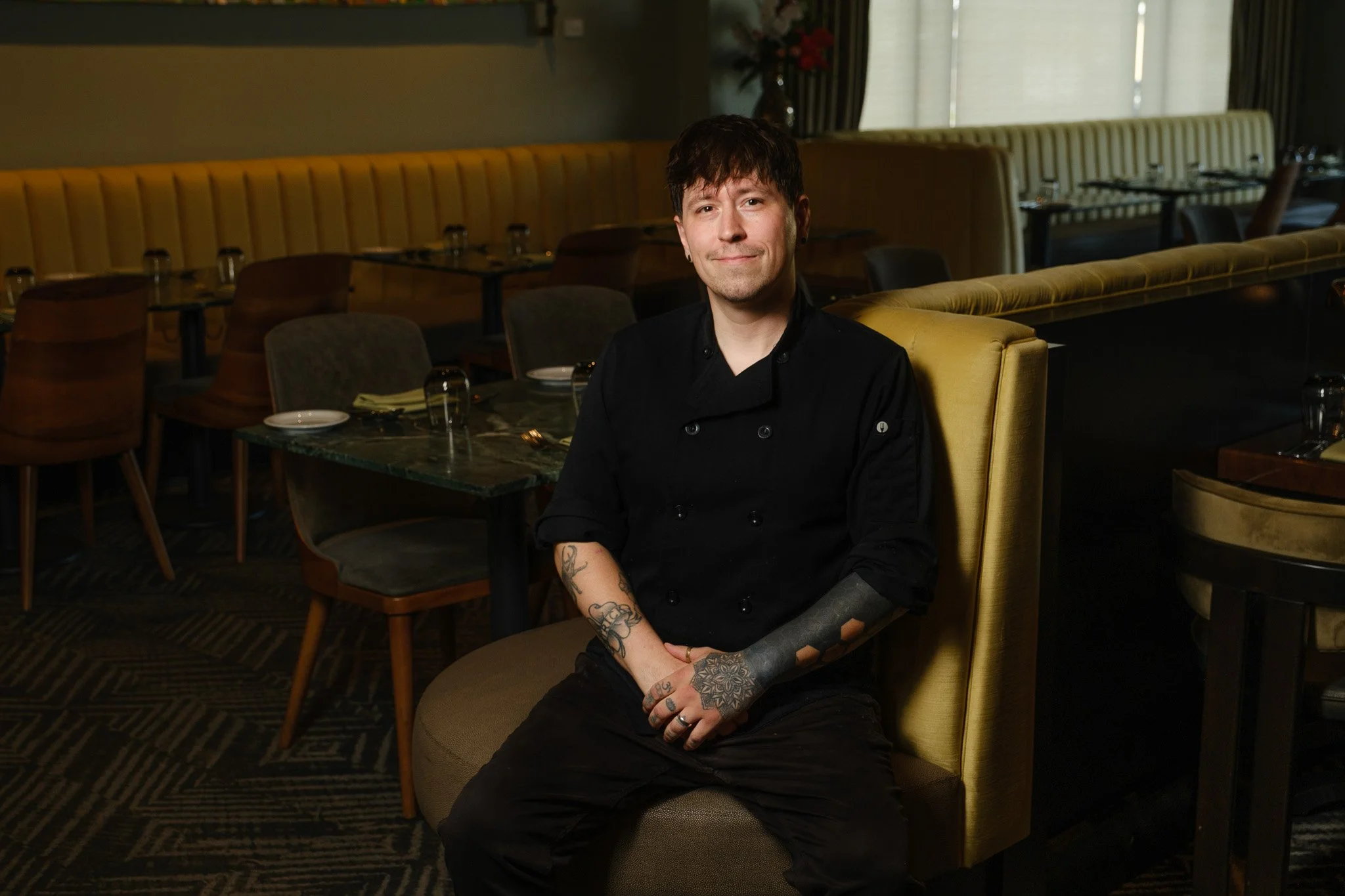
After staging at Boston’s La Padrona, Executive Chef Richard Lyman leaves The Roosevelt Room for a Sous Chef Role Under Exec. Chef Amarylis Colón
Interview : Susie Davidson Powell @susiedp
Photos: Victoria Sedefian/The Dishing @citrusforward | All photos ©️ TheDishing.com
Shoot location: The Roosevelt Room, Troy, N.Y.
Tastemaker: Chef Richard Lyman
Current Position: Chef | IG:@rich_the_cook
Where: La Padrona, Boston |
Hometown: Greenfield Center, NY
Current city: Troy, N.Y. and but moving to Boston, M.A.
Personal style: Black [laughs] Just black pants, black shirt, black shoes. I am not big on brands or styles, but I will say every serious chef should own a coat from Clement Design
Listening to: T-Rex, best rock band ever! “Mambo Sun” was ridiculously ahead of its time, as Marc Bolan often was
Favorite classic cocktail or N/A: I don’t drink, except for a glass of Spanish red wine with a well-cooked meal.
Coffee or tea. What’s your order?: Coffee, lots of sugar, splash of cream. And I need at least three a day!
Favorite restaurant anywhere in the world: Angle, Barcelona, Spain - so far!
Biggest professional industry influence: Charlie Trotter, hands down.
Industry trend that should end: Oof, idk, but to stop underpaying dishwashers would be a good start. It's the hardest job in the kitchen and usually earns the least.
Ahead of our tastemaker interview with Chef Richard Lyman, chef de cuisine at The Roosevelt Room, we learned he would be leaving his position in mid-July for a sous chef role at La Padrona, the celebrated + Michelin Guide-recommended restaurant in Boston. His lengthy career in the Capital Region has spanned positions at Next Door Kitchen, Mint, Osteria Danny + the War Room. We sat down to talk about the next chapter.
Hey, Chef, thanks for sharing your news with The Dishing. You joined The Roosevelt Room shortly after Chef Noah Frese’s departure and became chef de cuisine in January this year. Now you’re making a big move to Boston. Can you tell us about it?
Yes! I am relocating to La Padrona as their new sous chef, working under the talented Chef Amarylis Colón! She earned a James Beard nomination last year for “Best Chef NE” and the restaurant itself has earned a Michelin recommendation, which is generally a precursor to earning a star.
My goal as a chef has always been to take myself as far as I can, to push myself and to learn as much as possible. Chef Amarylis has offered me this unbelievable opportunity to step into a chef role at one of Boston's finest restaurants. I’ve accepted with the intention of growing as a leader and a chef, to prove to myself and others that it’s possible to achieve what you wish to achieve if you work hard and believe in yourself. My dream has always been to be a part of a team that earns a Michelin star, and I will do all I can to help La Padrona accomplish this.
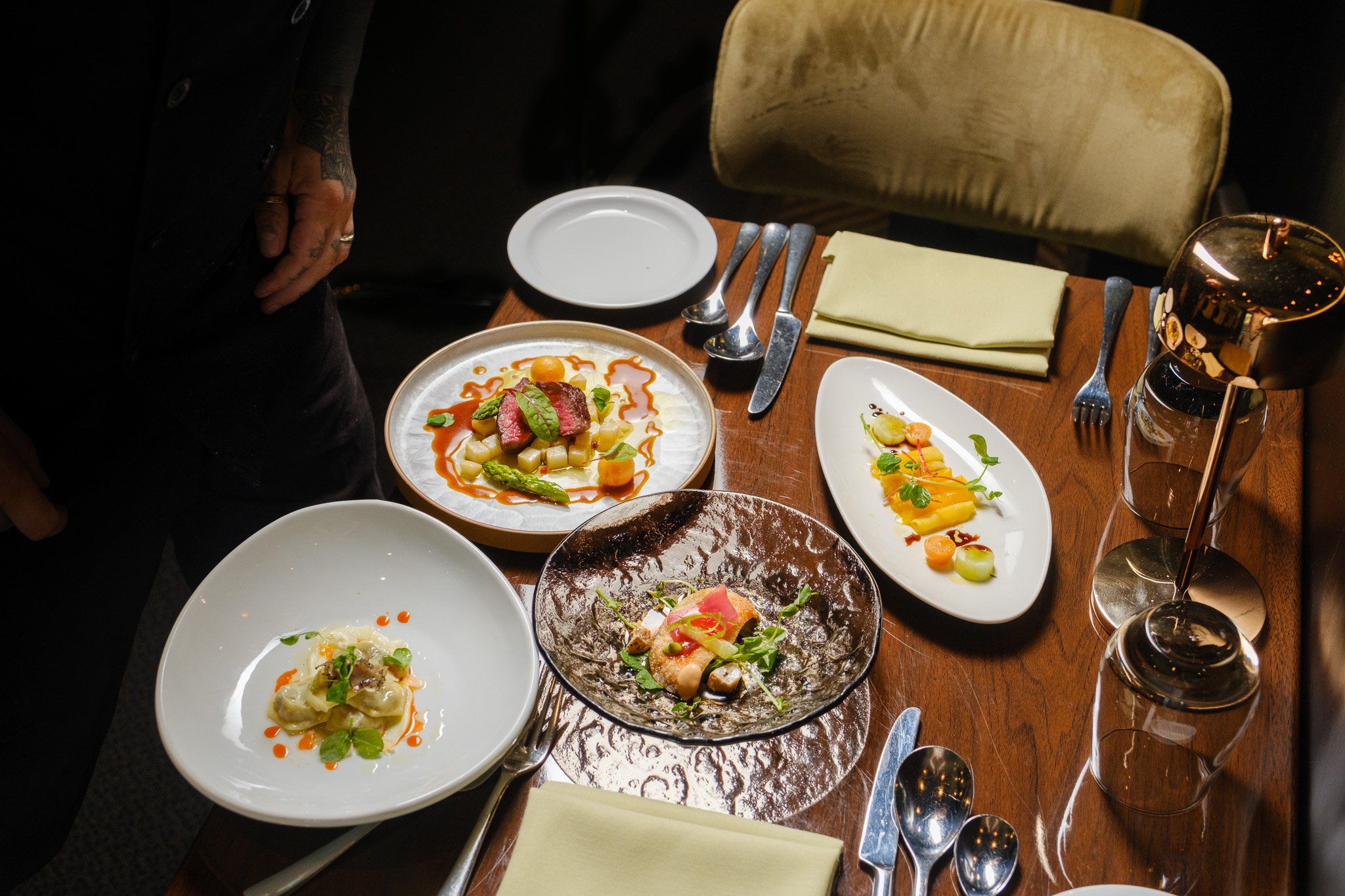
I’ve been following (and writing) about your career from Mint in Glens Falls to the War Room in Albany. You’re industry trained—what has that meant for you in terms of a broad culinary education?
It’s been an invaluable industry education. I started my cooking career as a line cook, never really intending to be a chef. I actually hated cooking for some time and resented being stuck in a kitchen. It changed when I took a job at Comfort Kitchen in 2014 and the owner, Rory Moran, changed the way I looked at food, from ingredients to preparation to cooking. He instilled confidence in me to be creative, and definitely suffered through some less-than-great food I tested in my time there, but he was always a gentleman, encouraging and a good friend!
From there, I took my first executive chef job at Cantina, which I admit ended in failure. It was a valuable lesson as I learned what it required to be a good chef, and I knew the journey would be long. My failure at Cantina was fuel for me to be the best I could and shortly after I took a line cook job at Next Door Kitchen & Bar, which was my first experience cooking in a higher-level, disciplined kitchen. Jeff Strom was a strict chef, talented and had high expectations of his cooks. I remember he’d throw out ingredients on my station mid-service if they were not fresh or prepared the right way. I watched as he refused to send out questionable plates, refiring a whole ticket rather than send out a bad dish. He set the benchmark of excellence for me that has only grown the more I learn. I run my line the same way; if it's not perfect, then it's not right.
Mint was the true test of what I had learned. It was my first Executive Chef job since Cantina. I ran my first dishes there and nearly all were well-received which built confidence and really felt validating as I realized that people liked the food I was making.
Joining The War Room in Albany definitely helped to get my name out there but the long work hours, and, honestly, my ego was deteriorating my relationship with my family, and I left in order to save that. The experience was absolutely a turning point in my career and the point when I began to focus on the food and the artistic building of a plate, rather than my own success. I took a much less stressful sous chef role at Osteria Danny in Saratoga which wasn’t much more demanding than a line cook and a much-needed break from the fast pace of cooking for celebrities and politicians at War Room. I stayed for nearly two years and used that time to build myself back up, read every cookbook, chef memoir and food philosophy book, building a foundation for my career, and left The Roosevelt Room before Danny sold the restaurant.
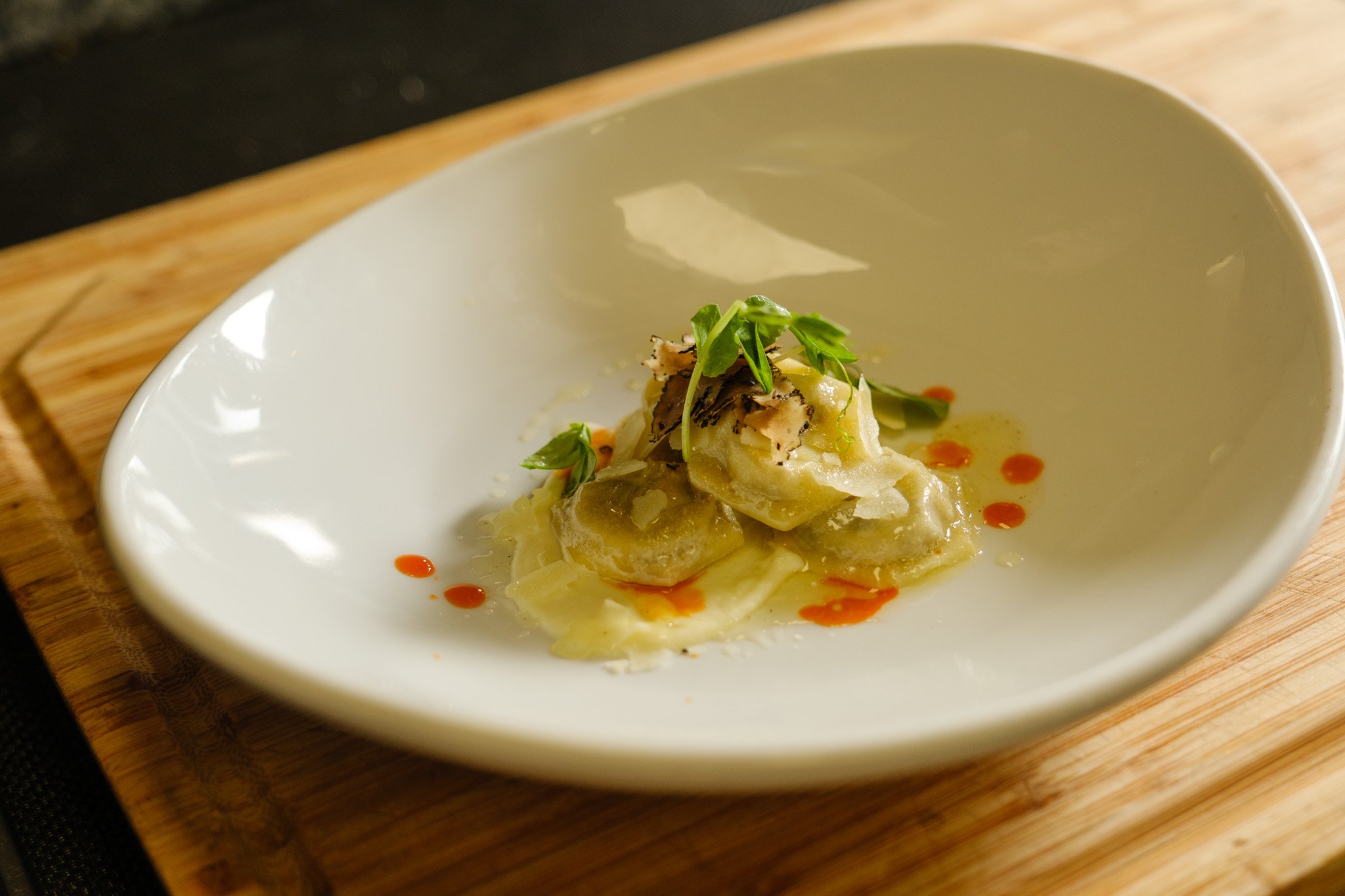
Earlier this year you staged at Per Se in New York City and at La Padrona in Boston where they offered you the sous position. Do you find you have a constant desire to push yourself to learn and grow?
Absolutely. Thirst for knowledge is what motivates me in almost every area of my life. I read relentlessly, I experiment with new ideas and techniques, and constantly ask “why?” This is why I chose to reach out to Per Se for a stage. Staging is an opportunity for a cook or chef to visit a high level restaurant and see how things are done, usually under the pretext of a job offer should you work and act according to the chef’s expectations. But many Michelin-recognized restaurants have observational stages giving chefs the chance to work in a legendary kitchen like El Bulli, Charlie Trotter’s, Le Bernadin… It’s quite common now, but it can be a challenge to secure one.
After reading Grant Achatz’s autobiography “Life on the Line,” I discovered he secured nearly every job and stage through handwritten letters. He worked for Thomas Keller at The French Laundry and since Per Se is a Thomas Keller restaurant, I also sent a letter detailing my experience, my use of some of Thomas Keller’s techniques in my own dishes, and humbly asked for a stage. A few weeks later, they granted me three days in their kitchen. All the commis chefs asked who I knew to get into Per Se and I said that I just wrote a letter. A smirk came across one of the veteran cooks’ faces as he told me that he also wrote a letter to get into Per Se. Apparently, the management respects a cook’s passion more when they take the time to sit and write and mail a letter!
But, you know, my stage was not as magical as I thought it would be. The cooks were not god-level chefs working with precision and perfection, or calm as Hindu cows, or older, wiser chefs from France, Italy and Sweden. They were regular regular kitchen workers with the same complaints, drama, skill set as every kitchen I’ve worked in. Some complained about the job and how they couldn't wait to leave, which made me realize there was nothing to fear when it came to Michelin starred restaurants. As industry workers, we all go through the same ups and downs no matter where we are, no matter the reputation the restaurant holds. It was reassuring to discover that there’s nothing separating what I can do and what they can do, so I’m capable of going above and beyond.
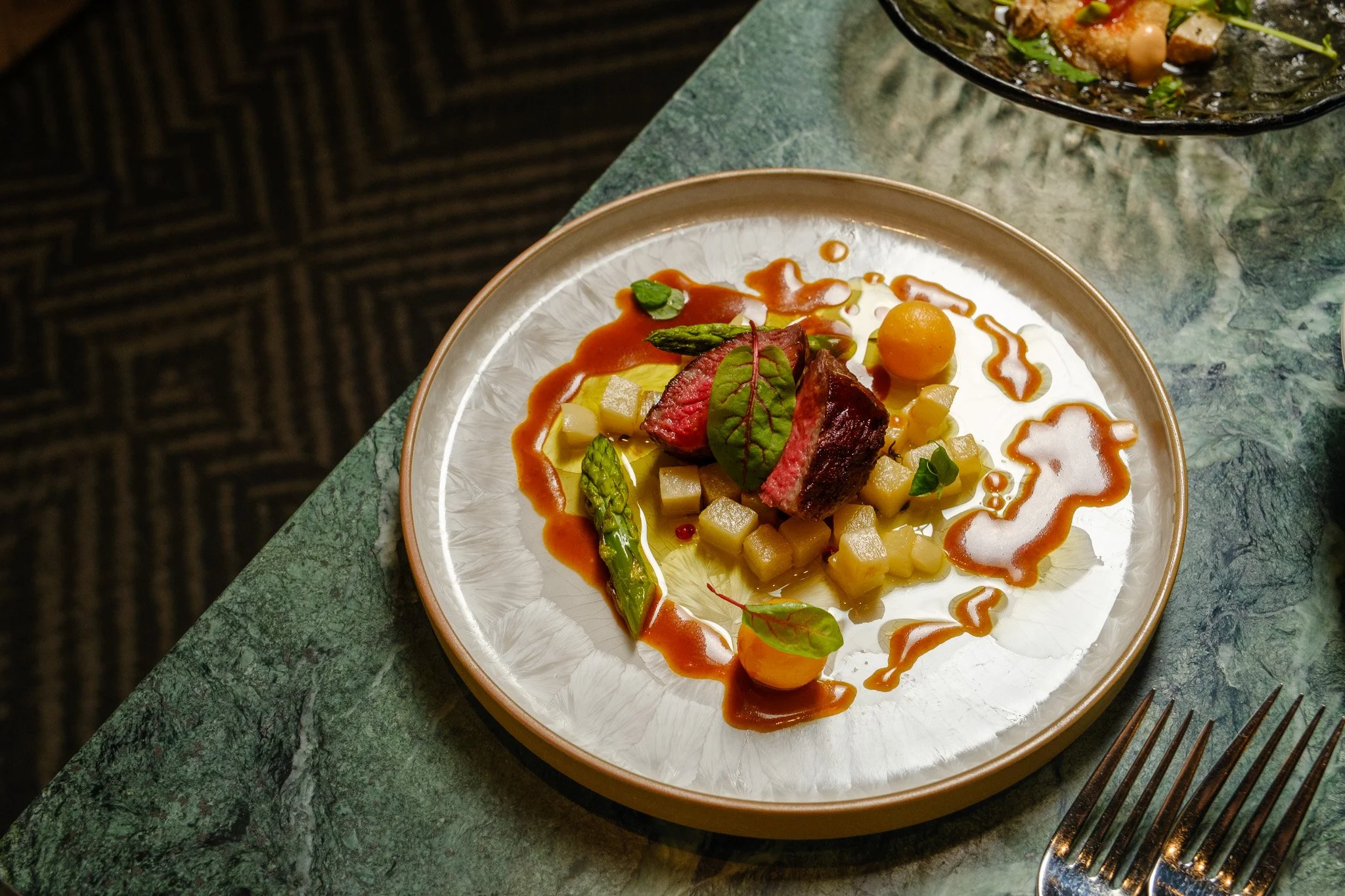
With all that reading, do you have a huge cookbook collection?
Yes, it’s massive with cookbooks, chef memoirs and books on food history/philosophy. The first fine dining cookbook I bought was NOPI by Yotam Ottolenghi & Ramael Scully. I found it in a used bookstore in Provincetown and I was drawn to the recipes and photographs. I was still at Next Door Kitchen at the time, but went to Mint soon after so my very first special was pulled from that cookbook! I still remember tasting the vichyssoise, having followed the recipe exactly. I was blown away and remember thinking, “Did I just level-up as a cook?”
After that I was hooked. I bought every relevant cookbook from classical French texts to nouvelle cuisine, molecular gastronomy, and the modern minimalist trend of focusing on quality ingredients and allowing the natural flavors to be the dish. That's the most important lesson I learned: If the flavor is there, the chef has little to do to perfect the dish. Nature is the real chef, my job is only to prepare the ingredients in the way they’re best represented.
The chef memoirs have helped me learn how great chefs carved their paths. Some I relate to, some not so much. Chef Curtis Duffy of Ever had a childhood nearly identical to my own and we even lived near one another. I found his story inspiring and proof that anybody can rise from nothing with hard work and commitment to their craft.
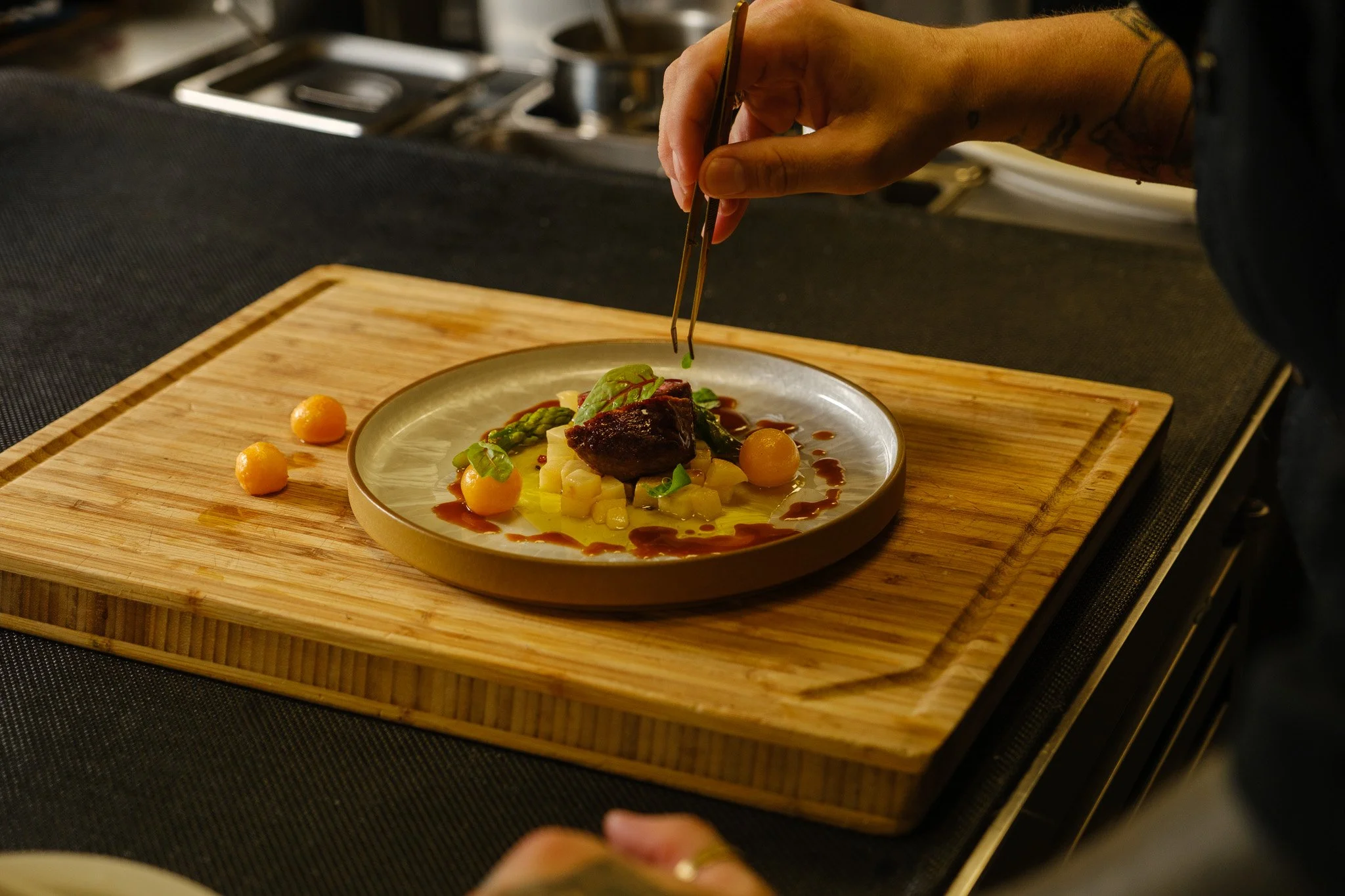
How would you describe the way you cook or your culinary style? Do you feel that’s what Chef Amarylis at La Padrona saw in you?
I do use cookbooks regularly for specials, although these days I rely on them more for inspiration. I may take one ingredient from a Grant Achatz dish and another from Jean-Louis Palladin and assemble it into my own creation. Maybe I have venison to use up, so I scan my cookbooks for venison recipes, compare dishes, recognize what works, and go from there. Sometimes I use them to see what pairs well, then build my own ingredients and ideas around that.
I definitely have a minimalist approach when it comes to cooking. I prefer vegetables over meat, as you can do so many different things with them. I can make a vegetable taste ten different ways with ten different textures. It's fascinating. I appreciate vivid colors and contrasts, empty spaces and few ingredients in a dish. I want to be constantly evolving. If I am doing the same dishes next year that I did this year, then I am doing something wrong. I’m in a perpetual state or refinement the more I learn, and I want my dishes to be a reflection of that evolution.
I don't exactly know that Chef Amarylis saw what she needed in my plates, but she saw that I possessed the skill to bring food to life; she told me my patience, talent and professionalism were what the restaurant required. She came so close to winning a Beard and a Star last year. I know what it’s like to push yourself harder and harder; I can only imagine what it must feel like to be at the cusp of everything you ever dreamed of and so close, but not quite close enough. I intend to be a solid foundation for her to continue her quest for excellence. I believe that's what she saw in me – the same hunger that’s in her.
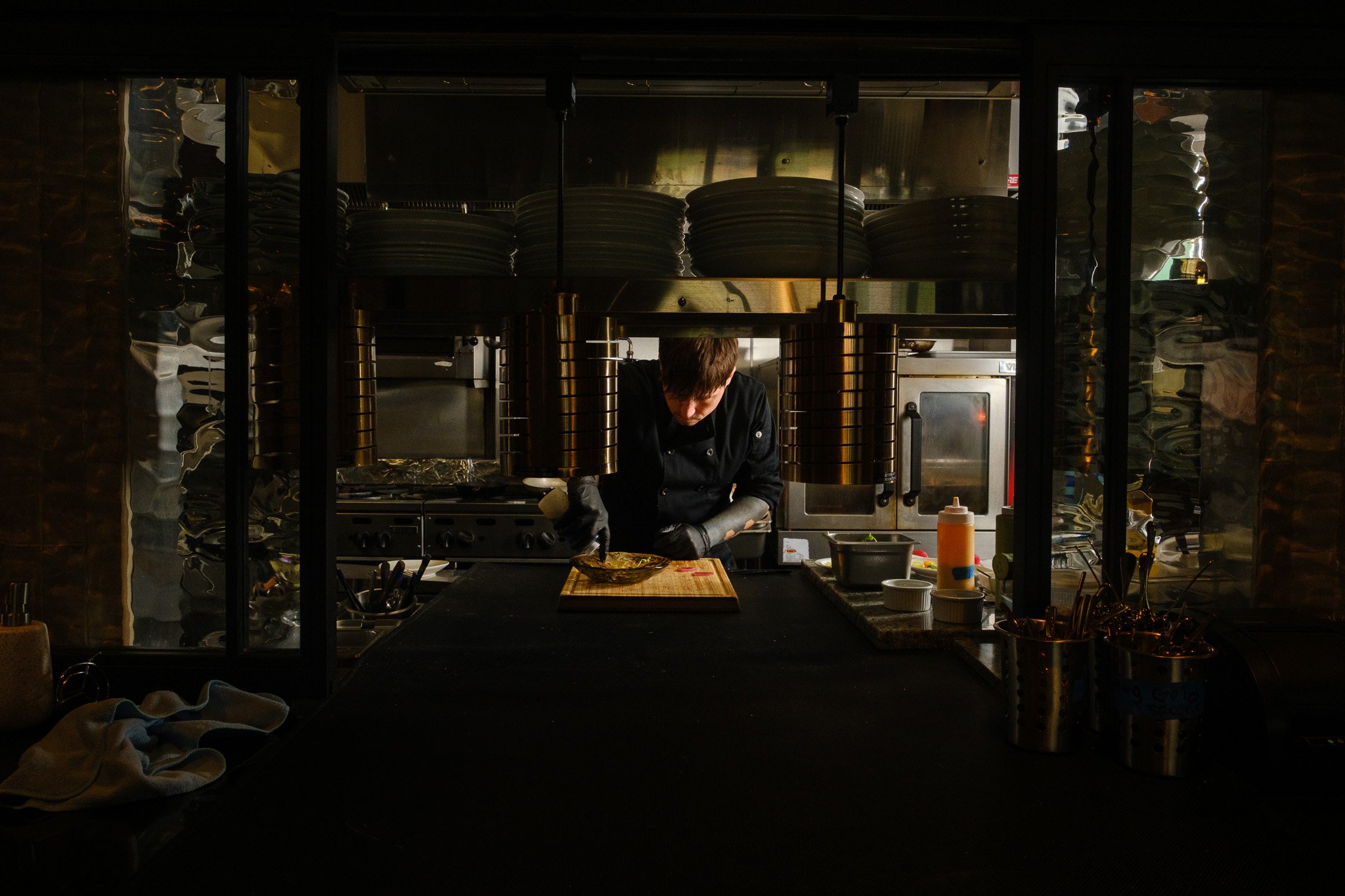
Your mom passed away when you were young and you moved around a lot with your father, a union electrician who was also originally a cook. What are your childhood memories of eating at home or dining out?
I moved with my father at age four after my mother passed. He remarried and his new wife, Jean, took on his three children and raised me as her own. They were both excellent cooks in their own ways. My father went to culinary school while Jean learned from her mother and grandmother. I remember my dad coming home from school and making pizza dough, pretzels, various sauces and tortillas. Every Friday night was pizza night, he would make pizza dough and my sisters and I made our own little pizzas. It wasn't all great though—he also made us pick cilantro and peel garlic! I hated it at the time, but now I appreciate my time as my dad’s commis chef.
Jean cooked homemade meals, classic mother comfort food. A lot of casseroles and meat-and- two-veg dinners. We lived in Greenfield on our landlord’s large estate in a small house next to their towering mansion. We were surrounded by farmland and forest so I did a lot of foraging as a kid. There was a raspberry patch alongside my house that I picked fresh berries from whenever I was hungry. To this day raspberry is the most consequential flavor I taste, instantly transporting me back to Greenfield and my childhood backyard.
We didn't have much money so we didn't go out to eat or to the movies or on vacation. On occasion my grandparents would take us all out to The Weathervane in Saratoga. But most of my childhood I was fed with homecooked, sometimes foraged, food. This was in the early 90s when many of my classmates bragged about having Pizza Hut or TV dinners or McDonald’s Happy Meals for dinner. I was always jealous, but in hindsight I see I had a more fortunate childhood than most of them.
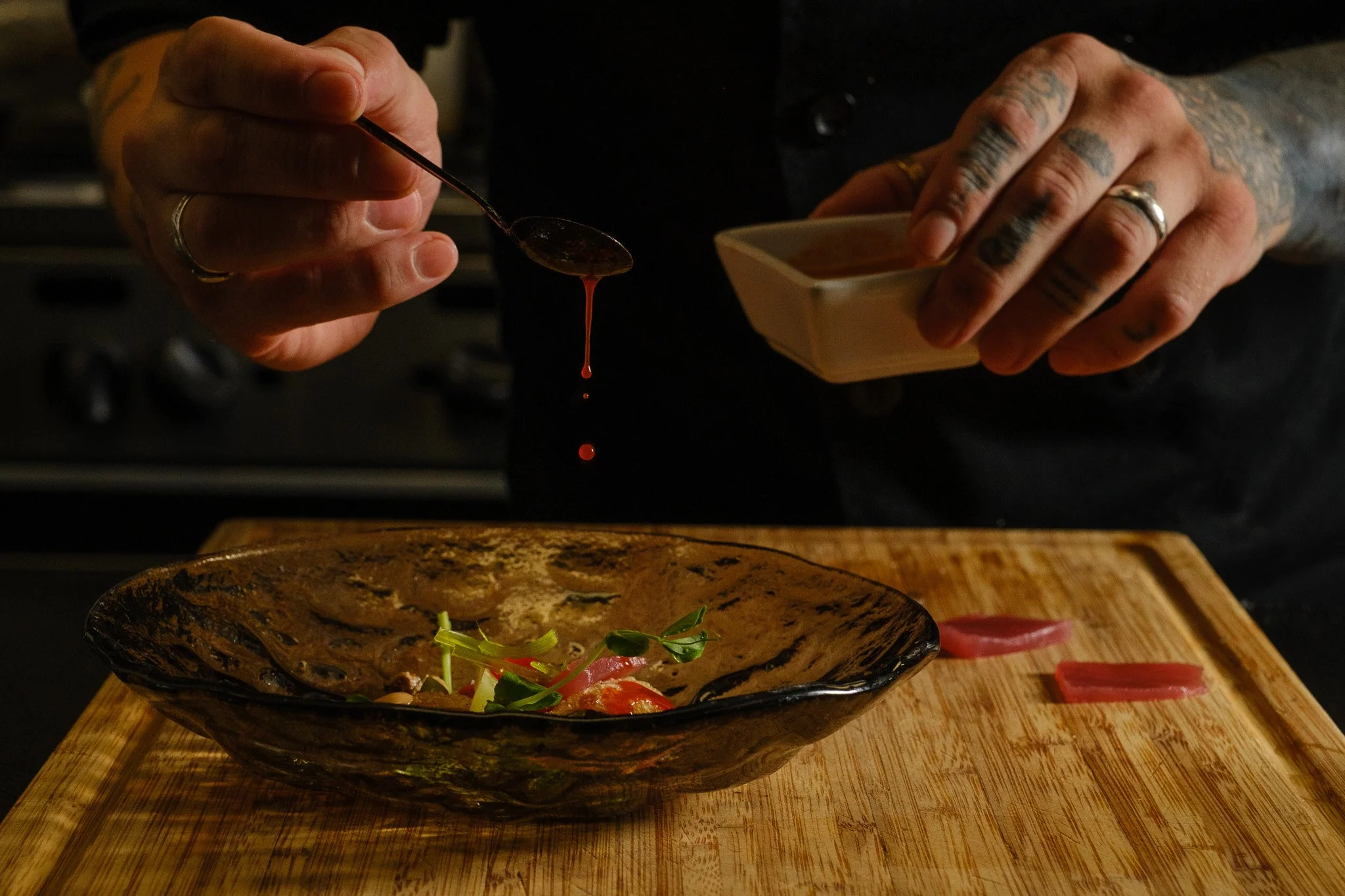
When we chatted, you described yourself as a musician, a writer, and a reader, all artistic pursuits. Is your culinary profession an extension of your creativity? Do you still have time for music and writing?
Cooking is absolutely an extension of my creativity. I mentioned that there was a time I hated cooking, but I eventually transformed how I saw my craft. I turned it into an expression of my inner artist. A plate of food can absolutely be a form of art. In fact, I cannot think of another art form that affects all the senses– taste, smell, sight, touch–and even hear the food in some cases. The ambience of the restaurant is the frame, the service is the intention behind the art, the food is the medium.
I haven’t played guitar in years; there was a time you couldn’t see me without a guitar in hand. I haven't written anything other than recipes and prep lists since COVID, but I have simply re-focused my energy towards another art form. My love of culture, science and art comes together in this industry, in my work. I feel lucky. I’m doing something that is my passion, hobby, and career all at once.
Your wife Jessica is the pastry chef at The Roosevelt Room. Do you chat about the specials and menu development? Is there any overlap in your culinary approach?
My wife is my best friend and knows me better than I probably know myself, so I seek her advice on nearly every decision, if she is available. She understands my palette and my intentions. She knows when to let me keep going and when to rope me in. I have greater faith in her advice and opinion than that of anybody else I know. Sure, this doesn't sound strange for a married couple, that's what they do, right? But I'm not always the easiest person to work with, nor am I easy to decipher in the kitchen. Sometimes we clash, other times we work in separate areas of the kitchen, but more often than not, I choose to work beside her. She is the only person who will say to me, “Hey, that’s over-salted” or “That plate has too much going on”. She is on the same level as me, in that we want to provide the best service possible to the guests.
We do collaborate, often actually. I always allow her the option to choose our tasting menu desserts. When the Albany Food & Wine Festival board members came to our restaurant (after I had been nominated, but not yet selected) she made a wonderful Delicata Squash & Banana Mousse for dessert. I have full faith in her and her skill. She has won more awards than I have, actually!
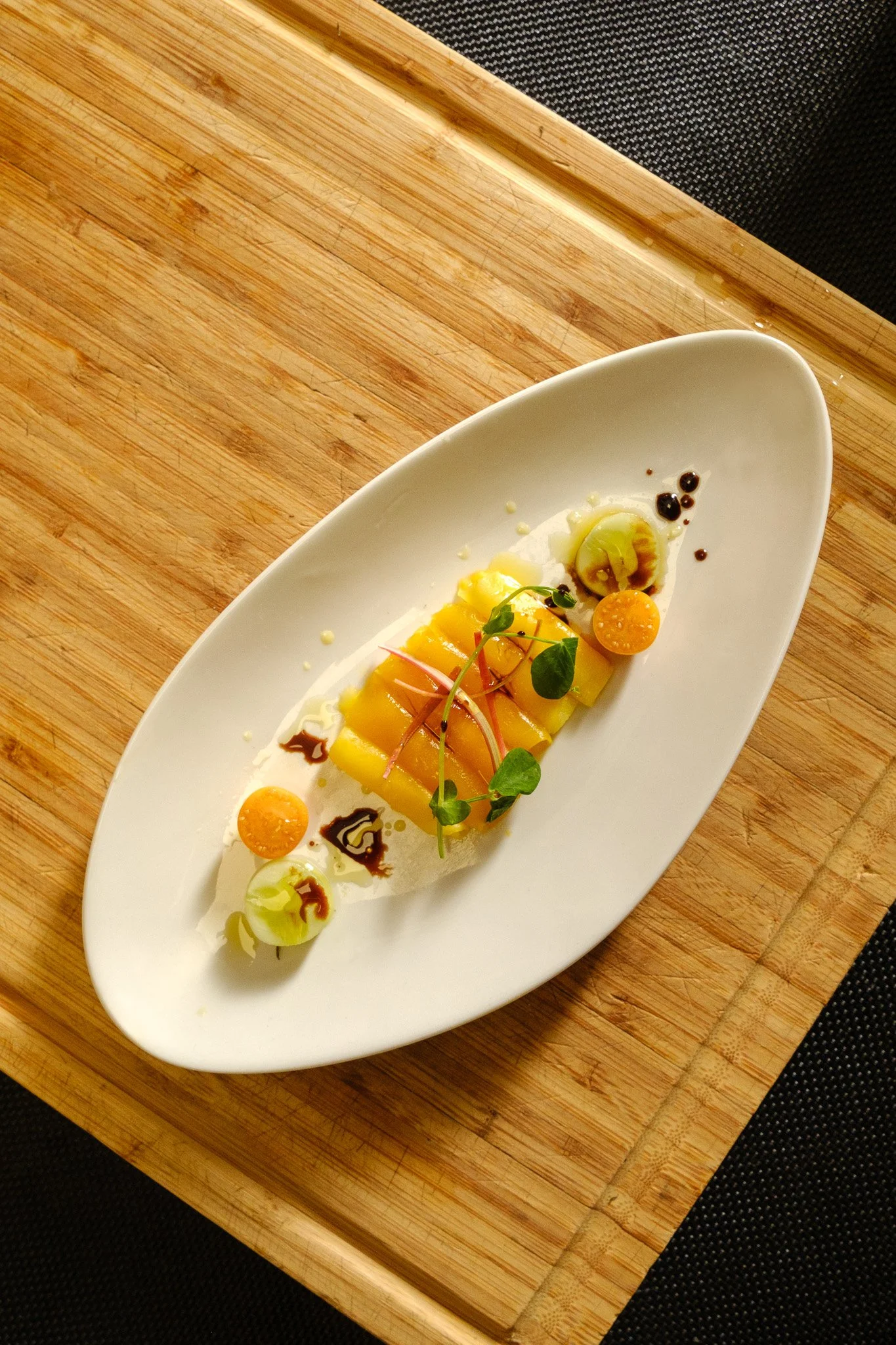
You have two teens in local schools. With your move to Boston, how will you manage the work/life balance?
It will be a challenge for everybody. We talked for a long time about it and I was hesitant to take the job at La Padrona. Jessica dismissed my unease and assured me that if I didn't go do what I wanted to do, I would never forgive myself. The thought of leaving them still hurts, but she’s right. This has been my dream and the opportunity has presented itself. Plus, the kids are older and don’t need us around as much... My son Patrick has been telling his classmates his dad is a famous chef ever since he was little, so this move is just confirmation for him! And Scarlett is counting down the days until Jessica joins me and the house becomes hers! So everybody is taking it well, all things considered. [Laughs]
Jess and I will make use of modern technology like TV-sharing apps and Facetime so that we can “hangout” even while we’re apart. The drive is also not terribly long, and we intend to travel to one another at least every other week. That said, my first 8 weeks at La Padrona will be intense training 6 days a week, 10 to 12 hours a day, so we’ll have minimal contact until the end of summer. It’ll be hard, but my wife possesses great strength and I, great determination. It’s not ideal, but we have faith in one another and we are committed to driving this dream forward. This is an opportunity I could not take without my wife’s unwavering support.
I frequently ask our industry tastemakers about their tattoos. Do any of yours have a backstory?
I have so many I wouldn’t know where to begin! And yes, each one represents a story or a time in my life. Funny enough, I always admired the scars on my hands and arms more than my ink. The story they tell is far more interesting. I nearly took a finger off once - twice actually. I have scars from stitches, I have scars from when I should’ve gotten stitches but didn’t, burns everywhere you look. Sort of connecting tattoos and the scars here, I have people ask me all the time if it bothers me that my tattoos have faded or scarred because of cuts and burns, but I don’t mind at all. I actually love the way they look. Together, the tattoos and scars tell the story of me like a journal or a map of my life.
But pertaining to my life as a chef, my most significant tattoos are on my left hand, specifically the large mandala. When I knew this was the life for me and I was going to plunge into it, for better or worse, I got this tattoo done to seal my fate as a cook, to be unhirable in any respectable profession! This was my oath to “the life.”
Can you tell us 3 of your favorite places for breakfast, lunch or dinner in the Capital Region or Hudson Valley?
For breakfast, I like very simple food. Comptons has always been one of my favorite breakfast spots. Incidentally, I earned my bones in a diner at age 16, so I enjoy the atmosphere of such places.
For lunch I’d go with Taqueria Guadalajara in Ballston Spa. Their food is the closest I have had to authentic Mexican food in this area, the portions are substantial, service is friendly, and ambience is fun and culturally significant. My mother was Mexican-American, and while she has not been around to teach me her culture, I have embraced it nonetheless, and I have taught its significance to my kids as well. Mexican food, to us, is more than Taco Tuesday, it’s a celebration of my mother’s ancestral homeland and, in a way, an homage to her.
Dinner, gotta go with Spice Malabar in Clifton Park. They have a large menu, excellent options for vegetarians, and it’s the best Indian food restaurant in the area, in my opinion. Their malai kofta is amazing.
Imagine your ideal day or night out. If you could go anywhere in the world with no limits on costs or reservations, where would you go and how would your day or night unfold?
That would be a tough one to answer, but I believe I would visit Peru. They have an amazing culinary scene, beaches, a desert, rainforest and mountains. Some of the world's best restaurants are in Lima, like Maido and Central, and a massive trove of unknown ingredients in the rainforest, which the great Chef Virgilio Martinez has based his cuisine around.
I would fly to Lima and dine at Central. Afterwards, I would go sandsurfing at the nearby Huacachina Oasis, then take a dune buggy to the great Vinicunca, the rainbow mountain. After that I would go to Cusco for sightseeing, more food, and visit Machu Picchu. I’d visit the rainforest with a guide, to see it with my own eyes, walk in the world’s greatest forest, and hopefully try some of the native plants and fish of the region. The perfect trip would end with a festive dinner with some of the indigenous tribes, to experience their preserved traditions, to eat what they eat and understand the importance of the forest to their culture. This would certainly take more than a day I think! [Laughs]
You’re starting at La Padrona on July 14. It’s literally next week. I imagine you have a lot of planning before the move, so how will you spend your next day off?
We do have a lot of planning, but we have an advantage of being able to take it slow since Jessica is staying local, there’s no need to hurriedly pack or sell. My sister, Kyrsten, and her wonderful husband Sim, live in Boston and they’re allowing me to stay with them until I find the right housing, so I am not going in blind, thankfully. I have a support system in place. My sister and I are very close; I gave her away at her wedding and she officiated at my own wedding! I’m very fortunate.
Amazing. Thanks for talking with us! Wishing you all the best in your move to La Padrona. We’ll keep tabs on you there and hope to visit too!