
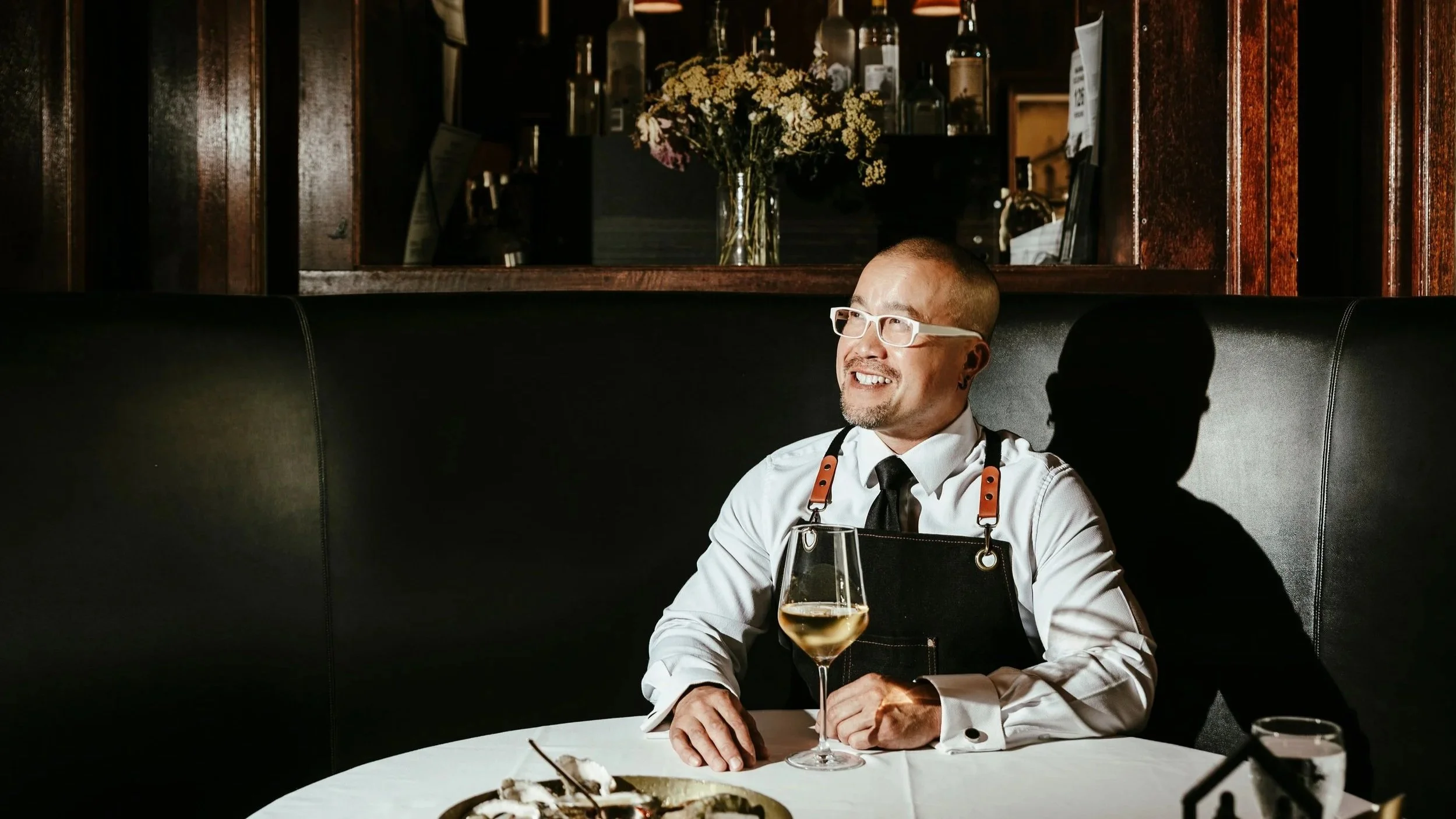
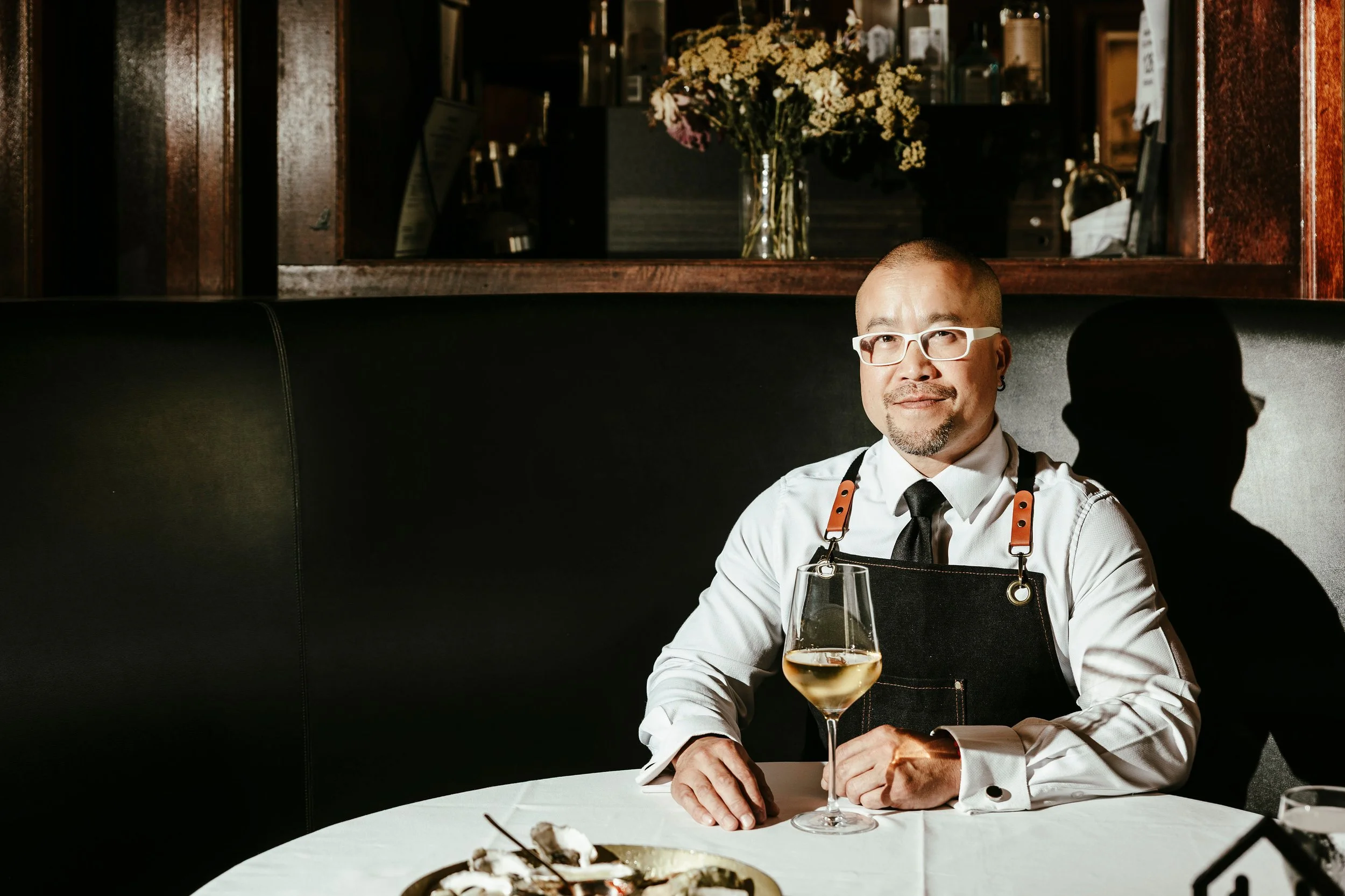
MEET QUANG TRAN, HOSPITALITY VETERAN, GM, SERVER + RESTAURATEUR
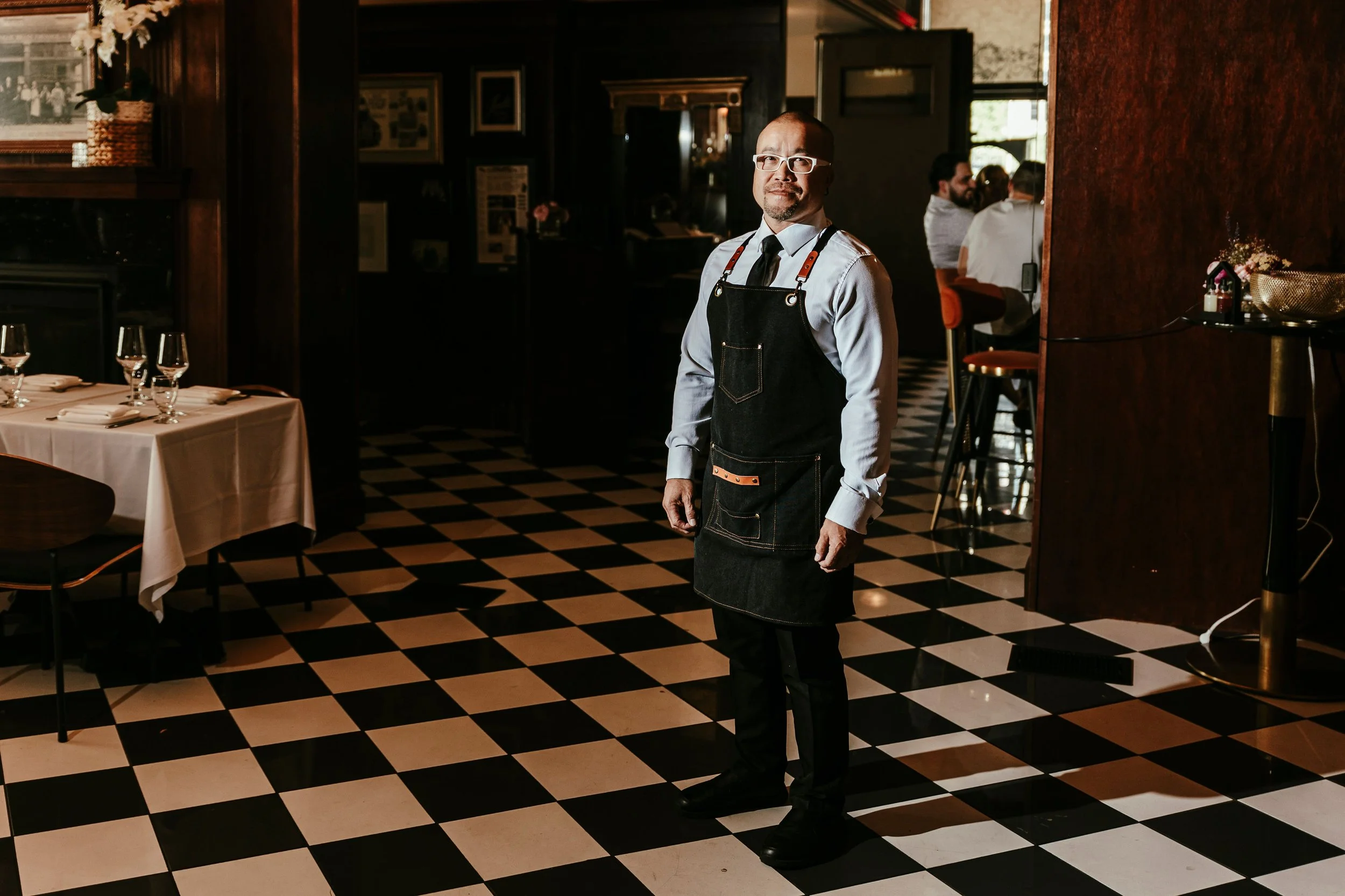
Hospitality veteran Quang Tran talks service, Michelin stars, fatherhood + the good, bad + ugly of a career in the trenches.
Interview: Susie Davidson Powell
Art direction: Susie Davidson Powell
Photos: KDO Photo/The Dishing
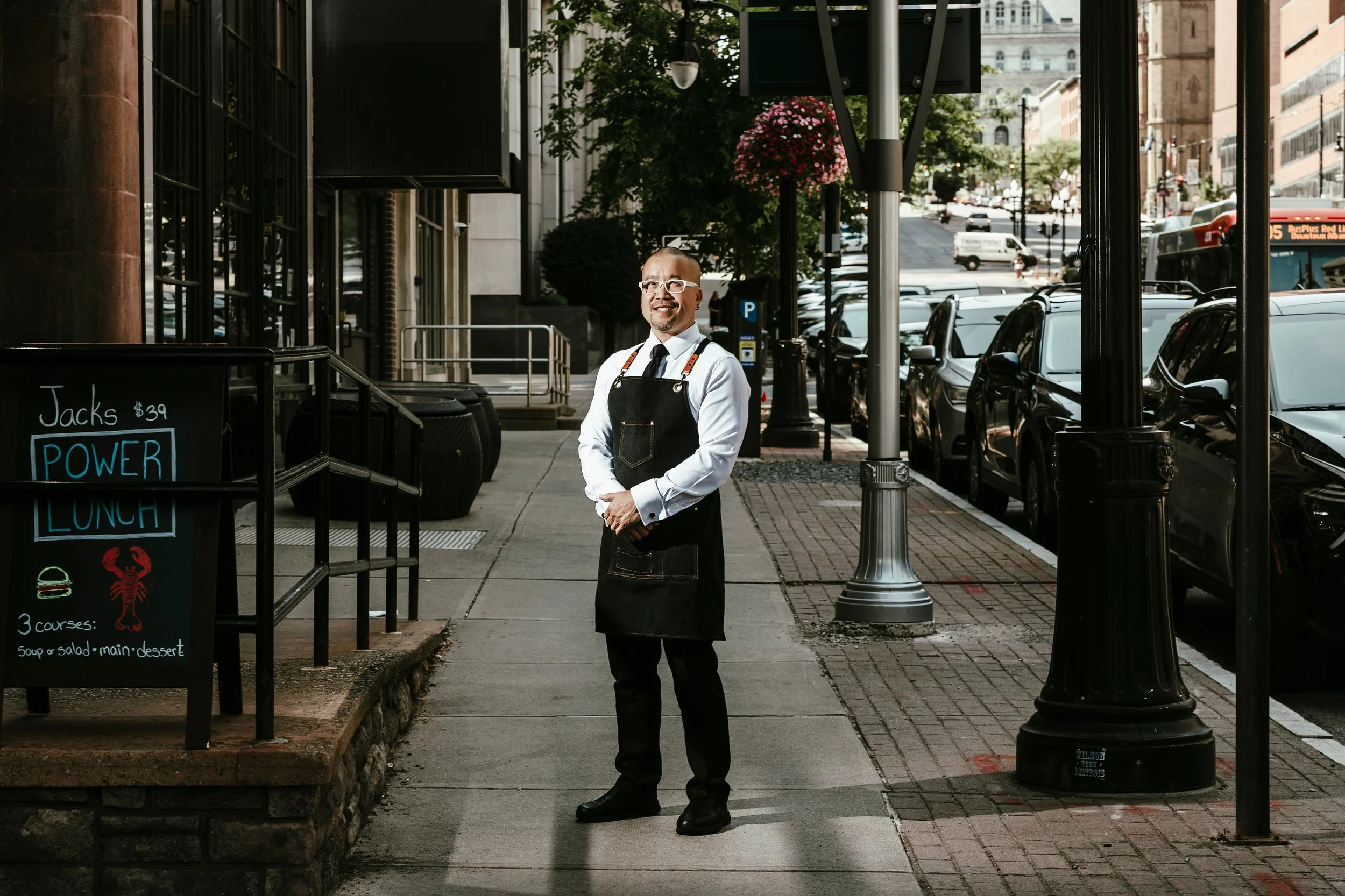
Shoot location: Jack’s Oyster House, Albany, N.Y.
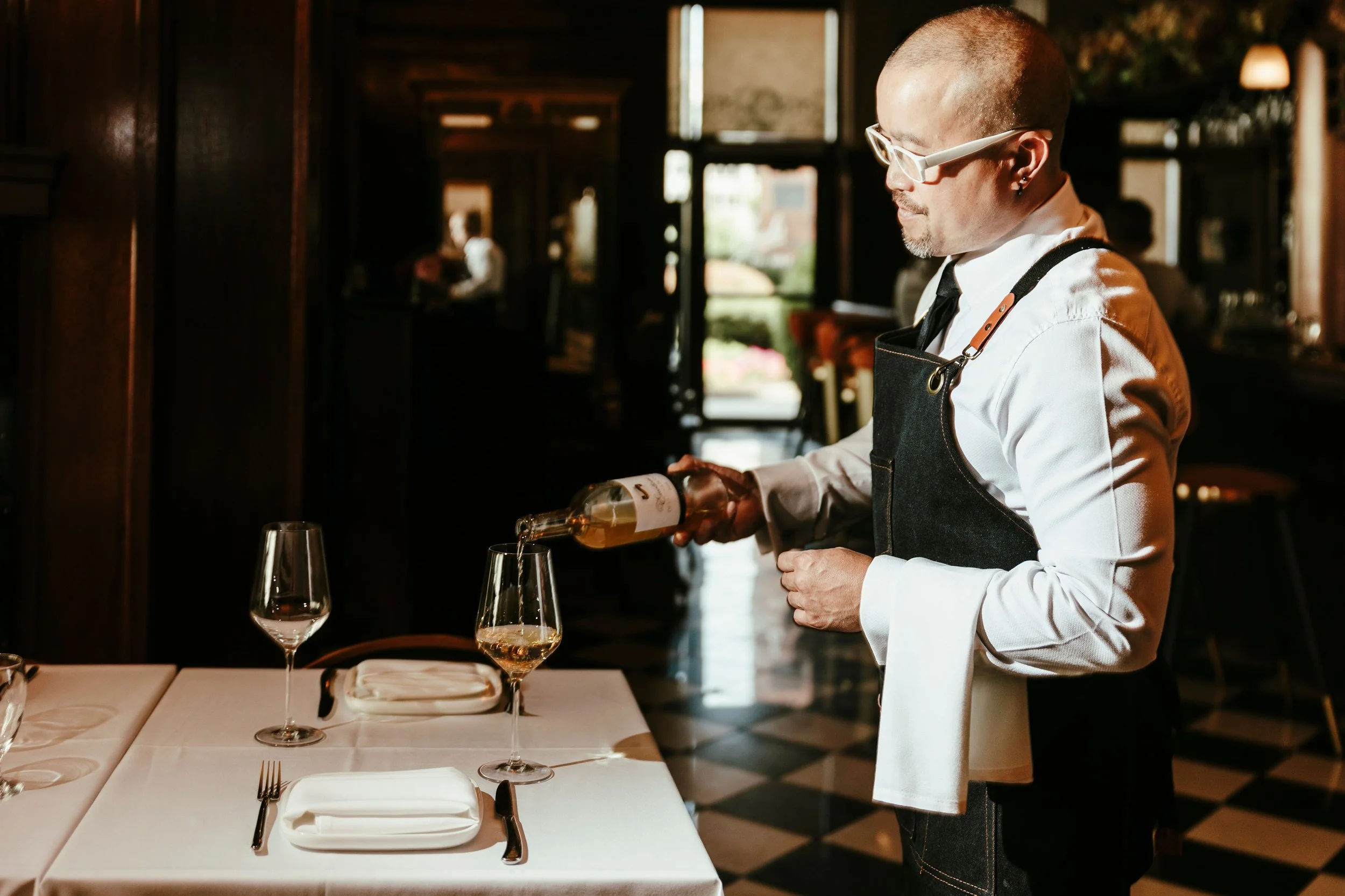
Tastemaker: Quang Tran, veteran server, former GM, and restaurateur
Current Restaurant: Osteria Danny, Saratoga Springs
Hometown: Oxnard, CA
Current city: Troy, NY
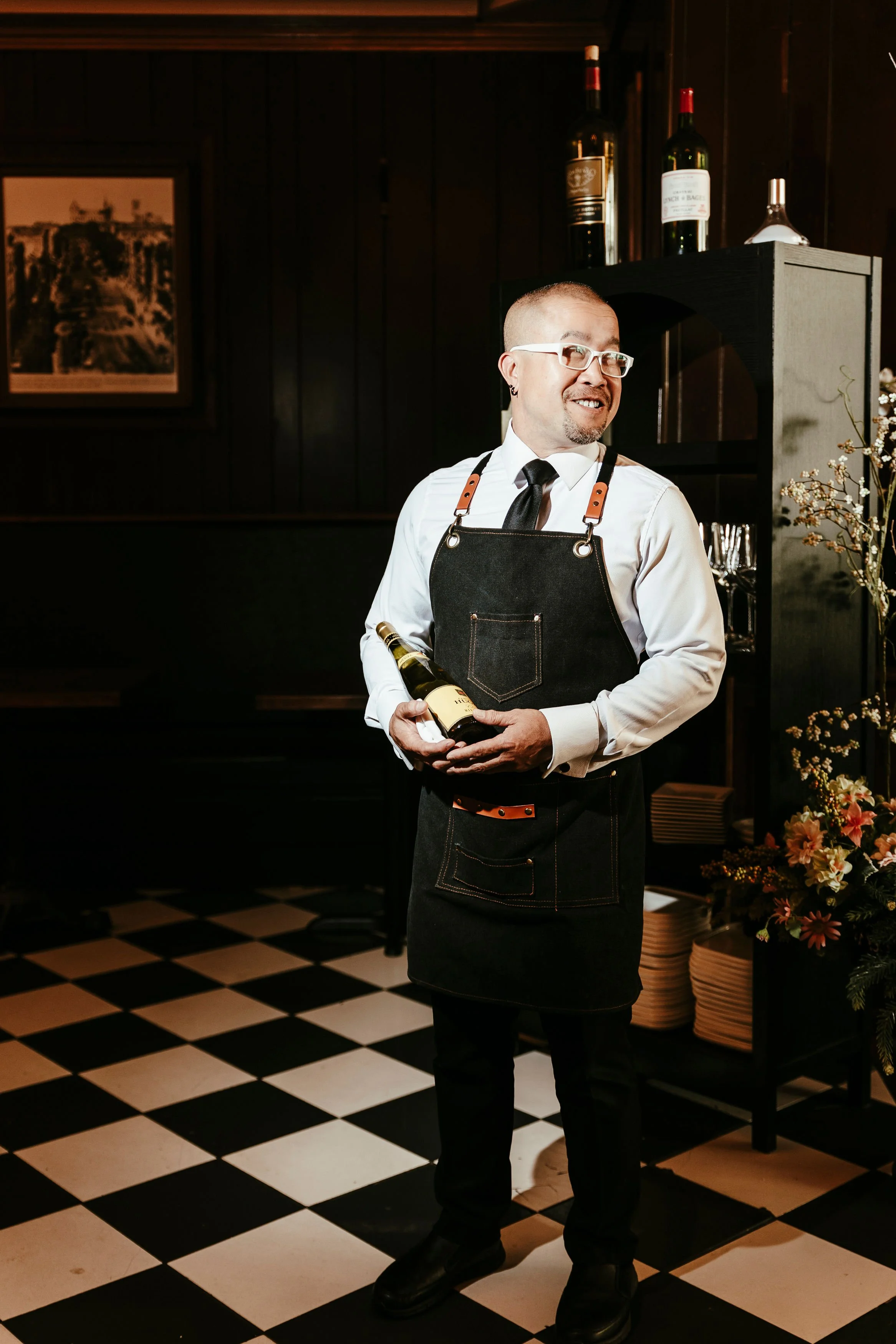
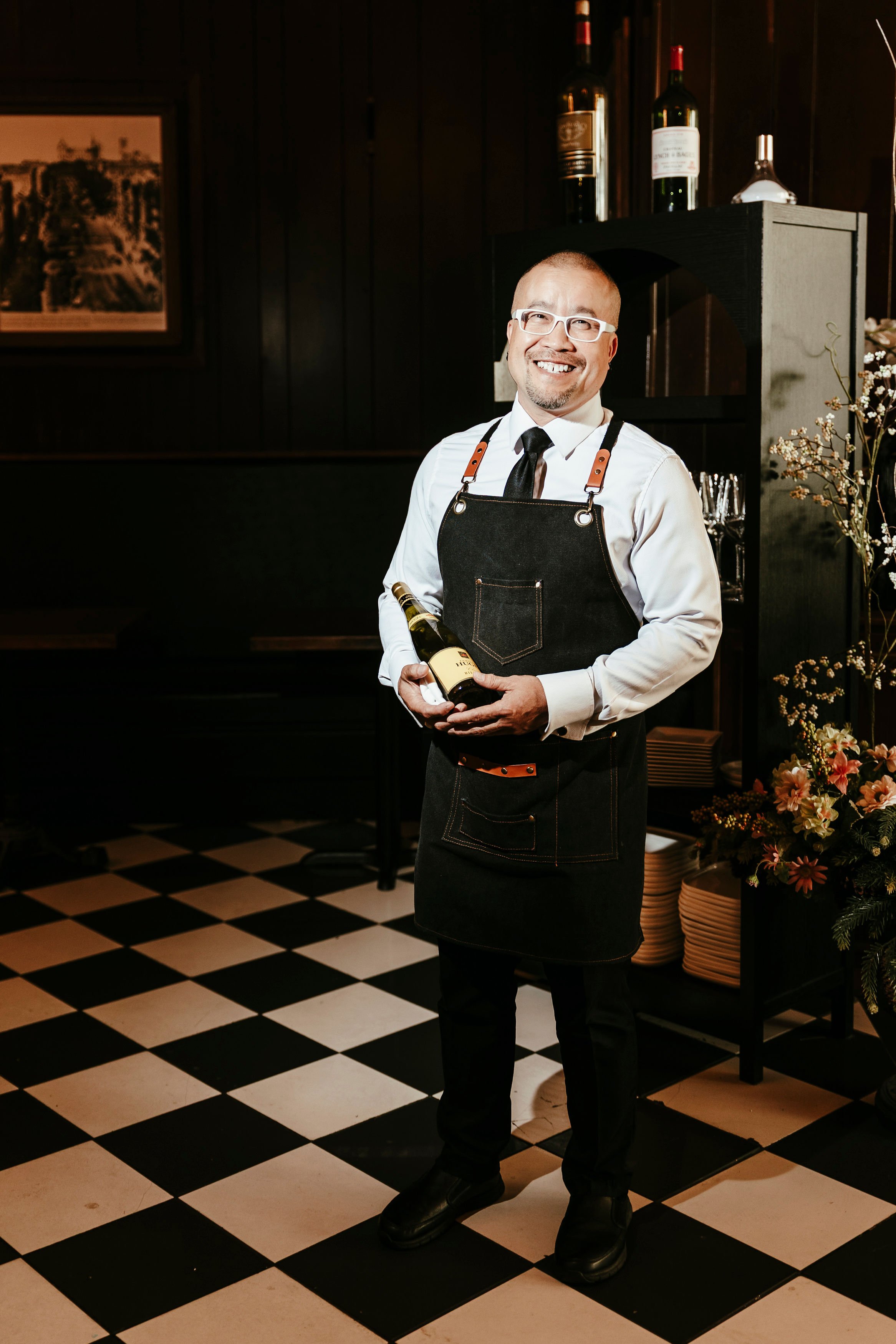
Personal style: Edgy elegance, anchored by my trademark white glasses! I’m almost 100% Old Navy, lol. I couldn’t care less about fashion, and Old Navy is neutral, affordable, and easy. I only really care about clothes when I’m dressing up. For suits, I go to Mark Thomas Men’s Apparel with Kerry Fagan or Britches of Troy with Markus Blaque.
Listening to: As for bands, I’m stuck in the ’80s. I usually set Pandora to the ’80s Party station and let it play throughout the day. For a more current track, I love “Go” by The Chemical Brothers. It’s usually the first song I play on my way to work. It gets me going and sets the tone for the entire shift.
Favorite spirit: Whiskey
Favorite classic cocktail: Stirred gin martini with a whisper of olive juice and bleu cheese olives.
Favorite bar or venue ever: McGeary’s in Albany
Biggest cocktail influence: Mexico City’s cocktail scene. The drinks I had there were creative, vibrant, and unexpected, while still being beautifully balanced. They completely changed the way I think about cocktails.
Drink trend that should end: Cocktails with too many ingredients and inedible garnishes.
The Dishing talks with tastemakers in the hospitality industry + trailblazers at the intersection of food, culture + art. Today we’re with talking with Quang Tran, a bi-coastal veteran of the hospitality industry, former restaurateur, GM + proud father of two boys, about Michelin stars, pandemic pivots and why service is king.
Hi, Quang! Thanks for talking with me today and also thank you for being part of our industry advisory committee. Let me first ask: What does hospitality mean to you?
To me, hospitality is treating every guest as if they were walking into my home. It’s a warm fuzzy feeling you’re able to provide by pampering people—not in an over-the-top way, but through dozens of subtle gestures that quietly say, “I care.” It’s remembering a guest’s favorite drink, noticing when they need something before they ask, pulling out a chair, or simply making someone feel seen. None of those things are remarkable on their own, but together they create an experience where people feel genuinely cared for.
Danny Meyer said in his book Setting the Table, “Pretend everyone has a sign around their neck that says, ‘Make me feel special.’” That one line resonated with me so deeply that I’ve carried it with me throughout my entire career. It’s a simple philosophy, but if you approach every interaction that way, people remember how you made them feel long after they’ve forgotten what they ordered. At the end of the day, I want every guest to leave feeling warm, valued, and better than when they walked in.
You were born in Vietnam and grew up in California. What are some of your childhood memories of food?
Some of my earliest memories are of food bringing people together. My mom would spend hours making traditional Vietnamese dishes from scratch and every meal was about family. I remember our house being filled with relatives and all of my uncles gathering around the table to nhậu—a Vietnamese tradition of sharing food, drinks, conversation, and laughter. As the evening went on, everyone would get a little tipsy, put their arms around each other, someone would grab a guitar, and they’d all sing together. I can still remember how happy and safe I felt watching all of it unfold. That was my happy place.
Looking back, I realize that wasn’t just dinner; it was connection. It was love. It was hospitality in its purest form. Those evenings taught me that food has an incredible ability to bring people together and create memories that last a lifetime. That’s something I’ve carried with me throughout my career and something I’ve always hoped to recreate for others.
In California, you studied architecture at Berkeley before entering the hospitality industry, and I know you worked at Michelin starred restaurants. What was your path into the industry and how come it won out as your career path?
Yes, I originally studied architecture at UC Berkeley, and I think that background shaped the way I approach hospitality more than people might expect. Architecture taught me to think about detail, flow, balance, and how people experience a space. While I was in school, I started working in restaurants, including Skates On The Bay, initially as a way to support myself, but I fell in love with the energy of the dining room, the teamwork, and the immediate connection you can create with people. I started as a busboy and worked my way up through nearly every position in the restaurant. I remember thinking, “Man, I wish I could spend my whole life in this industry.” And in the 2000s, I made my way into the San Francisco dining scene.
I landed a job as a food runner at Aqua, which was one of the hottest restaurants at the time, and worked my way up to dining room captain. Aqua earned two Michelin stars when the guide made its San Francisco debut in 2006. After four years, I joined Quince at its original location when it held one Michelin star. The restaurant later relocated to larger space where it earned a second Michelin star and I led the training of the front-of-house team as senior captain. It shaped the disciplined style of service I still use today. Quince continued to grow and currently holds three Michelin stars.
Flash forward 28 years, and here I am making a name for myself in the Capital Region. I honestly love what I do.
You met your former wife–a Capital Region native–in California, and moved to Malden Bridge in Columbia County for a couple of years so she could be closer to family. You worked at Fish & Game which, at the time, was one of the more exciting local restaurants. How did your fine dining experience fit there? What brought you to Peck’s Arcade in Troy?
Fish & Game was the first restaurant I had worked in outside that Michelin échelon in years, and I loved discovering how transferable that training was. The restaurant was more casual but could still apply the same attention to detail and level of care, which helped me stand out. But because Fish & Game was only open three days a week in the winter, I needed additional work and a friend suggested I work at Lucas Confectionery in Troy. I interviewed with co-owner Heather Lavine who suggested I join the opening team at Peck’s Arcade instead. Peck’s put me on the map in the Capital Region and completely redefined fine dining for me. In San Francisco, I had always been expected to maintain a very classic appearance; at Peck’s, co-owner Vic Christopher told me to just be myself. I grew a goatee, brought back earrings I hadn’t worn since high school, and traded my black frames for white ones that have become my trademark! It helped me realize that great service was not about suits, white linens, or fitting a certain image; it was about being yourself and making people feel genuinely cared for.
You made a pretty brave pivot in 2019 when you opened Quang’s Bistro in Troy. What was the inspiration to open your own place + how did the pandemic impact your business just over a year later?
After four years at Peck’s Arcade, and with a lot of encouragement from Vic Christopher, I opened Quang’s Vietnamese Bistro in 2019. When I first moved here, one of the first things I asked was where I could get a good bowl of pho! Everyone sent me to Albany, and I remember thinking, “Are you serious? I have to drive 20 minutes for pho?!” In California, Vietnamese restaurants were everywhere, so I couldn’t understand why Troy didn’t have one. The idea stayed in the back of my mind for years and Vic encouraged me to be the one to open it. I asked if he was worried about losing one of his strongest servers, and he said, “Quang, it’s about the bigger picture. Troy needs you!” That really stayed with me. He ended up chauffeuring me around town to look at vacant locations. Eventually, Jinah Kim, owner of Sunhee’s Kitchen and Vic’s girlfriend at the time, offered me the opportunity to open my restaurant in the back of her convenience store. It wasn’t exactly what I had envisioned, but it felt like the opportunity the universe was putting in front of me, so I took the leap.
My vision was Vietnamese street food through a fine-dining lens with thoughtful presentation, high energy, and attentive service. The restaurant quickly became a hit and won Best New Business in Troy. When the pandemic hit, I lost my staff, indoor dining disappeared, and I had to turn the restaurant into a one-man show. I took the orders, cooked the food, packaged it, and eventually welcomed back dine-in guests one table at a time. It was exhausting, especially as a single father, but closing was never an option.
You have two boys + you are this amazing dad in giving them incredible culinary experiences. Why is that so central to your relationship?
Food is one of the main ways I express love, and I want my boys to experience the culinary world the way I do. I never wanted them to be the kind of picky eaters who go to a restaurant and only order chicken fingers or macaroni and cheese, so I exposed them to everything from the time they were little. Now they want to know whether the restaurant has caviar or Wagyu so taking them out can cost more than taking someone on a date!
I want them to understand the difference between eating and dining. I want them to appreciate technique, timing, presentation, culture, and the care behind a meal. I do not cook professionally anymore, but I get to express that part of myself through them. I never half-ass a meal at home. I got that from my mother. In Vietnamese culture, food is love. My parents never said, “I love you,” but they always asked whether I was hungry or if I had eaten. It took me years to understand that those questions meant the same thing. That’s what cooking is for me. When I prepare something with real care, I am saying, “You matter to me.”
My biggest flex is seeing that same instinct growing in my children. When Hudson sleeps over at a friend’s house, he’ll come home and say, “Dad, I showed them how real scrambled eggs are made.” Watching my boys care about what they serve and how they make people feel is probably my proudest accomplishment.
You’ve worked at several area restaurants from Fish & Game, Peck’s Arcade and Sea Smoke to your current dual positions at Osteria Danny in Saratoga and Jack’s Oyster House in Albany. At this point, you are arguably one of the most recognizable veteran servers. What’s important for you in working with a team? Do you find yourself trying to teach the ways of Aqua and Quince?!
What matters most to me when working with a team is having the opportunity to elevate the people around me without making them feel intimidated. I came up in Aqua and Quince where the standards were incredibly high, and I carry those lessons with me. I never force that style on anyone, but I refuse to compromise my own standards. I have always felt a little caught between two worlds: In Michelin-level restaurants, I was sometimes considered too casual, too edgy, or too playful. In the Capital Region, I can come across as too structured or too polished. Over time, I learned to make that contrast part of my identity. People know that when I join a team, I bring precision, elegance, and discipline, but also warmth, humor, and approachability.
As the opening GM at Sea Smoke, I had the authority to help set the culture, and I tried to lead very differently from some of the intimidating managers I worked under. I wanted expectations to be high, but the environment to remain supportive. I joke around a lot and try to make work fun, but once service begins, I am completely serious about execution. My hope is that working beside me inspires people to raise their level, take pride in the profession, and see hospitality as more than just a way to make money. The best teams are not built through fear; they are built when people feel supported, challenged, and proud of what they’re creating together.
I want to ask you about the importance of balance in your work/personal life. I remember at Quang’s Bistro you would close to go to the gym each day or close if your boys had school events. And you left your GM role at Sea Smoke to be a server again. Why are you so careful about protecting your time + how has it been important to your career decisions?
Work-life balance in this industry does not happen by accident. You have to protect it. Restaurants can consume every part of your life if you let them, so my physical and mental health, and my children, have always been non-negotiable. When I ran Quang’s Bistro, I closed from 2 to 5 p.m. each day so I could go to the gym, take a short nap, and return refreshed for dinner service. I also closed for my sons’ school events and soccer games, even when other business owners reminded me how much money I was giving up. I would simply put a sign on the door that said, “Closed to attend my son’s soccer game.” I never regretted it. My parents were hardworking immigrants doing everything they could to build a life here, and I will always respect that, but they were rarely able to attend my school events, and that left an emptiness I never wanted my own children to feel. I made a promise to be present, whether that meant attending every presentation, standing on the sidelines, or being the loudest parent in the crowd.
That same clarity influenced my decision to leave management and return to serving. A title means very little to me if the cost is my health or my relationship with my children. I want to be remembered as a father first and a hospitality professional second. My boys will never be placed on the back burner for a job.
The pandemic had a huge impact on restaurants and the entire hospitality workforce. What are your thoughts on service in the industry today?
The pandemic changed the hospitality workforce dramatically. A lot of seasoned professionals left the industry and many restaurants are now staffed by younger employees who may have enthusiasm but little formal training. The problem is not their age. The problem is that too many operators expect them to succeed without giving them the structure, mentorship, and standards they need. What I see most often is inexperienced staff being managed by inexperienced managers. Too many restaurants are satisfied with simply being busy and profitable, but revenue alone does not mean the operation is excellent. Restaurants try to save money by promoting too quickly or avoiding the cost of seasoned leadership and that shortcut usually shows up in the guest experience. Training has become an afterthought, when it should be an ongoing investment.
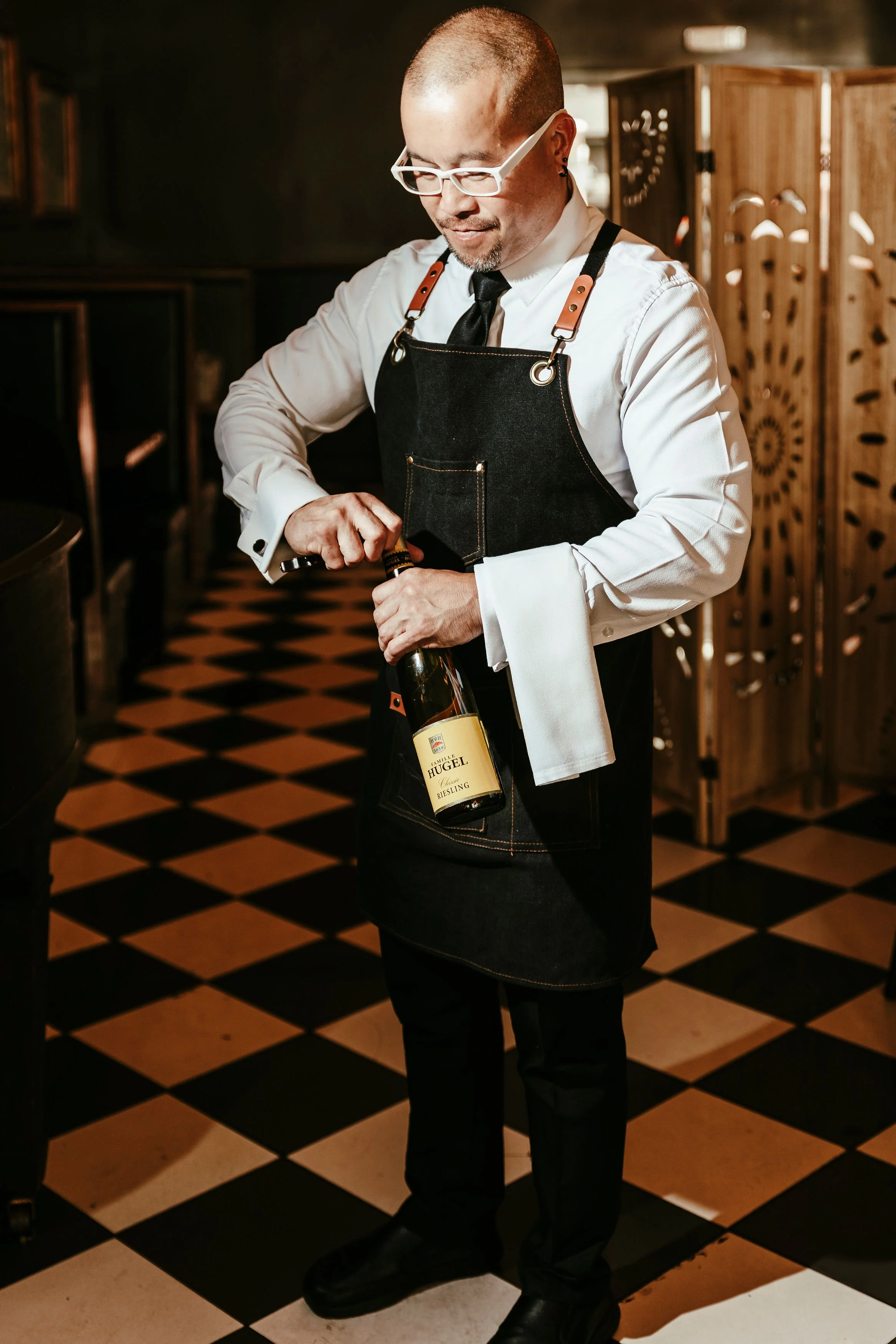
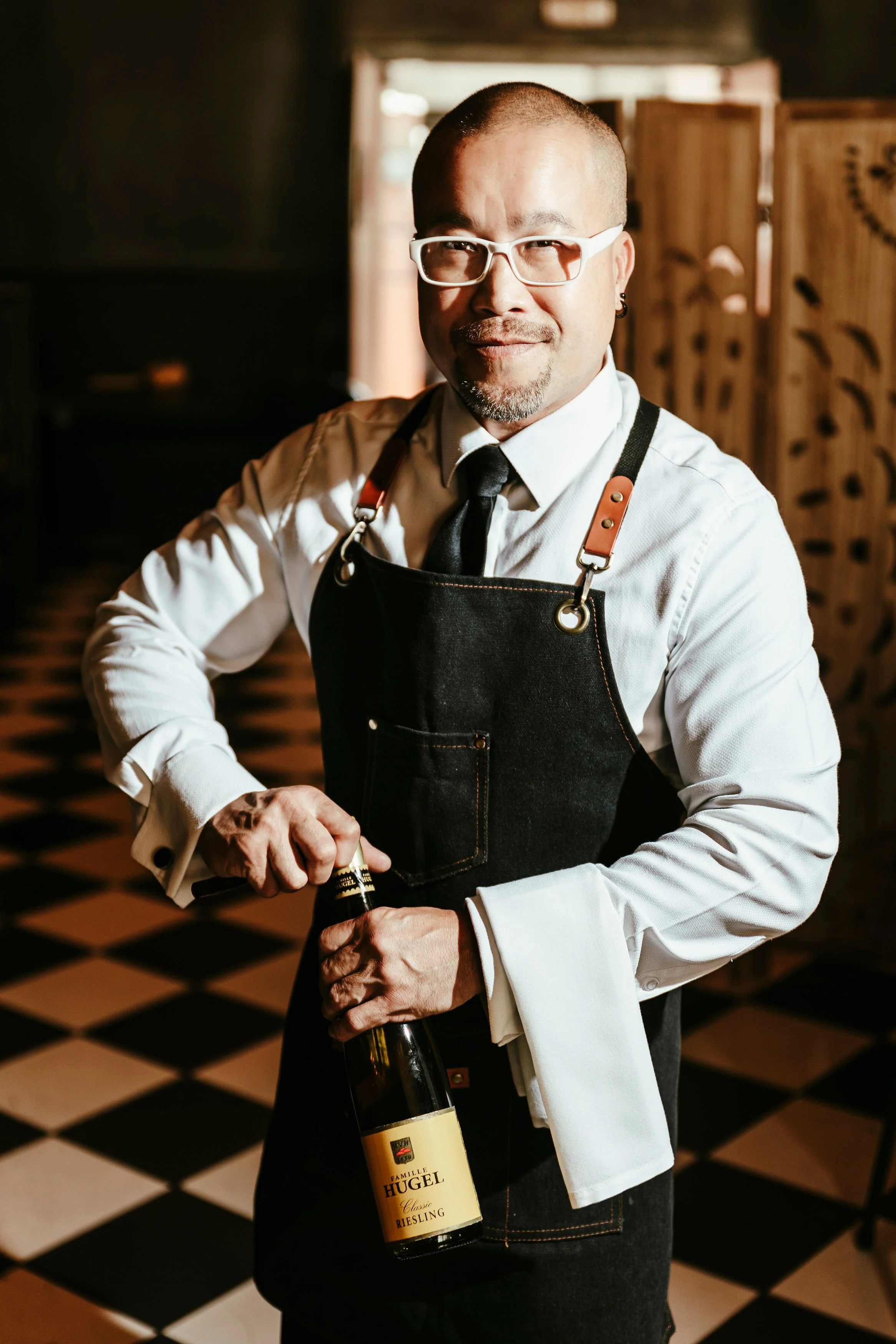
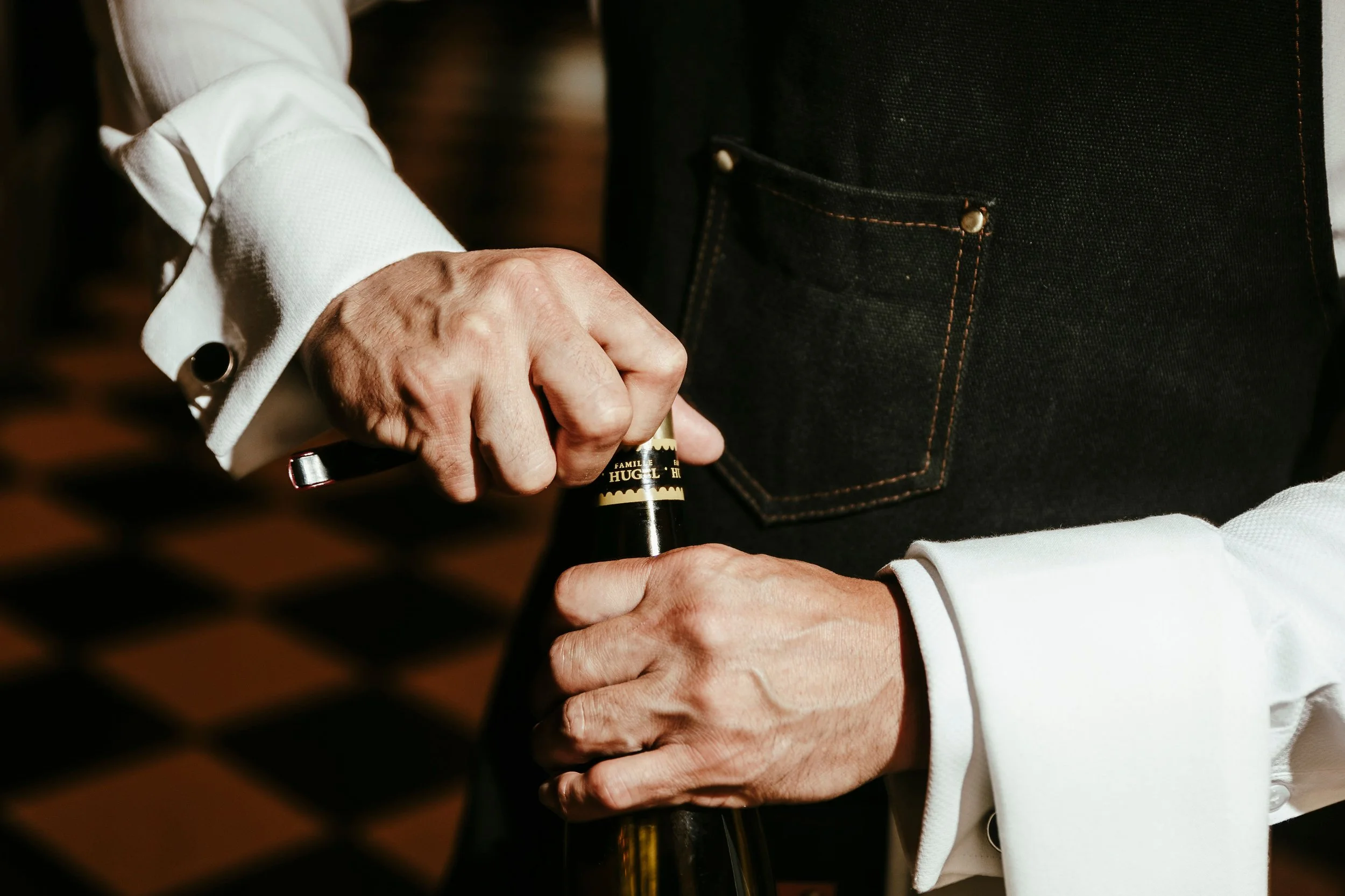
Great service is built through repetition, accountability, and attention to detail. How you carry a plate, open a bottle of wine, describe a dish, stand at the table, and communicate with guests all matter. I believe the industry can improve, but only if owners are willing to invest in professionals who can train and develop the next generation.
Burnout is an issue and we see many people in the industry who struggle with their health or mental health. The Dishing has partnered up with Southern Smoke to spread the word about their free counseling for people who work in the industry, but I know from talking to many people that there are still difficulties. What do you think impacts people in the industry most?
One issue we still do not discuss honestly enough is how deeply burnout, depression, and substance abuse are woven into the hospitality industry. I have watched them affect countless people, and I have lived through them myself in real time. Not many people know there was a point when I had to check myself into rehabilitation because my drinking was spiraling out of control and had become unmanageable. I was regularly drinking at work beyond recreation or appreciation. I was self-medicating. The pressure and stress of the industry caused my consumption to increase exponentially, and I began to recognize that it was affecting how I conducted myself. More than anything, I was terrified of the impact it could eventually have on my children. People do not always realize that you are struggling, so they do not know that you need support. There is a profound loneliness in appearing completely functional while privately fighting something that feels bigger than you.
Even today, I always stop and ask myself: Am I consuming for recreation and appreciation, or am I using alcohol to numb myself and shut everything off? That line can become blurred in an industry where alcohol is constantly present and celebrated. I speak openly with my children about addiction and the journey I am on. I want them to understand that addiction does not always look like someone who has lost everything. Sometimes it looks like someone who is functioning, smiling, and still quietly struggling. I want them to recognize the warning signs and approach alcohol and addiction with far more caution than I did. The work I put into confronting this beast is not only for myself, it is for my children and the example I leave behind for them.
That’s why organizations like Southern Smoke and Ben’s Friends are so important. Hospitality workers need support from people who understand the pressure, the culture, and the isolation that can come with this life. I strongly encourage anyone who is struggling to reach out. You do not have to wait until your life falls apart to deserve help, and you should not have to fight this battle alone. [Ed. note: Visit our industry resource page for information on Raise The Bar, our support initiative for people who work in the industry + for more details on the Southern Smoke Foundation’s free counseling program, Behind You.]
You came up in a time of shouting chefs and the aggressive military-style training in restaurants. Now, after the Me Too reckoning + greater mental health awareness, there seems to be a shift. What’s your approach in restaurant environments where there’s either stress or conflict?
I started working in this industry in the late 90’s where shouting, humiliation, and fear were treated as normal parts of restaurant training. I saw chefs throw plates, berate employees, and create an environment where everyone felt like they were walking on eggshells. I never believed people did their best work that way. Fear may create compliance, but it does not create confidence, creativity, or loyalty. So, when I ran Sea Smoke, I wanted a culture built on mutual respect and accountability. Stress is inevitable in restaurants, and people will occasionally lose their composure, but if that happens, we should be expected to teach and develop people, not degrade them.
I believe the industry is slowly moving away from that old military-style culture and that is a good thing. High standards and kindness are not opposites, You can be direct, disciplined, and demanding without making people feel small. In my experience, people shine their brightest light when they feel respected, supported, and safe enough to learn.
I know you’ve had amazing opportunities to eat at many fine dining establishments. Do you have a most memorable meal?
One of my most memorable meals was at Alinea in Chicago. Some longtime guests from Peck’s Arcade flew me out there for the weekend and treated me to the full tasting menu because they wanted my perspective as someone in the industry. It was more than dinner. It was theater. Every detail felt intentional, every course was executed beautifully, and some of the flavors were so powerful that you just had to close your eyes and let your knees buckle a little bit. It was also meaningful to be on the receiving end of that level of care for once. That experience was nothing short of transcending.
Closer to home, one of my favorite restaurants is A La Shanghai in Latham. The food is authentic and consistently excellent, but what makes it special is the hospitality. The owners greet me like family, remember what we enjoy, and treat my children with genuine warmth and respect. They make us feel special every time, and to me, that is what creates a truly memorable meal.
What do you find yourself looking for when you’re out to dinner? What is the hallmark of good service?
When I go out to dinner, I am not looking for perfection as much as awareness. The hallmark of great service is making a guest feel cared for without making the service feel forced. A strong server reads the table, anticipates needs, knows when to engage, and knows when to step back. Ultimately, I want to feel welcomed, understood, and a little pampered. I may forget exactly what I ordered, but I will always remember how the restaurant made me feel.
I notice the small details: whether the staff is prepared, whether they can speak confidently about the menu, whether courses are paced properly, and whether they genuinely seem to care about the experience. The best service feels effortless, even though I know how much work goes into making it look that way.
If friends came to visit you, where would be 3 spots where you’d take them anywhere in the Hudson Valley or Capital Region for breakfast, lunch or dinner?
For breakfast, I would take them to Manory’s in Troy. It’s a timeless neighborhood spot with old-school breakfast classics, friendly service and the kind of atmosphere that makes you feel immediately at home. For lunch, I would choose A La Shanghai for all the reasons I mentioned. For dinner, I would take them to Hamlet & Ghost in Saratoga. The food is refined and elegant without ever feeling pretentious, and the experience always feels thoughtful and polished. All three restaurants are run by wonderful people, which matters just as much to me as what’s on the plate.
Imagine your ideal day or night out. If you could go anywhere with no limits on costs or reservations, where would you go and how would the day or night unfold?
My ideal day would be in NYC. Me and my buddies would start the day off with a bowl of bún bò Huế (pho’s louder, spicier country cousin) from La Dong. We’d explore the city and have lunch at Le Bernardin. Dinner would definitely be a tasting menu with wine pairing at Per Se. After that, we’d roam the streets and hit every bar until one of us has to get carried into an Uber!
What’s next? You’ve held all the positions and you’ve had your own restaurant. Where do you see yourself in 5 years?
I honestly have no idea, and I’m okay with that. Whatever I’m doing five years from now, I just hope it’s something I’m proud of, that I’m happy, and that I’m still surrounded by the people I love.
Thanks for talking to The Dishing, Quang! It’s always awesome to talk industry topics with you and I want to mention—and thank you—for being part of our advisory board from the start!