
MEET: LILY TANG + KHALIL SHABIB of MOSU Asian BBQ + Hot Pot
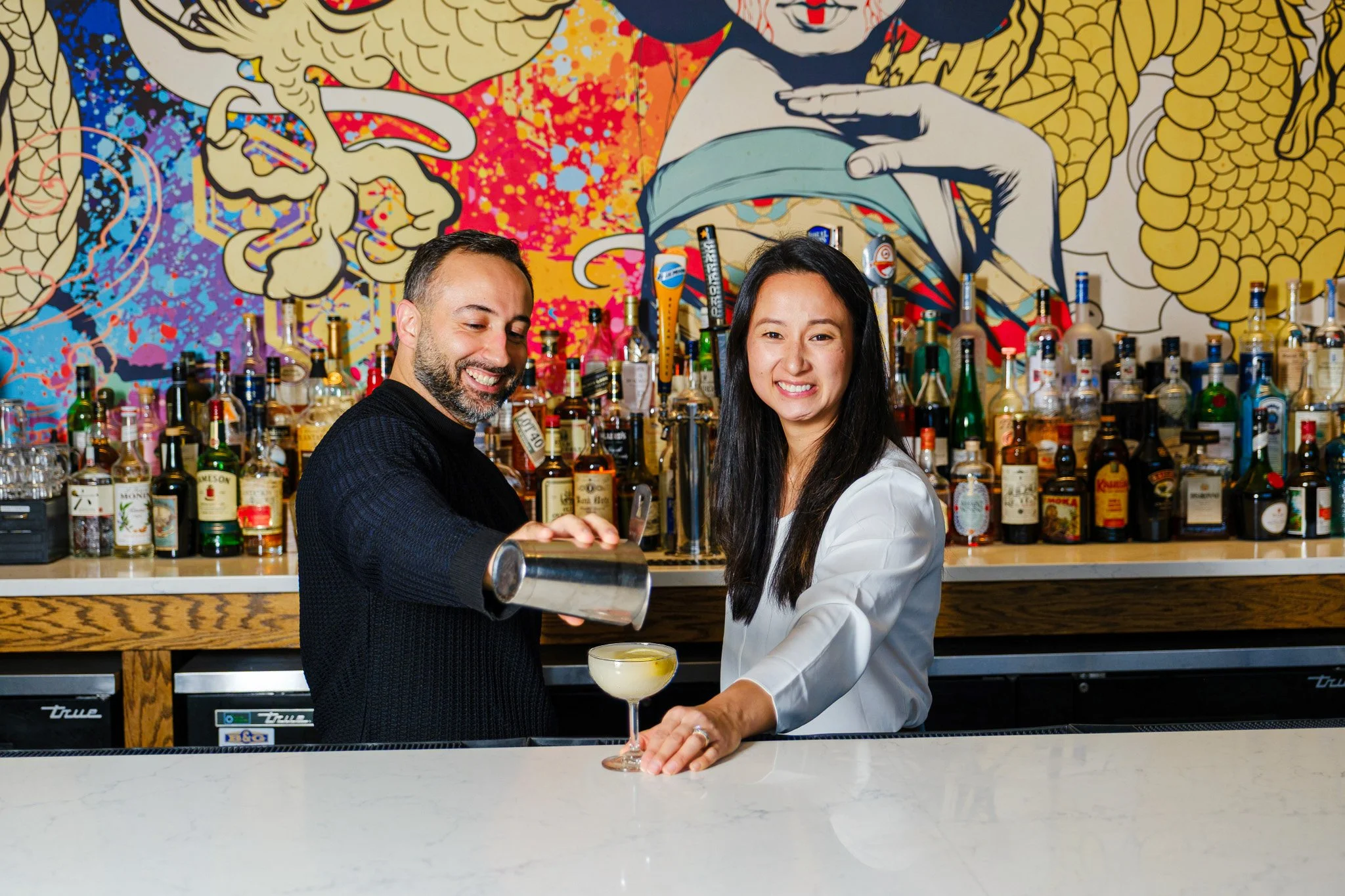
Lily Tang + Khalil Shabib left engineering for hospitality. They talk business pivots, travel, workplace culture + opening a second restaurant in Rochester, N.Y.
Interview : Susie Davidson Powell
Photos: Victoria Sedefian/The Dishing
Location: Mosu, Wolf Road, Albany, N.Y.
Tastemakers: Lily Tang + Khalil Shabib
Role: Restaurateurs | IG @eatmosu | IG: @whatsupkhalil | Website: eatmosu.com
Hometown: LT: Troy, NY | KS: I grew up moving around between the Middle East, Canada and the U.S.
Current city: Capital Region
Listening to? Lately we have both been listening to music in our native languages: Chinese + Arabic. | KS: I have been listening to Ahwe aal mafra' - Bilal Derky; LT: I’ve been listening to 当想你成为习惯, KeyKey but if I listen to English music it’s usually Teddy Swims.
Personal style: LT: Jeans and t-shirt kind of girl; KS: Classic/timeless fashion
Favorite classic cocktail or non-alc drink: LT: Chinese Tea | KS: Turkish Coffee
Coffee or tea? What’s your order?: LT: Coffee with cream | KS: Espresso or black coffee
Biggest Industry influence: Anthony Bourdain’s travel style when it comes to trying everything, and chef David Chang.
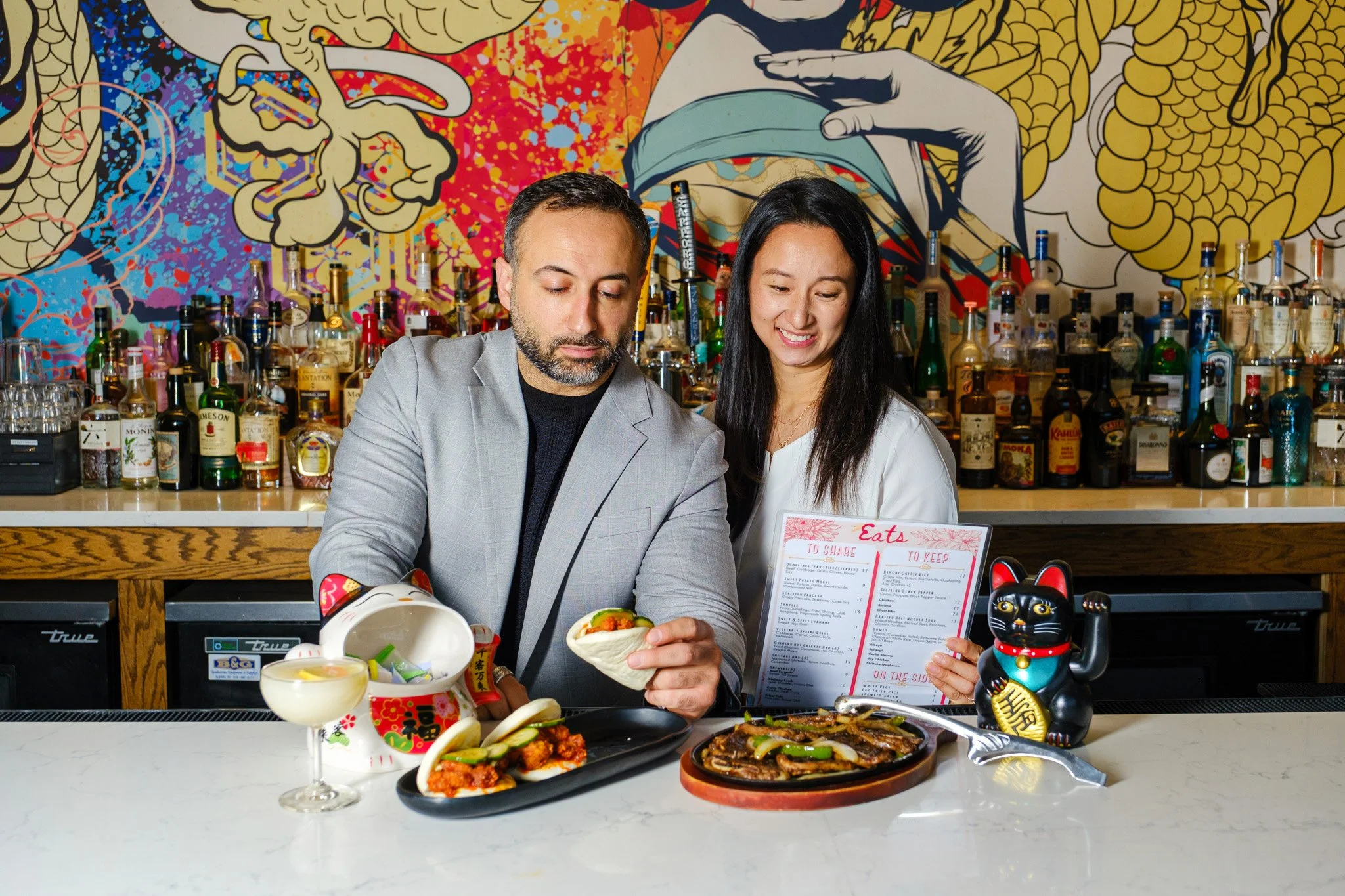
“Welcome to The Dishing’s Quick Serve interviews where we talk matters of taste with tastemakers in the hospitality industry and trailblazers at the intersection of food, culture and art. Today we’re talking with married restaurateurs Lily Tang + Khalil Shabib, two former engineers turned hospitality pros, who opened Mosu Asian BBQ + Hot Pot on Albany’s Wolf Road in 2020 and are in the process of opening a sibling MOSU in a former Red Lobster in Rochester.
Lily + Khalil, it’s great to see you both, and thanks for talking with The Dishing!
Let’s start with your backstory: You’re both trained engineers, with Lily—who is from Troy—having attended Rensselaer Polytechnic Institute (RPI,) and Khalil having attended the University of British Columbia in Vancouver (UBC.) I know Lily’s family has been in the restaurant business for 30 years, but what made you decide to leave engineering to open a restaurant, and specifically hot pot + Korean barbecue?
LT: In 2016, I left engineering to essentially take over my parents take-out restaurant. They were ready to sell and I was unfulfilled with where I was and timing just worked out. Khalil saw how much happier I was in a restaurant and this idea of opening our own place took shape. We went through so many ideas; what did I like to cook, what did we like to eat and when we landed on hot pot and barbecue, something clicked. We travelled all over Asia, and no matter where we were we always gravitated towards barbecue or hot pot whether it was yakiniku (barbecue) in Japan or steamboat (hotpot) in Thailand or satay in Indonesia. We wanted to bring that experience and flavors to the Capital Region.
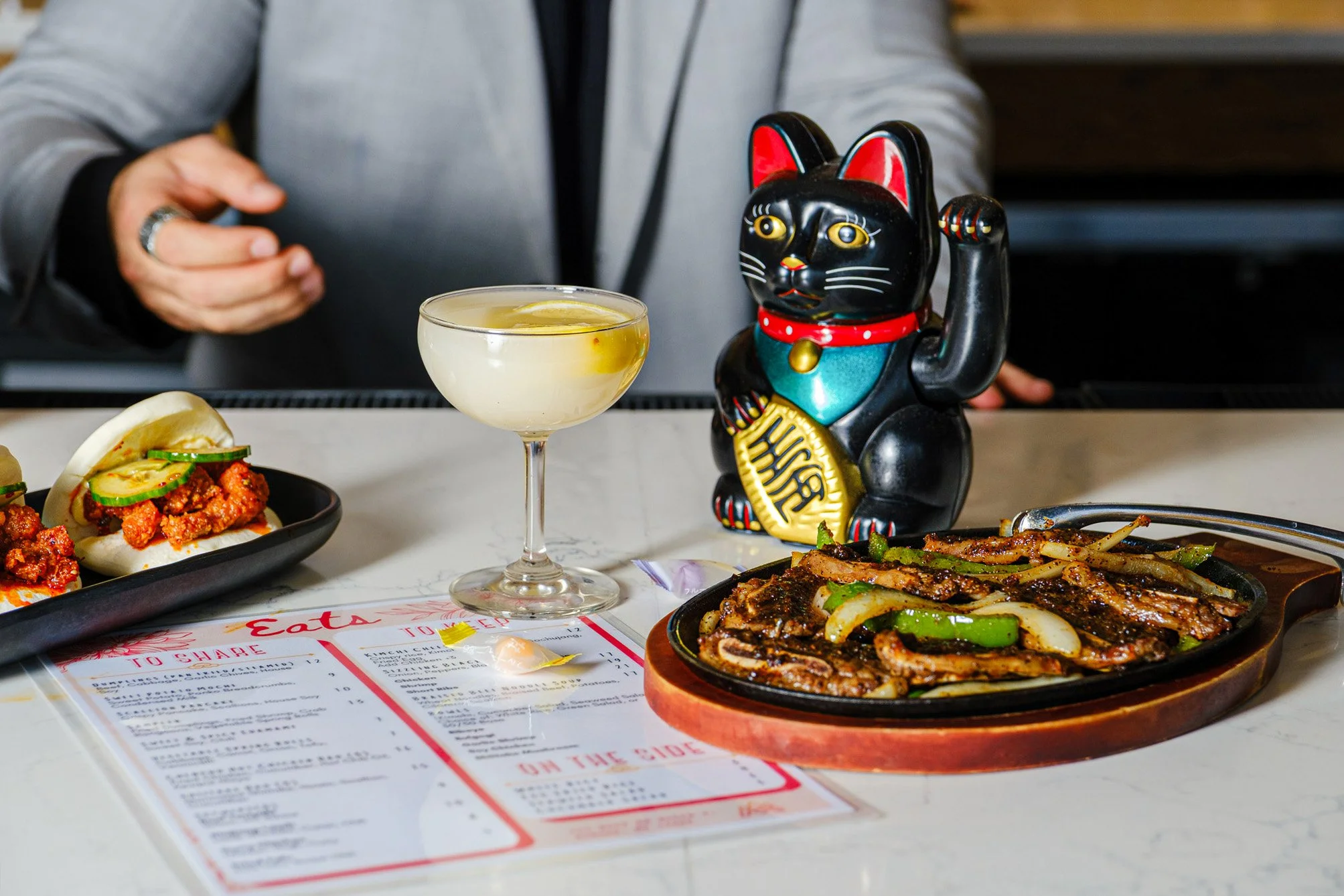
Your restaurant offers three distinct experiences, so when people make reservations they need to choose Chinese hot pot, Asian bbq, or the Asian street food menu available for seats at the bar. For people who haven’t been, how do you describe the MOSU experience?
KS: Our two cook-yourself options are BBQ and Hot Pot, with most dishes coming raw to the table. For BBQ, you cook the items on the grill that is in the center of the table with a menu that's more meat focused with some seafood and veggie options. For hot pot, you pick two broths (or more for larger tables) and you cook the food by boiling in the broth in front of you with a menu that’s more seafood, veggie and noodles focused with some meat options. For both options, we will set you up with a tablet to order directly from so there is no wait and it has pictures of every item. You can choose between all-you-can-eat pricing or à-la-carte ordering.
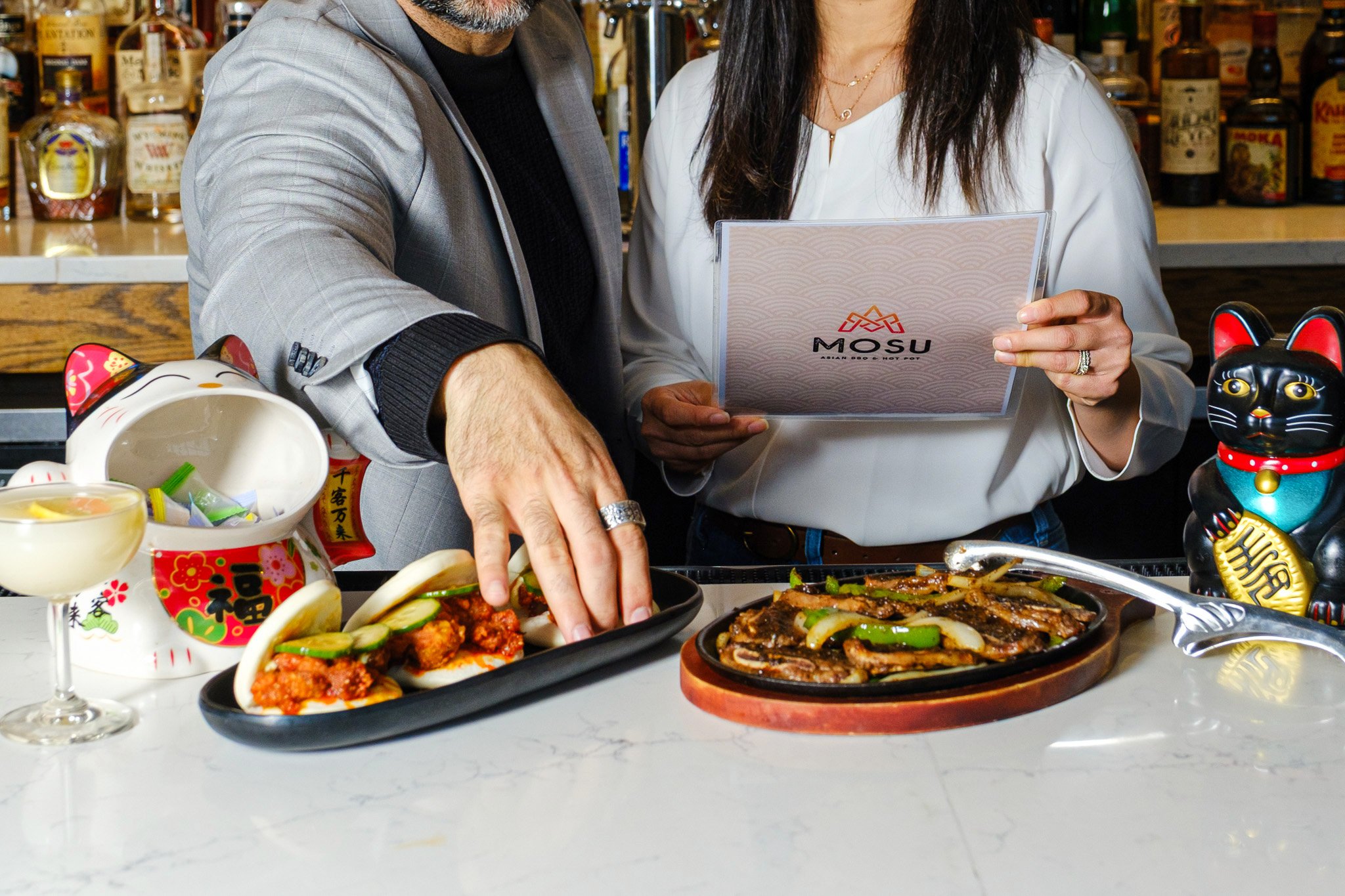
The hidden gem at MOSU is the bar menu which was recently revamped this fall and is a must try! If you’re looking for shareable plates, asian street food inspired dishes or full plates that come ready to eat from our kitchen without cooking it yourself, this one is for you! Menu highlights include Chengdu Hot Chicken Baos, Kimchi Cheese Rice, Braised Beef Noodle Soup and Sizzling Black Pepper Skillets!
You opened on Wolf Road late in 2020 during the first year of the pandemic and the built-in exhaust system required for your bbq tables actually provides more than ten times the normal air exchange. This was a huge bonus for people returning to distance dining. How much did you have to pivot from your original opening plans or were you uniquely poised to meet the challenges of opening during the pandemic?
LT: Of course for any opening you want the community excited and the goal is a full house. Our vision for MOSU was to have the community and vibe of an izakaya where every sake bomb was celebrated together, every stein finished was commemorated with a big hit on the gong and loud huzzahs and for everyone to leave full and happy and maybe make a new friend. Unfortunately at the time of opening we were limited to 50% capacity and every table had to be spaced 6ft apart, and because our tables require utilities they are fixed in the locations we have them so we ended up losing more than 50% of our available tables.
But we were also in a unique position because the 28 Japanese gas barbecue tables we imported had a downdraft exhaust system that caused the air changes in MOSU to be 10 times more than that of any typical restaurant. So we scrapped the close knit izakaya/pub vibe and pivoted to little bubbles of family/friends at each table connecting and bonding over interactive dining which was so well received after the months of quarantine.
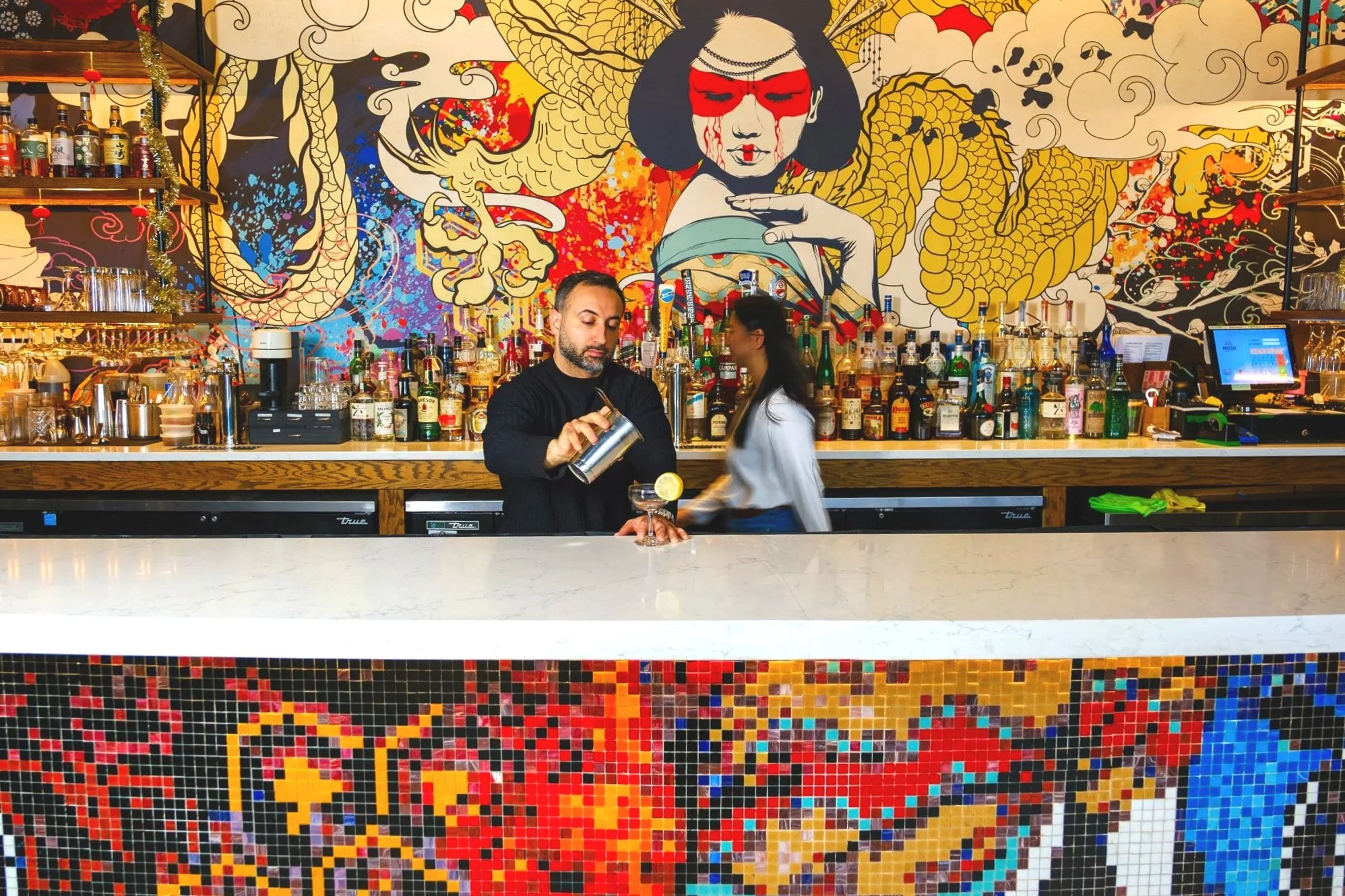
Can you talk about the stunning interior design? I know you worked with a design firm but you also traveled extensively collecting ideas and furniture – (and sharing much of it on social media) – before opening. Did you have a clear vision of what you wanted?
We created a vision board of all the things we liked and collected from our travels. We knew what we liked and didn’t like but didn’t know how to put it together. I think our designers did a good job incorporating the elements we wanted and taking our ideas and creating MOSU with it.
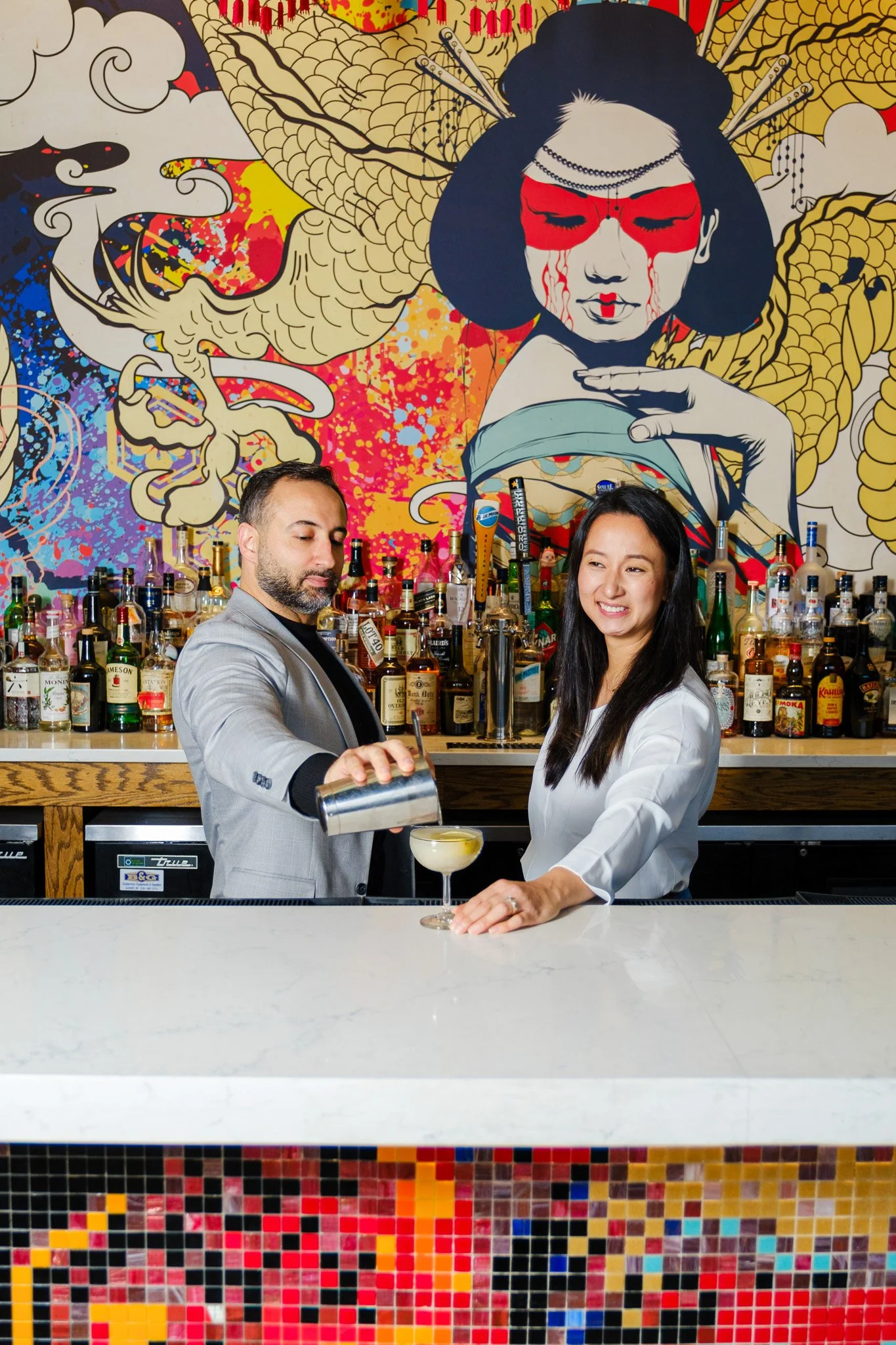
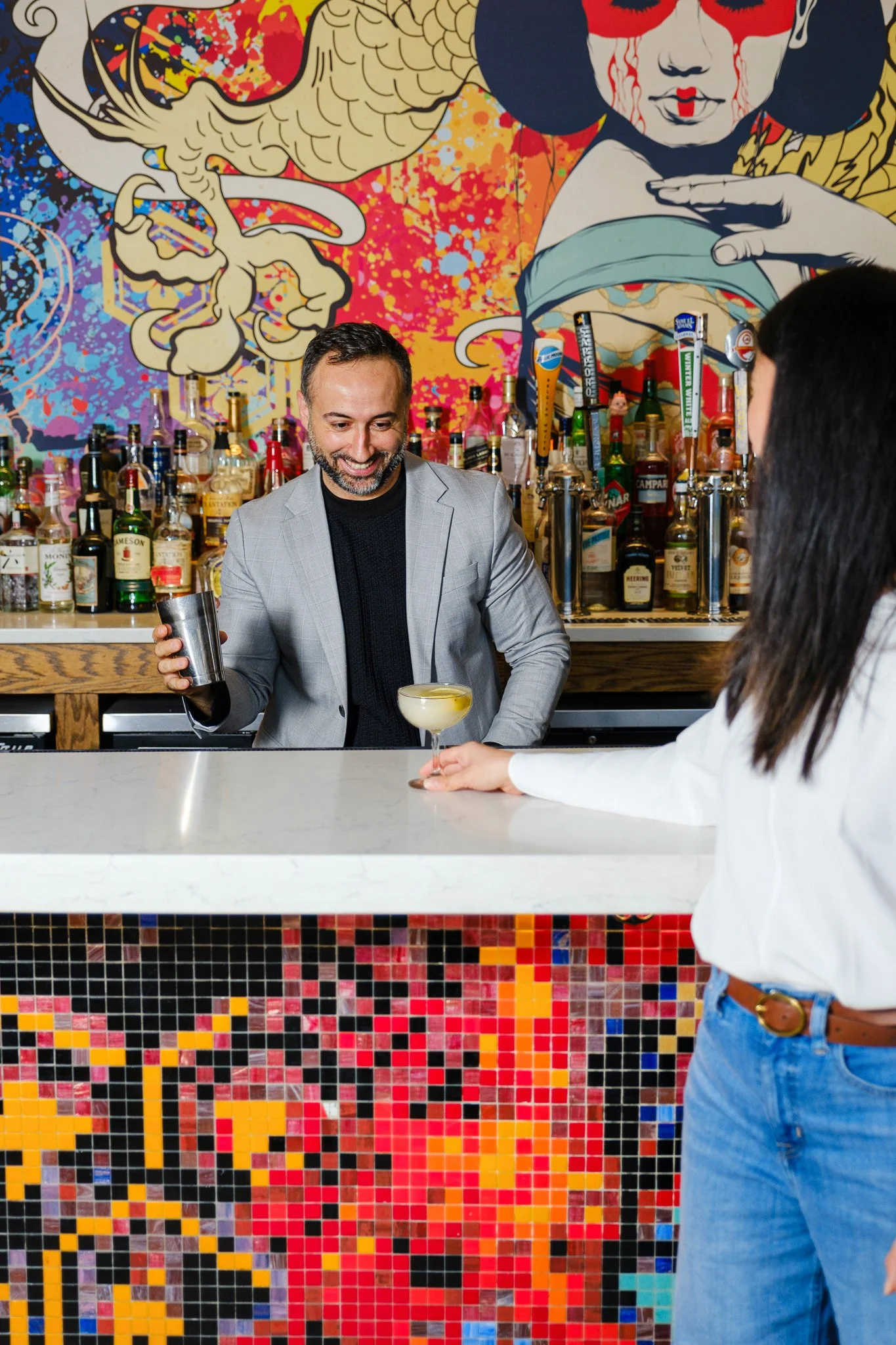
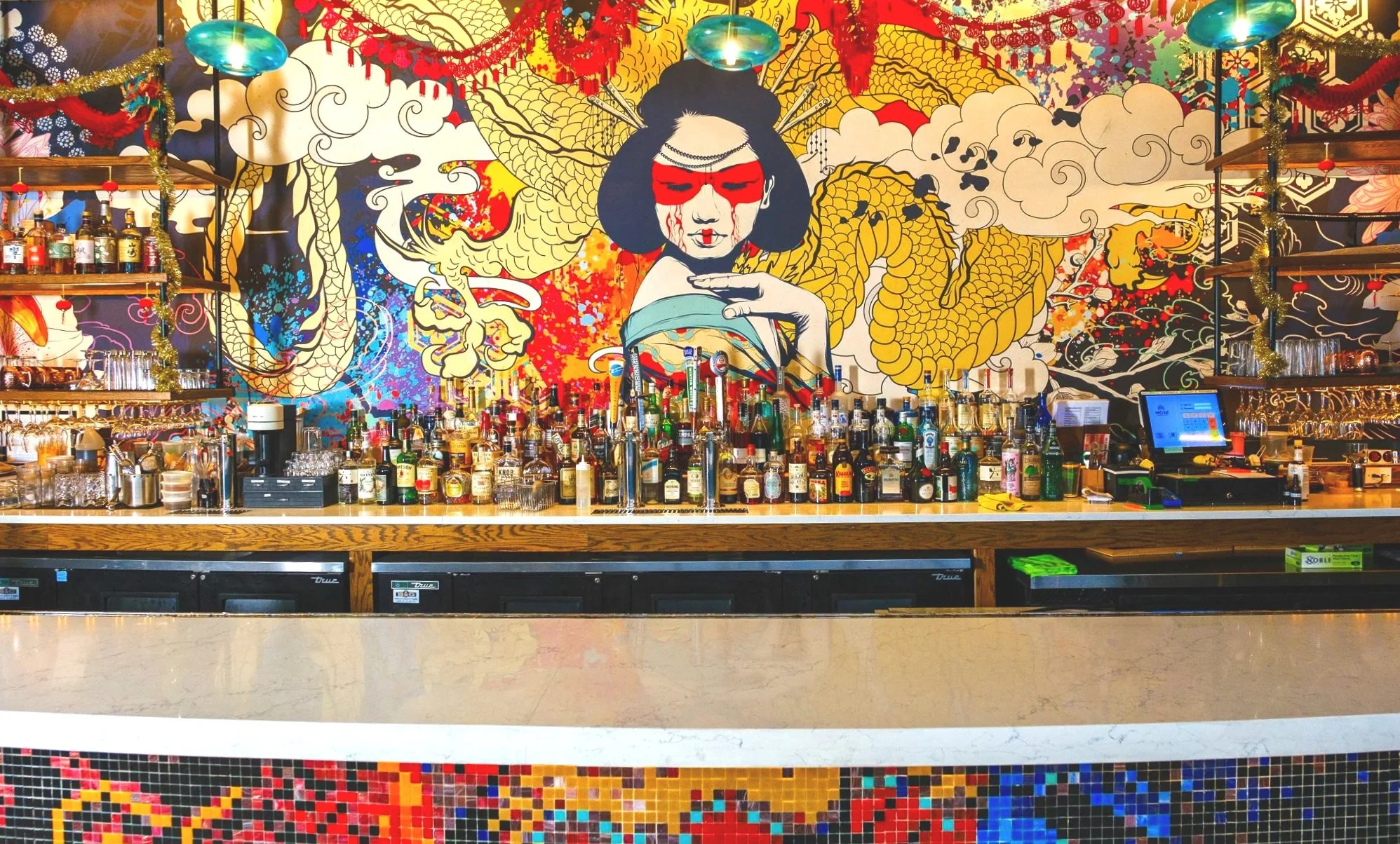
A focal point of the space is the colorful geisha mural behind the bar with the image reflecting in tilework under the bar. Who designed it and how did you come up with that idea?
LT: My brother Owen is the artist of the family; while my sister and I are both engineers, he studied graphic arts in college. So we knew when we needed a mural he was the one to do it. He took our abstract idea (and we were all over the place) and made it come to life. He’s currently working at the 2 Michelin-starred Sorekara in Orlando with the intention to one day open his own place (hopefully up here!), but he did spend two months this fall reworking MOSU’s menu. To date this has been our biggest menu change since we opened, new marinades for barbecue (which now are mostly gluten free and all sauces are seafood free), new cuts of meat and a big revamp of the bar menu.
Can you talk about your approach to hospitality in terms of the customer experience + your approach to staff training or retention?
KS: Our theme for hospitality is high end but not pretentious or overbearing. MOSU’s concept revolves around people “breaking bread” together and being in the moment. From sharing a tablet screen to discuss what to order next, agreeing (or disagreeing) on whether something is cooked enough or not yet, someone who is more focused on cooking vs. someone who is happy to just eat whatever is put on their plate, it’s all about experiencing a meal, not just dining and dashing. So we want to generally provide great service but leave the guests to enjoy their experience without too many interruptions!
Our team is the heart and soul of MOSU (or any business at that). We wanted to fight against the stigmas of working in the restaurant industry and the shortfalls of it. We approach it as a career with room for growth, living wages and what we think should be standard benefits like group healthcare and 401k matching. We focused on a positive culture (I mean who wants to work next to a miserable person all the time) but with a focus on professional development like performance reviews and cross training. This resulted in a cohesive team that works well together that we retain for years.
Growing up with Chinese and Middle Eastern families, what are some of your childhood memories of food whether it’s home cooking or dining out?
LT: Food is a big part of my childhood. My dad has worked in all different restaurants from NYC down to Key West including Italian, American, and Chinese spots and in every BOH role. Growing up we had our Chinese staples, but he would mix it up with his spaghetti sauce, or clams casino and oysters Rockefeller or just some random 80s recipe he remembered and craved. My parents opened their own place in 1990 on my 1st birthday, and in the back of the restaurant used to be a playpen for me. So I am the very definition of a restaurant baby. After school I used to sit in the front and do my homework and then help shuck snow peas or peel carrots and eventually answer phones and take orders. Food has been the center of my life, even to this day when I take my parents out to eat their favorite saying is “You like this? I can make it at home for you.”
KS: In Middle Eastern culture, hospitality and food is a big part of welcoming guests at home, it's a measure of your generosity and is basically tied to your reputation and honor (laughs). Some of my fondest memories involve my grandmother baking fresh bread in the morning and a family gathering where everyone takes part in cutting, prepping and cooking a whole lamb for days. Hosting formal dinners at our house meant that we had 3 main courses, 4 appetizers, 3 salads, multiple side dishes, a few desserts and even the garnishes had to be perfect! We always joke that in our culture, feeding a loved one is the closest thing to an apology you will ever get! (laughs)
You’re in the thick of opening your second restaurant in a former Red Lobster way out in Rochester! How did that come about? I know you’ve recently traveled again in Asia. Were you scouting for similar decor? Will it be different or a MOSU 2.0?
KS: I worked out in Rochester for a while as an engineer and really loved the city, so when we thought about expanding it was one of the first places we thought of. The food scene is very impressive and we thought MOSU would be a great fit. We’ve been scouting for a location in Rochester for the last three years, it just aligned that the Red Lobster location opened up and it checked many of the boxes on our list.
You’re committed to sourcing really quality ingredients and limiting waste. What is about quality and being as waste-free as possible that’s important to you?
Dining at home or eating out in Asian culture is very focused on fresh and quality ingredients. Wasting food is a huge no-no (you will be called out for not eating every bit of meat on a chicken wing or around fish bones). We brought that mentality into MOSU’s kitchen, we source ingredients directly from Korea and China where we need to, we work with local suppliers to source our meats and produce and Asian suppliers for Asian ingredients. We buy bulk ingredients and process everything in house, for example we buy whole ribeye and use it for different cuts and we use the trim for dumpling filling. We also try to avoid using disposable items like bamboo chopsticks and plastic utensils to reduce waste.
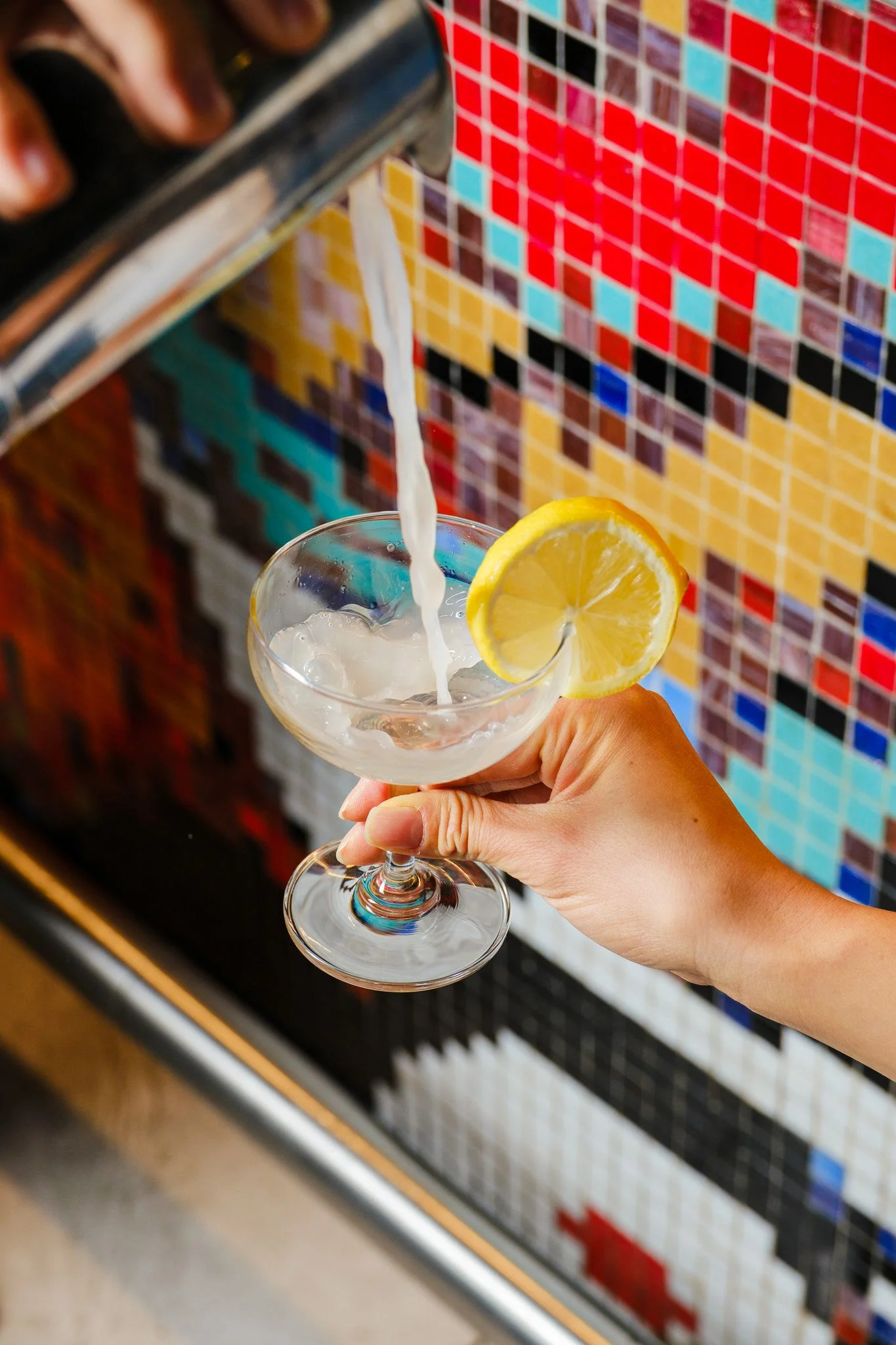
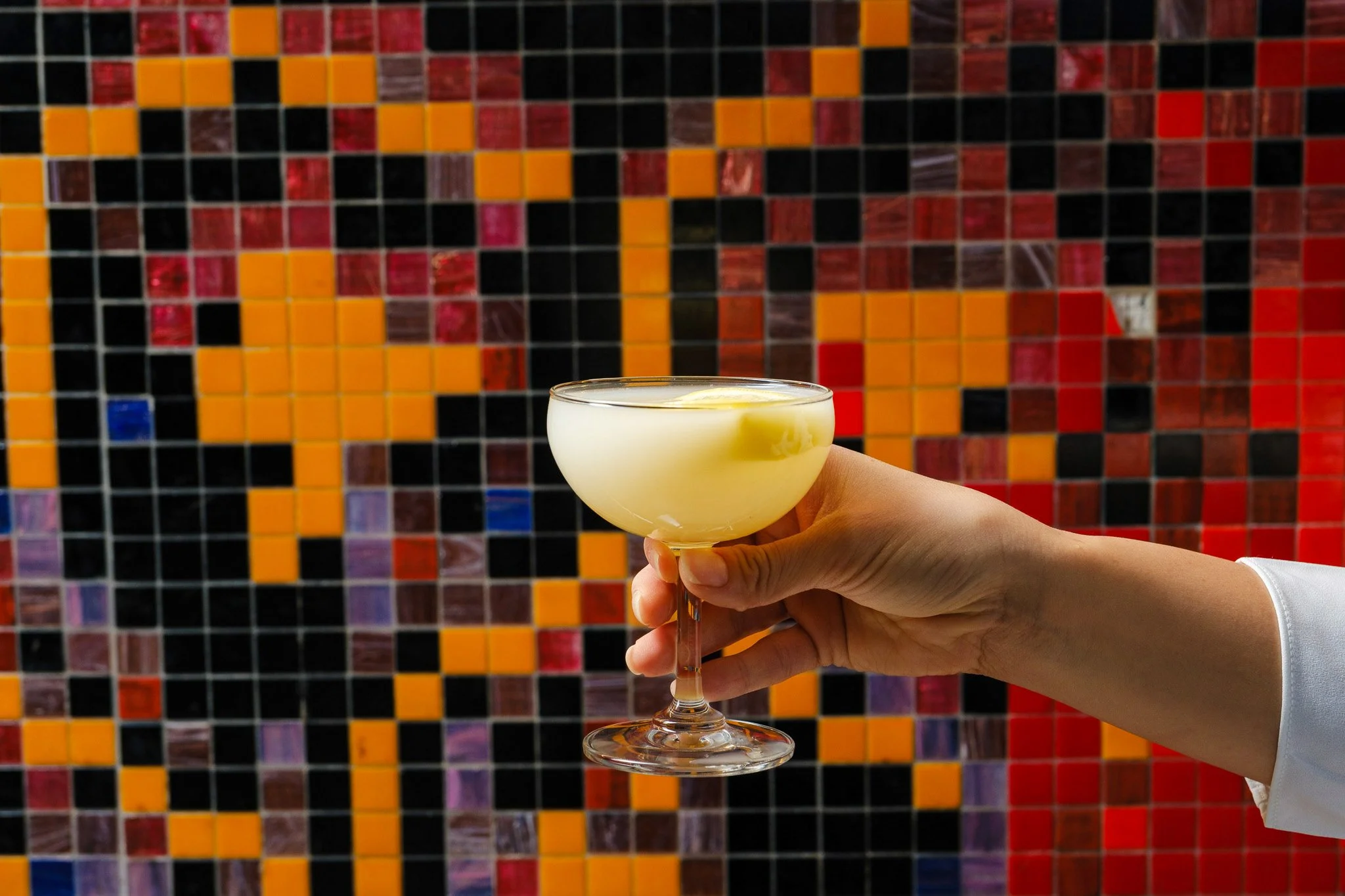
Wolf Road is not known as a destination for good cocktails, but you have had a strong cocktail program since opening. The Lily has been on the menu since the start and the popular tea-based Marteani earned a permanent spot. Who’s behind the cocktail program and do you incorporate any Asian flavor profiles or spirits?
The cocktail program is a collaboration effort between the entire bar team. We will set up a few nights for “testing and tasting” with the entire team giving feedback on which drinks they like or what they would change in it. That gives a sense of ownership to the team when they see their efforts make it on the menu. We try to incorporate Asian ingredients like tea and spices in our drinks and use Asian spirits like Sochu and Japanese Whiskies in our program.
The restaurant industry is known for burnout and I always ask our tastemakers how they manage a work/life balance. Of course, you both have a young family – and you’re in the process of opening a second restaurant. How are you managing to do all of this?
We divide and conquer but also we get a lot of help from family and our amazing management team at MOSU Albany (shoutout to Samantha & Carly!) Don’t get me wrong—the pressure and stress still gets the best of us sometimes, but it’s learning how to reel back from that and stay grounded. Traveling is definitely key to recharge and also get inspired by what we see and eat.
The pandemic obviously hit the restaurants and hospitality industry hard and the post-pandemic years have shown different dining trends in terms of costs and customer foot traffic. What do you see as the future for the restaurant and bar industry?
I think the traditional dining scene is disappearing in the U.S. and newer generations are gravitating towards experiences, not just venues. I don’t want to be pessimistic, but the rough patch for the restaurant industry is not over yet. I think A.I. and technology is going to have a huge impact on the industry and the way restaurants operate. We just got back from China and the amount of automation with food preparation and delivery are insane. I think we will start to see this become the norm in restaurants over the next decade.
Can you share 3 of your favorite spots for breakfast, lunch or dinner anywhere in the Capital Region or Hudson Valley?
Shining Rainbow (Albany) for traditional Chinese cuisine. We used to order a full roast lamb once a year from Sheba-al Yemen on Central Ave (which I believe has rebranded under a different name). Saigon Springs (Clifton Park) for pho take-out.
[Ed. note: Yes, Sheba al-Yemen is now Saba Café on Central Ave.)
I know how much you love to travel. Imagine your ideal day or night out. If you could instantly be anywhere in the world with no limits on costs or reservations, where would you go and how would your day or night unfold?
The Maldives is definitely on our bucket list for a relaxing beach vacation doing absolutely nothing but lounging and eating for a few days!
Two restaurants in 5 years. What are you most proud of to date and what are your plans for the future? More MOSUs?
Life has changed so much in the last 5 years in ways that we could never imagine. Our goals and aspirations have shifted and continue to evolve. We will always hope to improve on what we currently have and pursue new ventures and opportunities as they cross our path.