
ICE OUT: LOCAL RESTAURANTS, CAFÉS + BARS STAND IN SOLIDARITY, RESIST I.C.E.
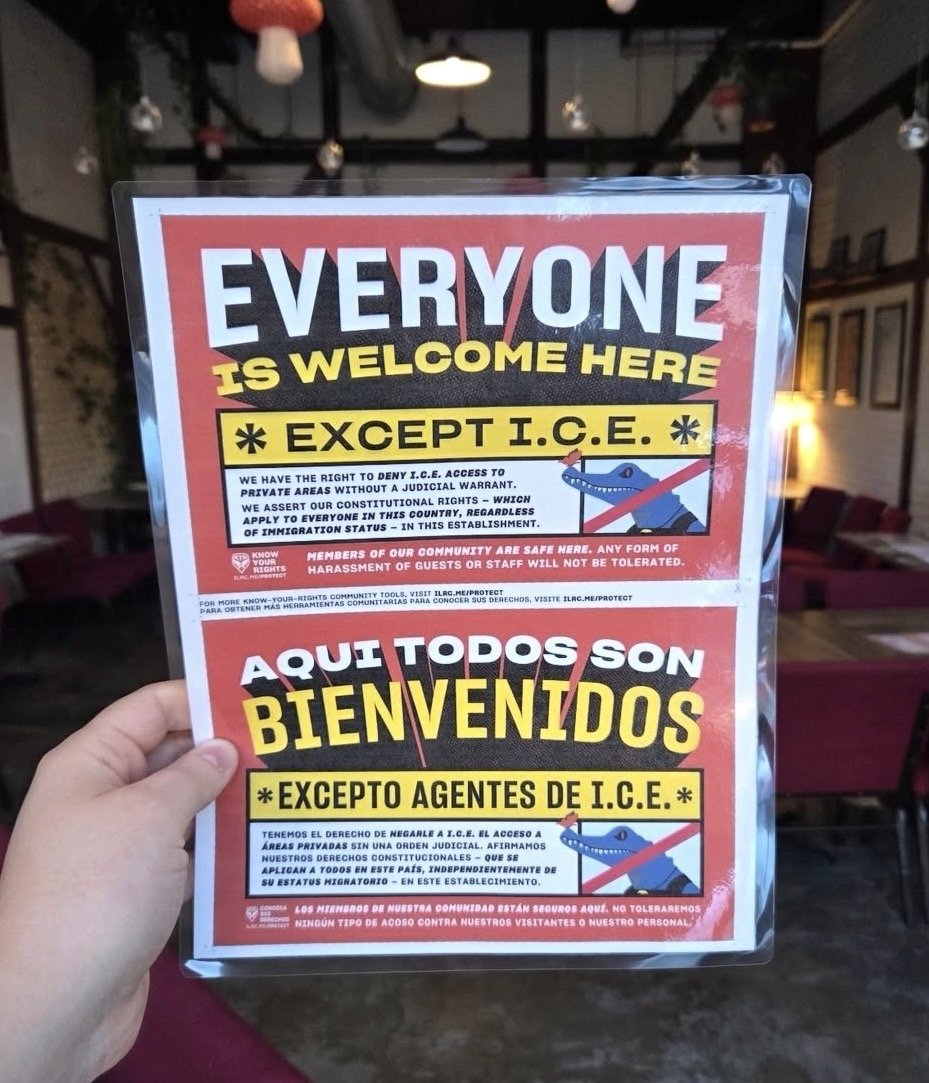
As Immigration and Customs Enforcement (ICE) horrors continued to escalate in Minnesota, Friday, January 30 was marked for a general strike to demand the cessation of ICE action through walk-outs at offices and schools. Many restaurants, cafes and bars planned to closed in disruptive solidarity, but others, citing financial inability to close on a precious Friday night in an already slow winter month, chose to stay open while making donations to legal funds or immigration organizations, limiting hours and capacity, and requesting cash payments to avoid credit card fees.
How restaurants, cafés and bars are standing up for workers and communities by resisting I.C.E. + uniting in solidarity with Minnesota.
Words: Susie Davidson Powell
Photo: Bard + Baker educational flyer, Instagram.
Once again, hospitality workers have stepped up: In Minneapolis, restaurants that are closed for regular business are operating as safe meeting places or preparing food for people on the strike lines or in the community at large. Upstate New York communities and businesses have been impacted too. Last summer, with patrons packing the race track, several Saratoga restaurants were impacted by ICE raids. As recently as last week, a Clifton Park family with school-age children was the latest to be detained.
In advance of the Friday strike, Charlotte Guyton and Bryan Connor, owners of Bard and Baker board game café in Troy, announced they would donate game cover sales to 518 Capital Region Sanctuary Coalition and Minnesota ICE Watch and open The Cottage space as a drop-in ‘Know Your Rights’ education room for discussion and support. In an Instagram post they added, “Our act of resistance today is educating folks, providing an area for support, outlet and discussion, and encouraging our community to come out and game together in solidarity… We stand with Minneapolis. ABOLISH ICE.”
At Lone Wolf in Kingston, chef-owner Anton Kinloch chose to stay open with proceeds going to Ulster Immigrant Defense fund and $5 Jeppson’s Malört shots for all guests. Writing on social media, Kinloch expressed: “This is what supporting your neighbors looks like in practice, not theory. You want to make an impact? Support local businesses that stand against ICE.”
In Hudson, Kat Dunn of Padrona and her staff also decided to stay open, requesting cash transactions and donating a percent of sales to the Columbia County Sanctuary Movement. Dunn offered her space “as a place to gather, to organize, to resist or just to rest from the horrors, if that’s what you need,” while standing in solidarity with all those striking. She called for patrons to go after “the businesses that directly impact the divisions of this government. This is the top of the S&P500 which is composed of just 10 businesses. Cancel your subscriptions, pay in cash when possible… and continue to support small community-based businesses.”
Rachael Petach, owner of C. Cassis Tasting Room in Rhinebeck, after canceling Friday lunch service in solidarity with the national strike, spelled it out unequivocally, but with hope: “No person is illegal. A system oriented around care is what we collectively are building…” She encouraged people to “imagine everyone safe and with needs met and supported in their diverse skills and unique interests, and think of the real, small and large cumulative steps you are going to keep taking towarding this everyday.”
Even with razor thin margins, the restaurant, food, beverage and hospitality industry is often first in line pulling together during times of crisis to support local communities as we saw after the defunding of SNAP benefits and during the California wildfires of 2025. Locally, the hospitality industry is being pro-active, expanding early-warning networks to report on ICE activity and sharing ways to safely alert staff if ICE attempts to enter businesses unlawfully. Immigrants and the children of immigrants are the backbone of the hospitality industry, so whether you’re ordering takeout or going out to eat Chinese, Oaxacan, Yemeni, Indian, or Japanese, it’s good to remember that diverse communities are the core of American society. Building community, sharing meals and recognizing there’s more that unites than divides us is the way forward. As Guyton wrote: “Spread awareness. Spread knowledge. Spread support.”