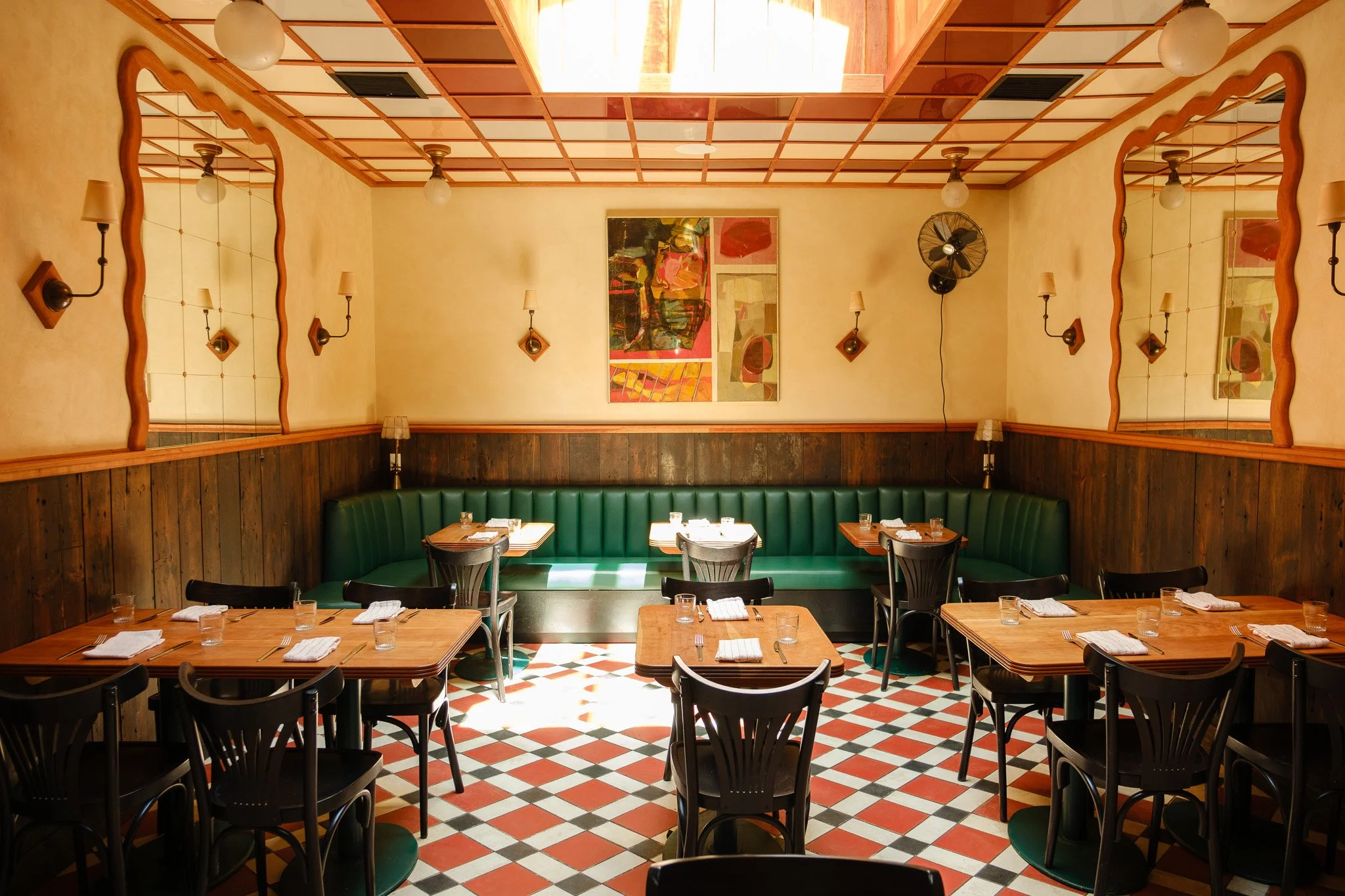
MEET: CHEF PRUITT KERDCHOOCHUEN, ELIZA, KINGSTON
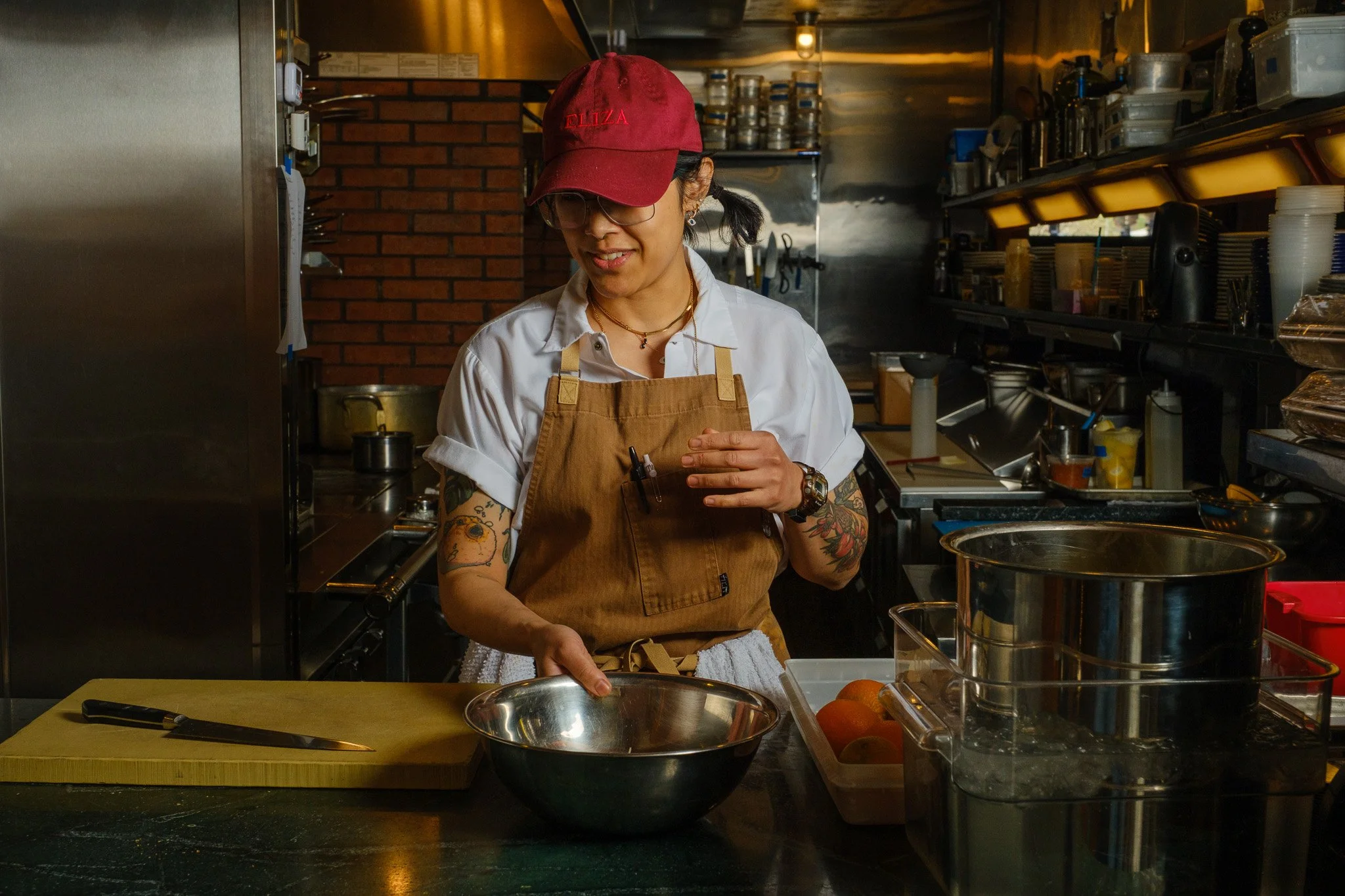
Chef de Cuisine Pruitt Kerdchoochuen talks travel, third culture flavors, local produce + the politics of food.
Interview : Susie Davidson Powell
Photos: Victoria Sedefian/The Dishing
Location: Eliza, Kingston, N.Y.
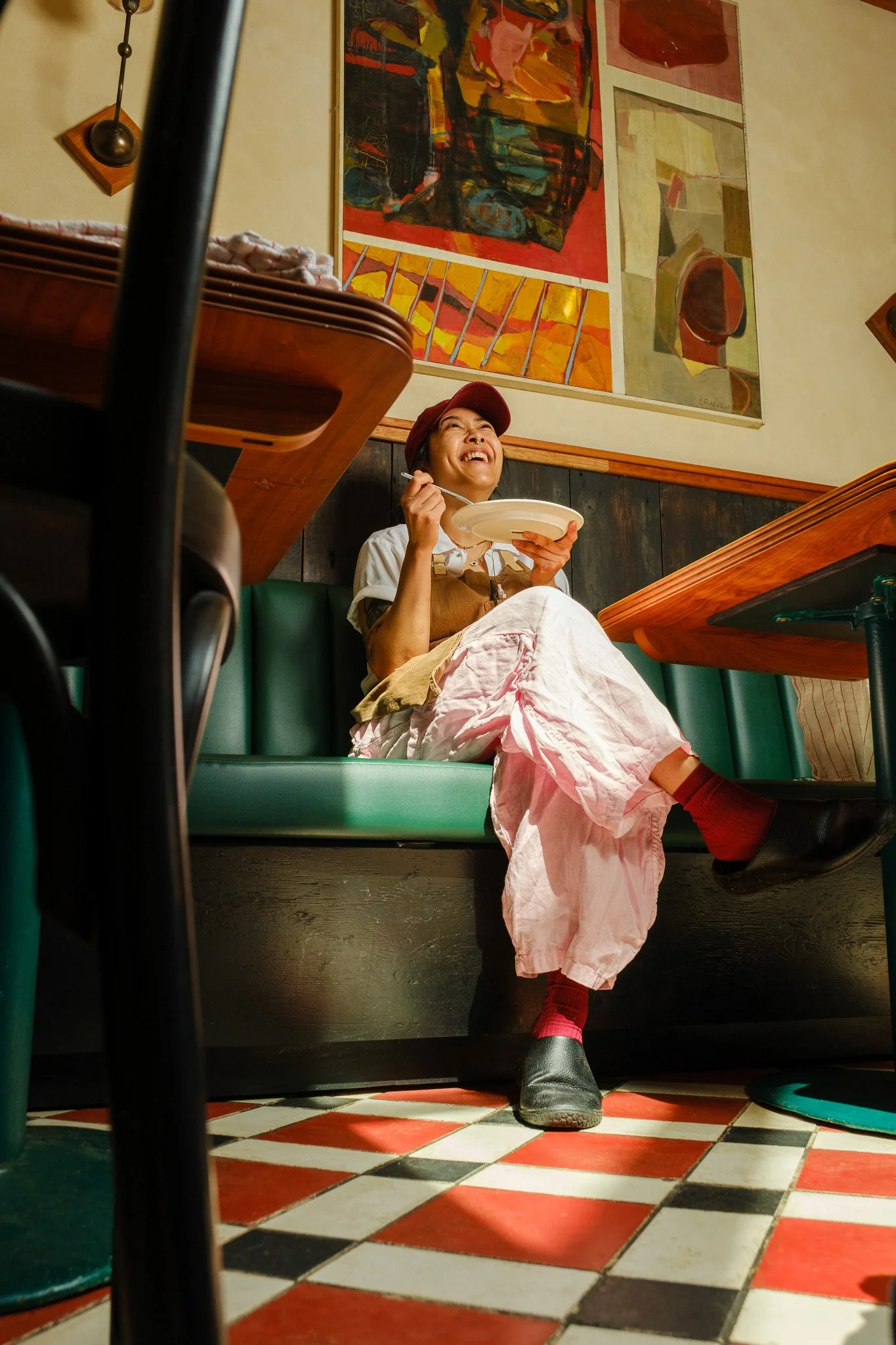
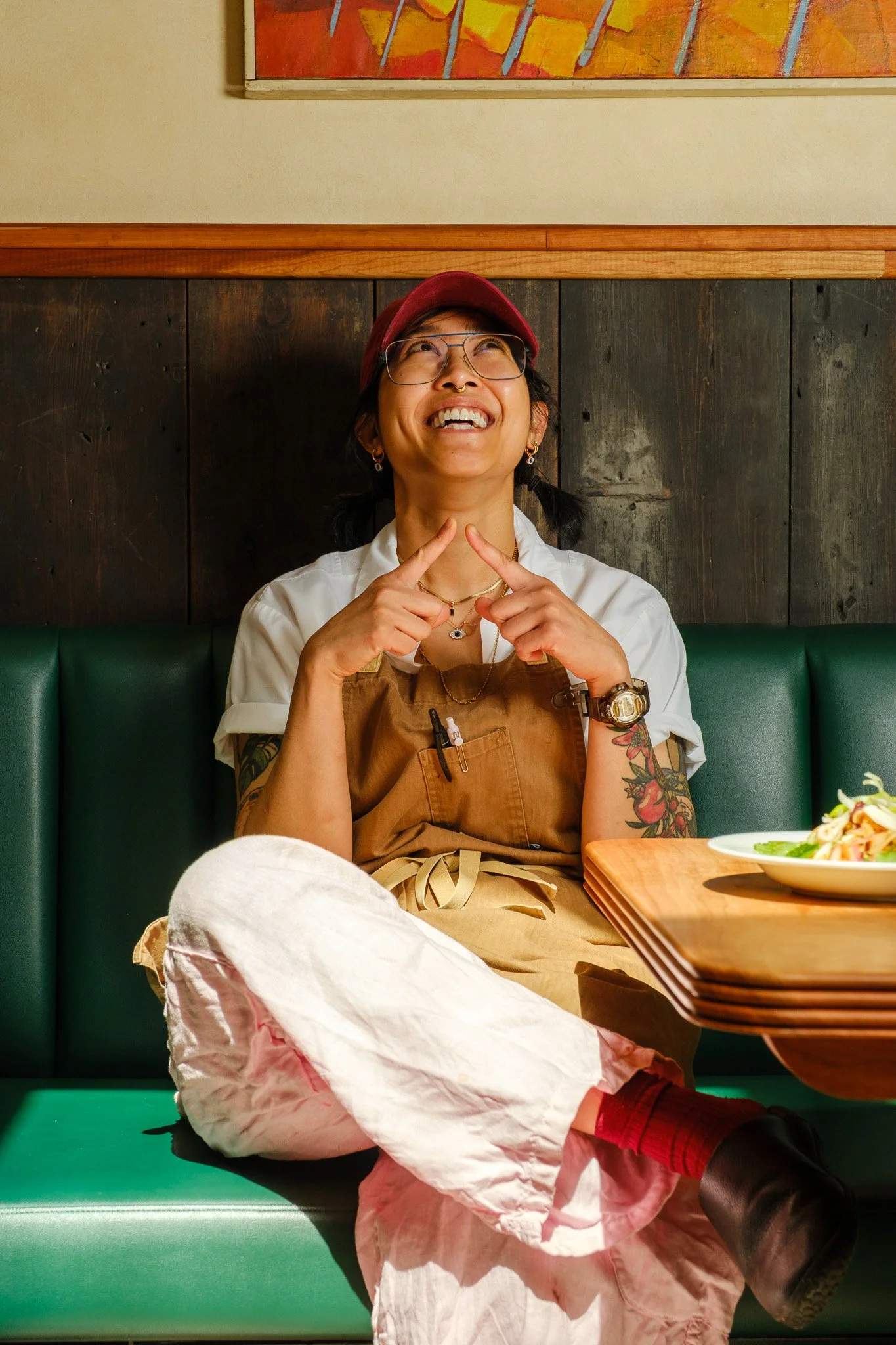
Tastemaker: Chef Pruitt Kerdchoochuen | IG: @needsmorebutter
Current Position: chef de cuisine
Where: Eliza, Kingston, N.Y. | IG: @eliza.bistro | Thai(ish) pop-ups @eatthaiglish
Hometown: Bangkok, Thailand
Current city: Kingston, NY
Personal style: Mostly thrifted bits, but currently obsessed with my @mealsclothing pants
Listening to: My mid-2000s mall emo playlist is very much alive and well in this kitchen. [“IT’S NOT A PHASE, MOM!”]
Favorite classic cocktail or non-alc drink: It changes, but currently a rye manhattan (with extra cherries, if our bartenders are being nice)
Coffee or tea. What’s your order? Espresso and tonic over ice - preferably in a quart container with a straw.
Favorite restaurant anywhere in the world: Tough… but I’ll give you one: Huan Pen in Chiang Mai. It’s been serving traditional Lanna food with no frills for 60+ years, and is still going strong. An absolute institution.
Biggest professional industry influence: Yes, it’s trite… but I’m going to say my parents. They set the bar on how to operate in a way that puts employee, community, and environmental well-being over profit for sure.
Industry trend that should end: Political fence-sitting. Food is political—always has been. The targeting of immigrants impacts our industry and our families directly. Wars and foreign policy impact us directly. Unchecked corporate power and weakening regulatory bodies impact us directly. If we stay seated, who will we cook for in the future?
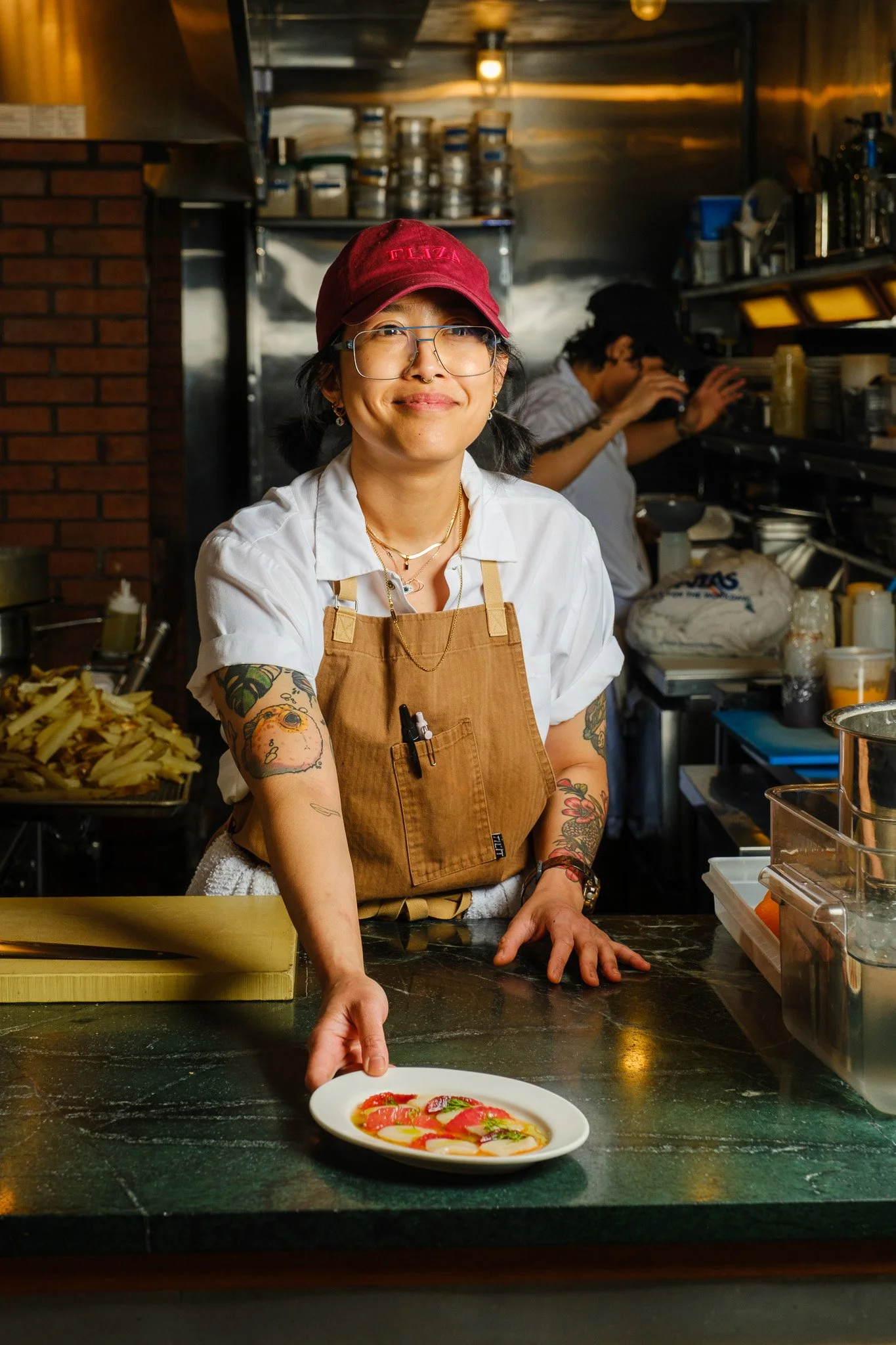
Welcome to The Dishing’s Quick Serve interviews where we talk matters of taste with tastemakers in the hospitality industry and trailblazers at the intersection of food, culture and art. Today we’re talking with Chef Pruitt Kerdchoochuen, chef de cuisine at Eliza in Kingston. Chef Kerdchoochuen is a graduate of the CIA, a former recipe developer for Serious Eats, and the creative force behind Thai(glish) pop ups all over the Hudson Valley.
Thanks for talking with The Dishing, Chef. Let’s get into it!
SDP: Eliza is a beautifully designed restaurant that opened in the former Tony’s and has amassing praise since it’s 2023 opening. You joined the team in 2024 as sous and become chef de cuisine last year. The Eliza menu has popular staples like charcuterie and oysters, as well as a burger, half chicken and the famed malt salt fries. What sort of culinary license or new directions has the menu taken since you took over as chef de cuisine?
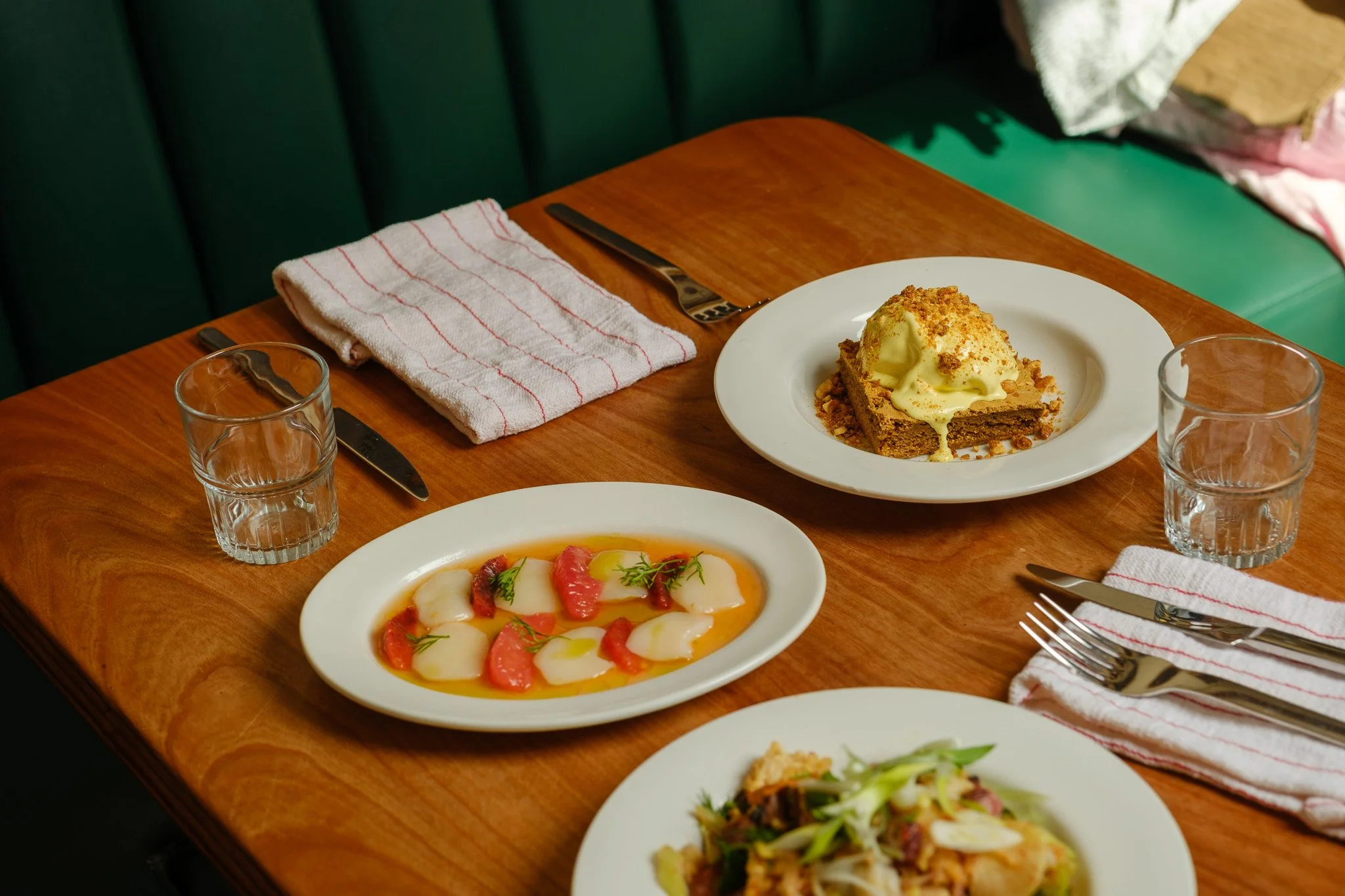
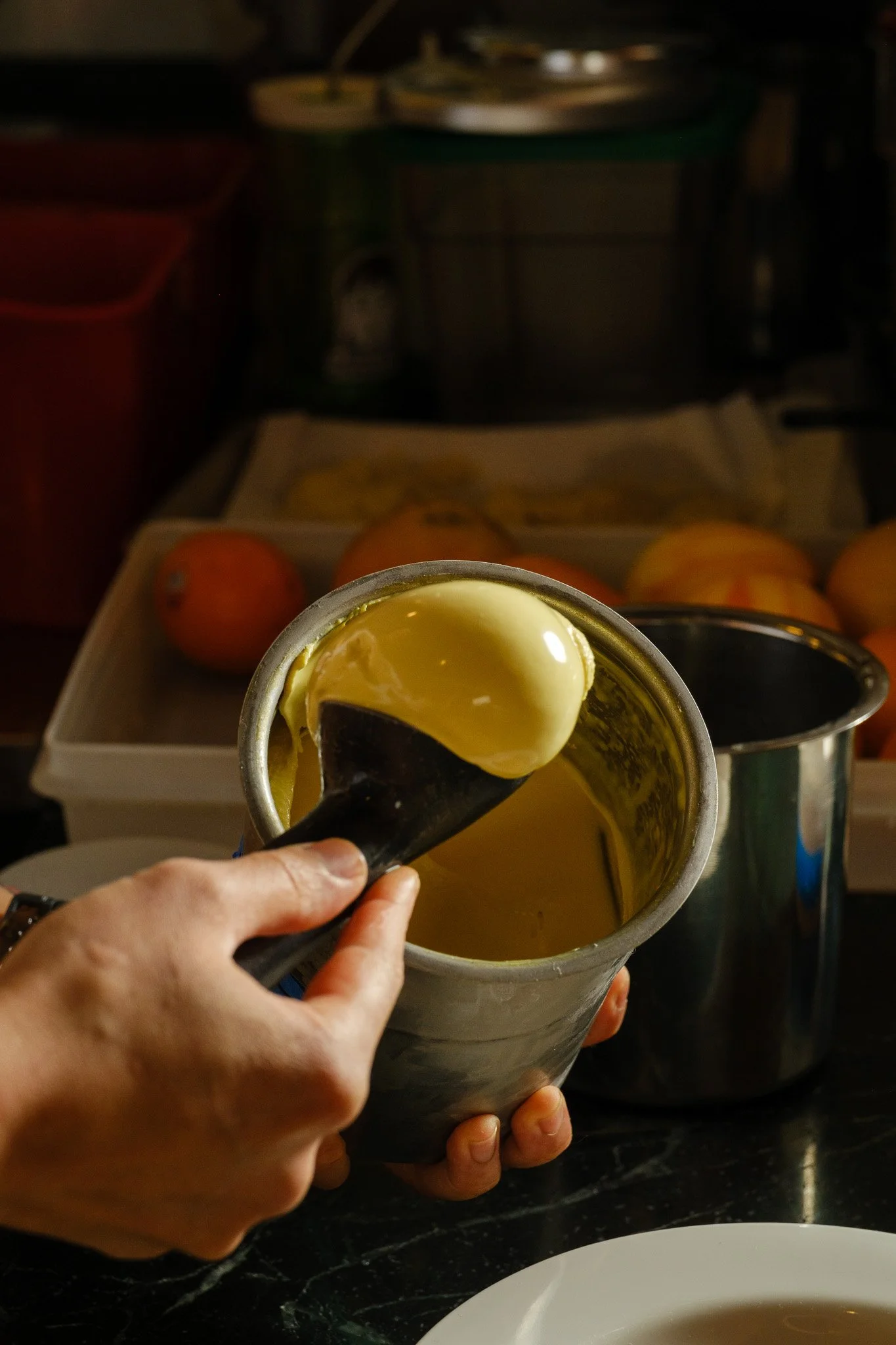
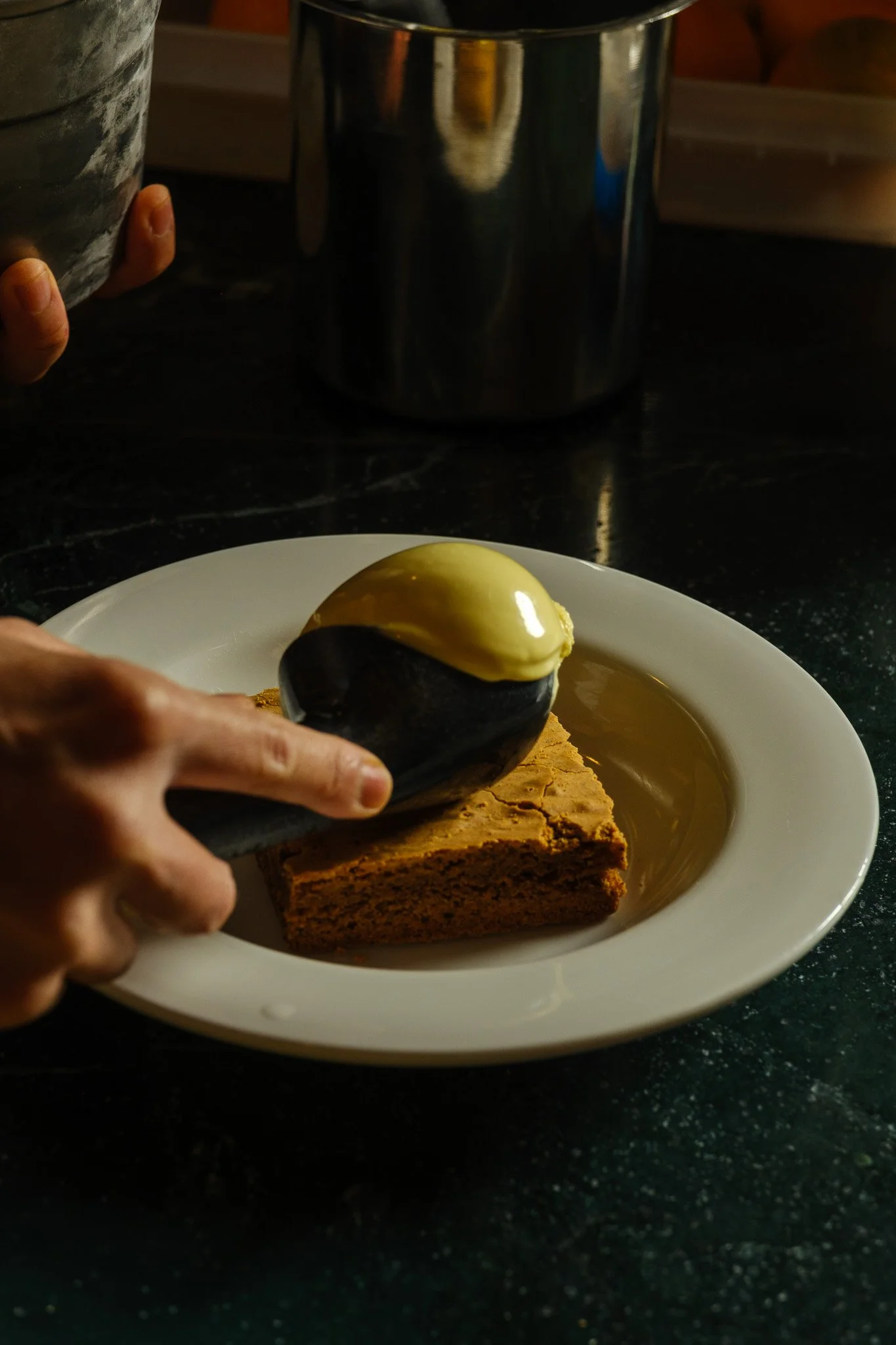
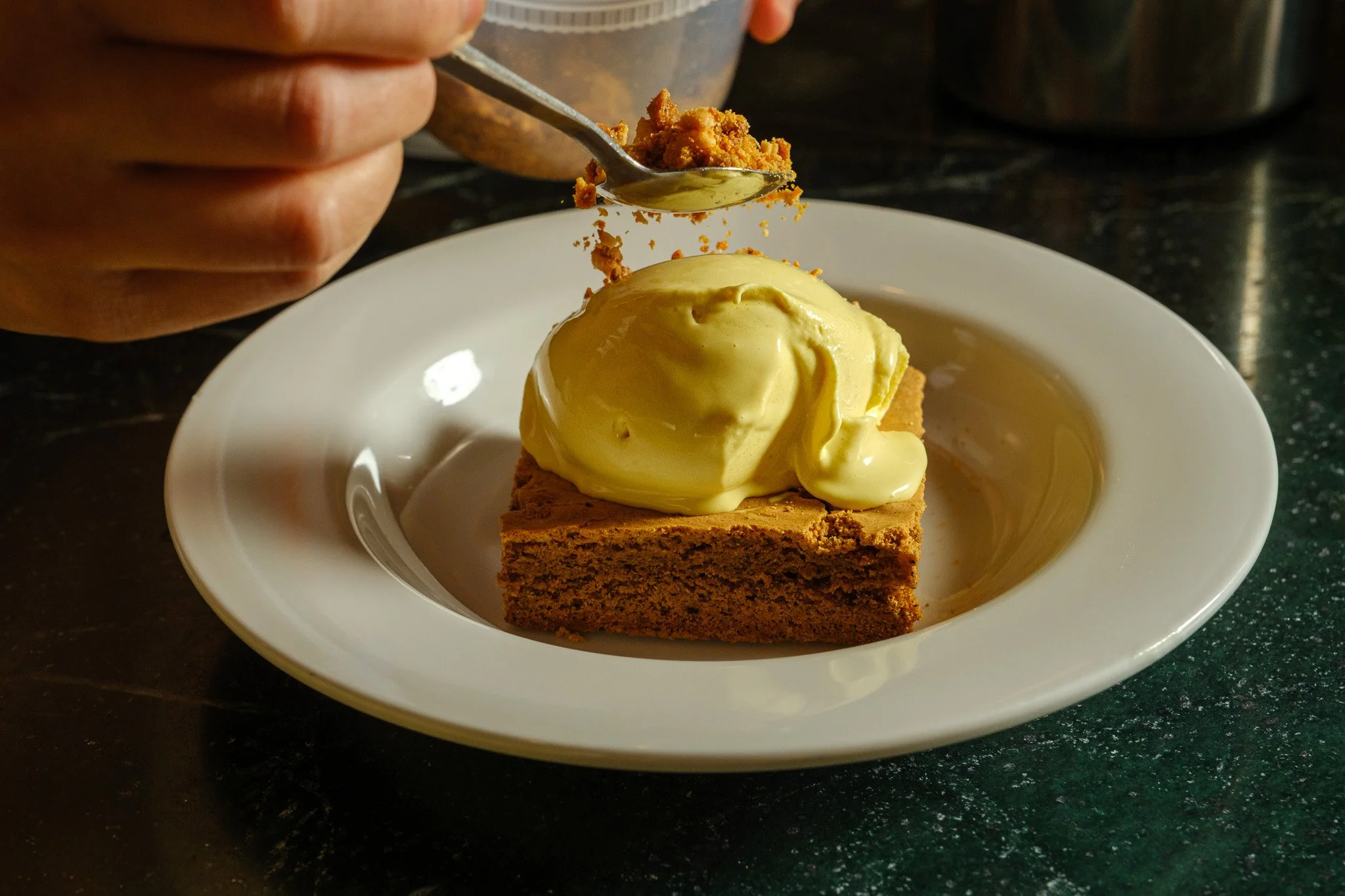
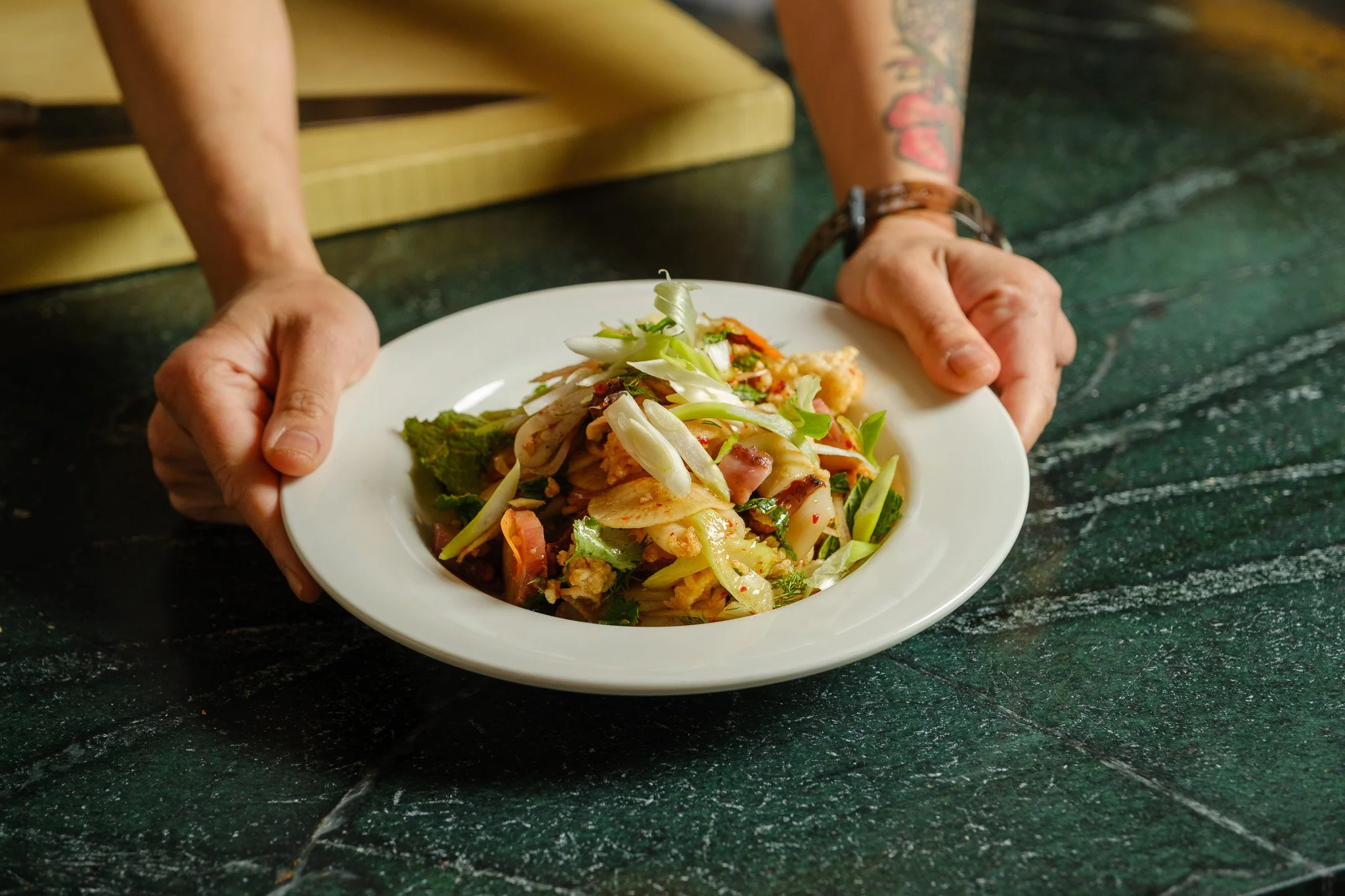
PK: I asked myself the question, “what would a neighborhood bistro like Eliza serve if it opened in Bangkok?” and found answers and inspiration in the restaurants I grew up going to with my family for special occasions. These are the cozy spots that serve both Thai and western fare - and oftentimes a hybrid of the two. Dishes like spaghetti with green curry (which inspired our mussel bucatini last year, and the short rib massaman pappardelle currently running), pandan layer cakes, and steaks with Thai-style dipping sauce are mainstays. What I enjoy most is being able to interpret nostalgic flavors using ingredients available to me here in the Hudson Valley (shout out to all my farmers!)
You were born in Thailand to parents who owned a restaurant and an organic dairy business processing milk, yogurt and ice cream. You’ve said you “split time between the mall food courts of Bangkok and the mountains of Muak Lek, Saraburi.” (I love this Serious Eats bio, btw!) With that, what are some of your earliest childhood memories of food?
According to my parents, my second word after “mom” was “eat.” “Cow” was the third, so food and agriculture has always been a huge part of my life!
One of my earliest food memories is of our breakfast routine: every morning before pre-school, we’d stop by the congee stall at the local market. The lady who ran the stall knew our order and would have it ready as soon as we walked in: two adult congee with all the trimmings - white pepper, poached egg, pork balls, liver, and blood - and one kid congee with just pork balls and a poached egg. To this day, congee is still comfort food for me.
Let’s talk about your journey into culinary. You attended boarding school in Connecticut, the CIA in Hyde Park, and earned a BA in history at Yale. Was food always the through line? Did you imagine food would be your career?
Looking back, it’s funny to discover that as much as I tried to outrun it, food has always been the through line for me. For a while, every summer break, I would go home and work for my parents at their restaurant. At boarding school, I would cook with my friends for fun in our dorm kitchen once in a while. One year, our friend Rebecca’s mom shipped her some fiddlehead ferns from their home in Maine, and we had a midnight pasta party with those and the pasta machine she had stashed under her twin double wide bed. First time I ever made pasta or had fiddleheads.
In college, I was lucky enough to take a medieval history course with Professor Paul Freedman that changed my life. In addition to being a medievalist, Professor Freedman is also a food historian, and his books showed me how cuisine can serve as a lens through which to examine the world. He became my senior thesis advisor for my final paper on food advertising in the post-WWII war era.
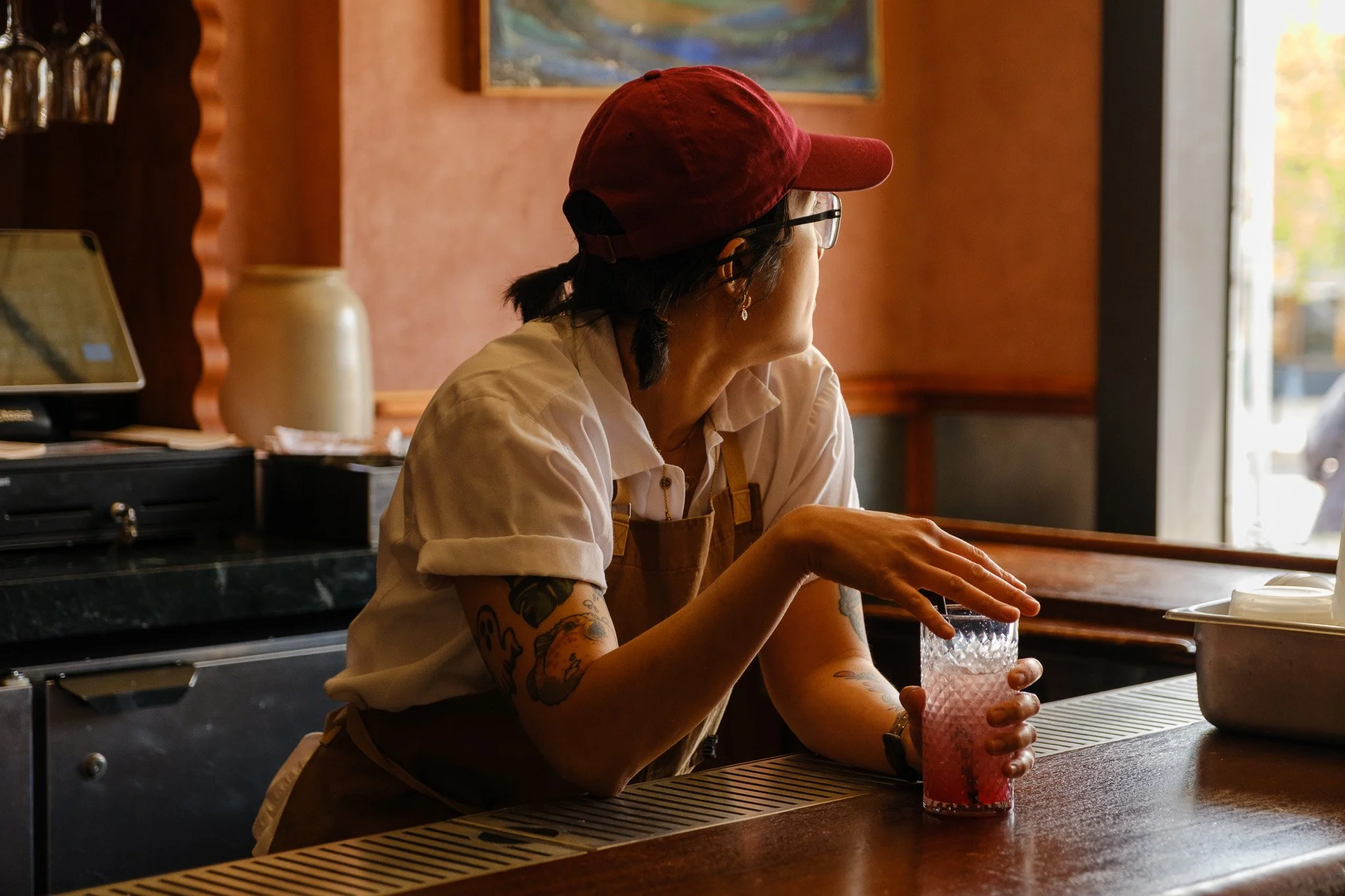
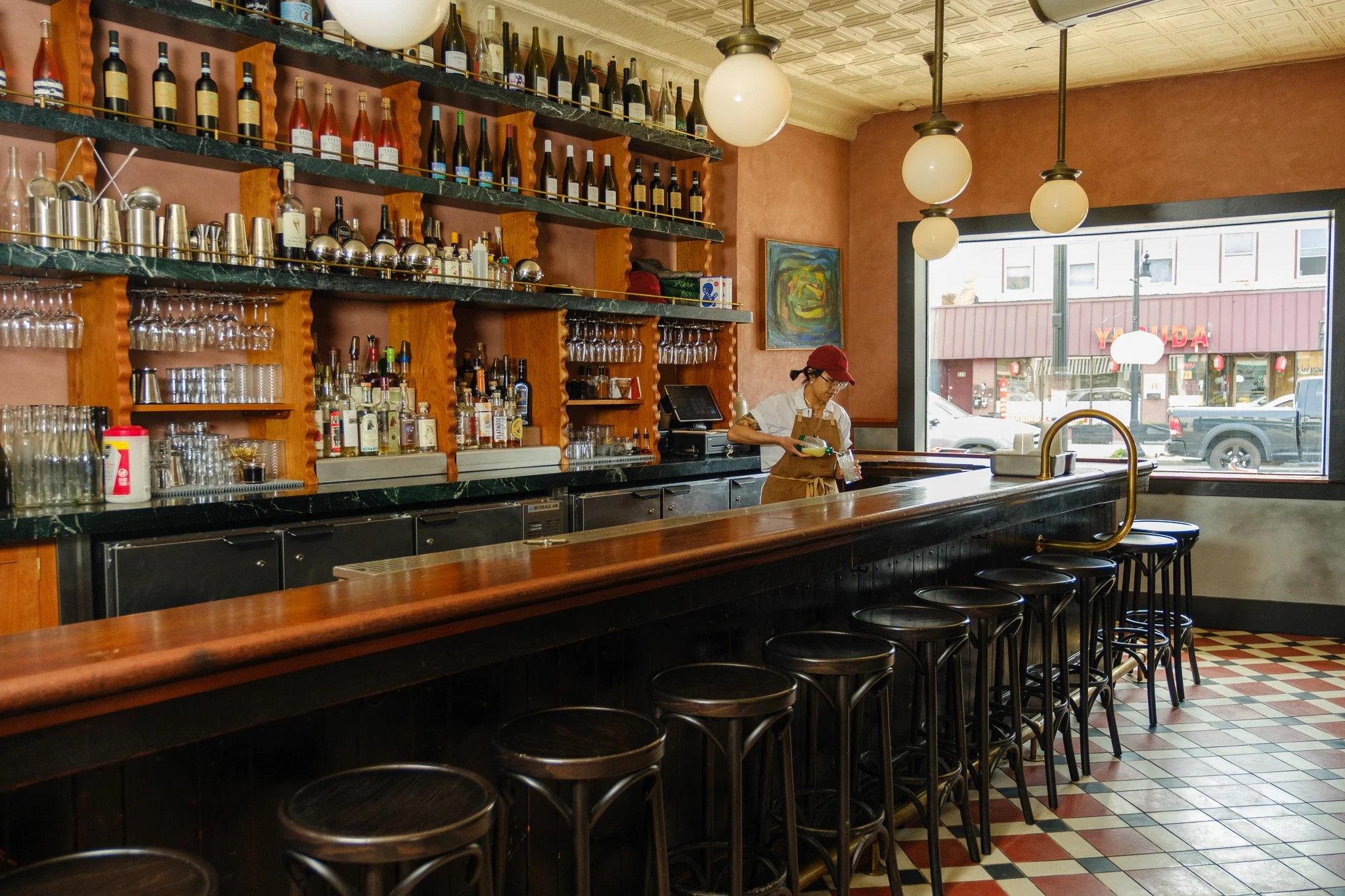
Early in your career you worked with a non-profit focused on food access, which continues to be a major issue. How has that influenced your culinary path?
My work in food access and food policy showed me just how political food is. While we often treat food as escapism, I don’t think we can divorce ourselves entirely from the real issues impacting the farmers and workers without whose contributions there would be no food on our tables.
I feel grateful to be able to be in community with so many amazing folks doing the work to build a better, more equitable world, and to support them in my own small way. From the folks who organize and contribute to the community fridges (shout out to my friend Pat, who helps me bring stuff from Eliza to the fridges every Sunday), to organizations doing emergency food distribution like KEFC, Columbia Kitchen, and People’s Place, to networks supporting immigrant neighbors like Ulster Immigrant Defense and CCSM, to people shaping a new future through education like the YFarm and Kite’s Nest, there are so, so many amazing things happening around the Hudson Valley.
I’m extra grateful to my team at Eliza, who have been super supportive. It’s been a real privilege to be able to leverage some of the resources - time, space, labor, ingredients - we have here towards supporting some of these initiatives.
To quote Diane di Prima, “NO ONE WAY WORKS, it will take all of us // shoving at the thing from all sides // to bring it down.”
[Ed. note: From Revolutionary Letter #8, published 1971.]
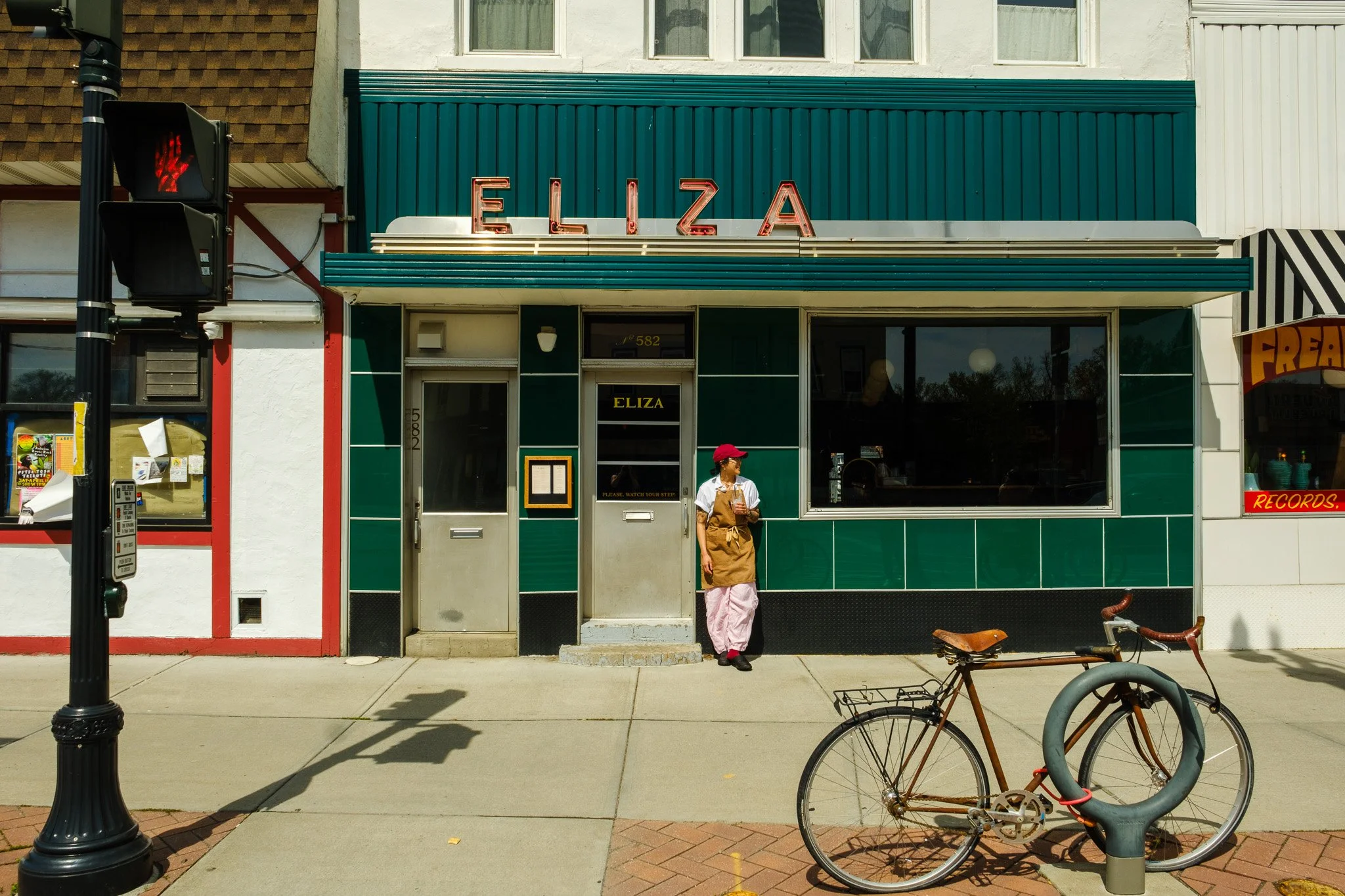
You recently held a fundraising dinner at Eliza with Chef Jon Kasza of Home Farm, an organic grain farm in the Hudson Valley trialing rice varieties for climate resistance. That sounds fascinating. Is it becoming a viable, sustainable crop that might scale?
I hope so! A diversity of crops - especially staples like rice - is key, I think, to building a sustainable food system in a time of climate change. It’s been really cool to learn more from Jon about this project, and to be able to use some of the rice the team harvested the previous season for the dinner.
The most interesting part, to me, is learning how one of the bigger challenges is not so much the growing of the rice, but the processing. More specifically, finding efficient harvesting and milling/polishing equipment for small-ish commercial farms, a category that’s been disappearing since farm operations began to consolidate at an increased pace starting in the 1950s.
In the Hudson Valley, Choy Division, a three-acre, Asian-led farm, was founded by a young Asian farmer who saw local farm markets had few East Asian heritage crops. Chefs often tell me they embrace family recipes made with available Hudson Valley ingredients. I’ve had exactly this conversation with an Indian restaurateur, a Yemeni restaurateur and an Italian chef, although locally grown ingredients are somewhat different due to terroir. How important is it to you to have local Asian produce available?
It’s for sure something I get madly excited about! I think a greater diversity of produce - reflecting the growing diversity of farmers and cooks - is a boon to everybody.
Since I’ve started exploring my Thai culinary heritage more deeply these last few years, starting with my pop up Thaiglish, I’ve met a bunch of amazing farmers growing Asian vegetables here in the Hudson Valley, including Sarah Chien of Dirt Dance Farm here in Kingston, who’s lately been supplying me with the most immaculate baby bokchoy.
Through these relationships, I’ve even started to develop a new appreciation for veggies I used to avoid as a kid, like bitter melon… so it even works as a form of immersion therapy!
People sometimes get hung up on a pretty narrow idea of culinary authenticity. Since third culture cooking has its own sense of place and identity, how does that cultural interplay influence your menu development?
I’d argue that the interplay is the whole point. What is cuisine but a reflection of how people respond to their place and time? Almost every “traditional,” “authentic” dish we know today was novel - maybe even iconoclastic - at some point. Chile peppers, now a huge part of Thai cuisine, arrived from the Americas via Portuguese traders some time around the 16th century. Many Thai desserts we consider “traditional” now were introduced to the Siamese court of King Narai in the 1600s by Maria Guyomar de Pina (known as Thao Thong Kip Ma in Thailand), a woman of Portuguese, Bengali, and Japanese descent, and were based on Portuguese recipes. A true third culture icon!
I’d also argue that even Thai cuisine itself draws strength from being somewhat “third culture,” geographically. Thailand lies at the junction of many trade routes and has benefited greatly from them. The court of King Narai, which many consider part of the Siamese golden age, was a metropolitan center populated by traders, adventurers, and travelers from all over the world. Many iconic Thai dishes originate from the cuisines of minority ethnic groups who live within these borders.
The restaurant industry has continued to face difficulties with foot traffic, rising food costs and staff shortages since the pandemic. If restaurants are engage more in programming and collabs, what do you see as the future for the industry?
It’s honestly hard to say… one thing is for certain, though, I don’t think we can have a sustainable industry unless we can make it sustainable for the workers. It’s been sad to see how many talented friends exit the industry because of burnout, or because they simply cannot afford to work the job they love and, say, also pay rent. It’s been heartening to see more advocacy around issues like fair wages and working conditions over these past few years - including some moves towards unionizing and collective bargaining too. That said, I think advocating for higher wages in a vacuum isn’t the solution: most independent restaurants are already struggling, and in many cases they simply cannot shoulder the burden of matching the rising costs of living alone without policy support.
This is why I think issues like cost of living, universal healthcare, housing access, and affordable childcare impact our industry directly. Having strong social services and a social safety network would go a long way towards building a future where independent restaurants can thrive. In short, maybe the most fruitful collabs we can engage in now are with the policy makers and labor organizers in our area?
Yes, burn out and mental health is increasingly part of the conversation for industry professionals. So how do you manage your work/life balance? What do you do to relax?
Million dollar question! As someone who’s kind of made food her whole personality over the years, it’s been a bit of a hard nut to crack… I got some great advice recently to invest time into hobbies and activities that have nothing at all to do with cooking, and I’ve been trying to do more of that. I’ve gotten back into reading for fun again, and that’s been huge. Huge.
You’ve been popping up around the Hudson Valley as Thai(glish) since 2018. You went home to Thailand just a couple of weeks ago. Does travel inspire new ideas for the menu?
I try to visit every couple of years, and would love to spend more time there in the future. Every time I go back to Thailand, I find something new to mull over, another corner of culinary history to chew on, and new trends to witness. Since I cook so much from nostalgia and past taste memories, it’s crucial to remind myself that food culture is not static, and just like, say, language and fashion, it moves and grows with new stimuli.
What are some of your favorite ingredients and spices? If you were traveling, which 3 would you bring?
Fish sauce, limes, and chiles… the three pillars of flavor!
Is there any kitchen overlap with the bar program at Eliza?
Some! The best overlap happens when we do special events like Songkran, which is Thai New Year. It’s a chance for us to run some classics like Thai iced tea and Singha beer, along with some fun cocktails featuring Thai ingredients.
We often ask our industry tastemakers about their tattoos. What’s the backstory behind one of your favorites?
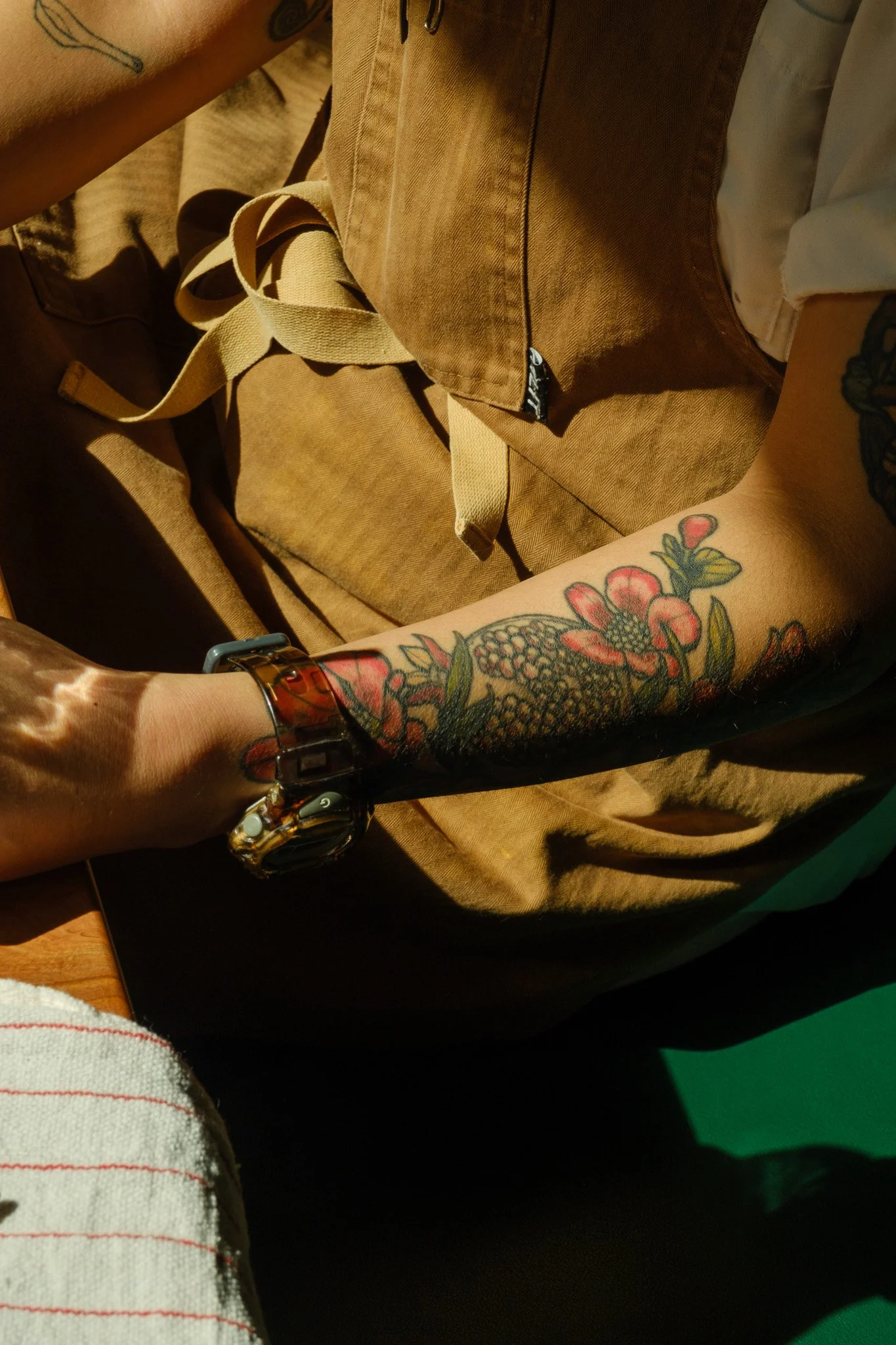
One of my current favorites is the pomegranate, done by Emily Scott at Dog Street Tattoo in New Paltz. I’m a bit of a mythology nerd, and it’s an homage to Persephone, Greek Goddess of spring and the underworld. I love her story partly because she has her feet in two worlds - the original third culture girlie, in a way.
Where are 3 of your favorite places for breakfast, lunch and dinner anywhere in the Capital Region or Hudson Valley?
There are so many great spots around, it’s hard to pick! I’m partial to a good diner breakfast, and Dietz is my go to in Kingston. I also love to linger over a breakfast burrito and a cute coffee special at Camp. For lunch, Ollie’s Pizza in High Falls, or some take out from Top Taste in Kingston. For dinner, I’ve really been loving Well Nice Wine Bar in Rosendale for the vibes and the food.
Imagine your ideal day or night out. If you could go anywhere in the world with no limits on costs or reservations, where would you go and how would your day or night unfold?
Honestly, I love exploring new cities… the location doesn’t matter as much as the method. Here’s how our day would unfold: we’d start early with coffee and breakfast at a local cafe, because more time in the day equals more time for meals. Then a stroll through a museum, followed by lunch. Then some meandering through thrift shops and bookstores, where I will inevitably pick up one to three new books for my TBR pile that I swore I wouldn’t add to. We’ll stop for a little sweet snack somewhere in between, of course. Then, when my feet are sore from all the walking, we’d go for dinner. We’d order too much and be well and truly stuffed before the dessert menu is dropped, but we’d get something to share anyways. A night cap at a cute little bar before we take the long way back to bed to end the night.
How will you spend your next day off?
Besides doom scrolling in bed?! Hopefully finishing off the book I’m currently reading (Lev Grossman’s The Bright Sword), maybe a stop in at Rough Draft for a coffee break (during which I will absolutely not buy another book), and hopefully a little walk/ramp-finding expedition.
Thanks for talking with us today, Chef!