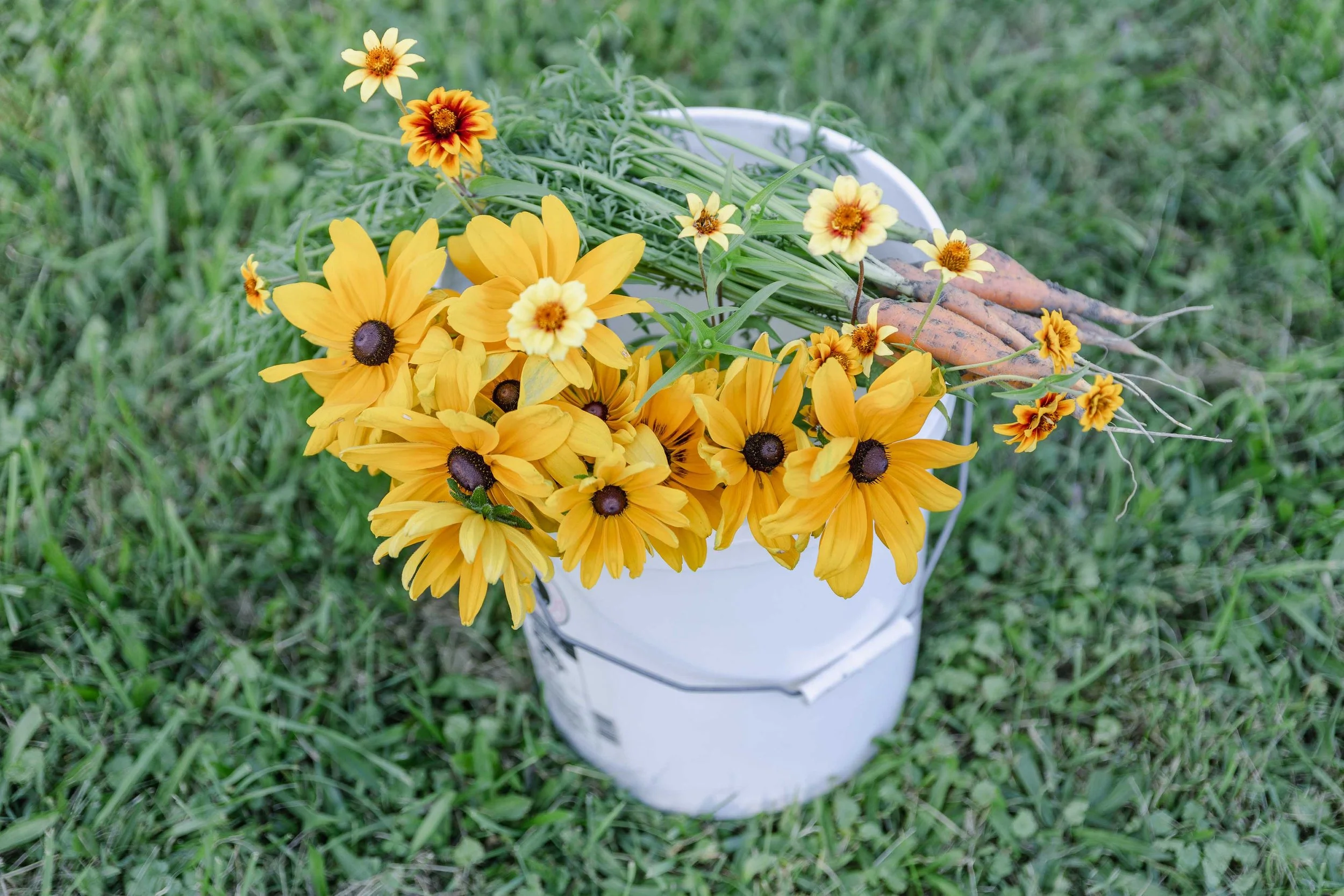
ALICIA BROWN OF EDIBLE UPRISING TALKS URBAN FARMING, MOTHERHOOD + GARDENING AS CREATIVE ART
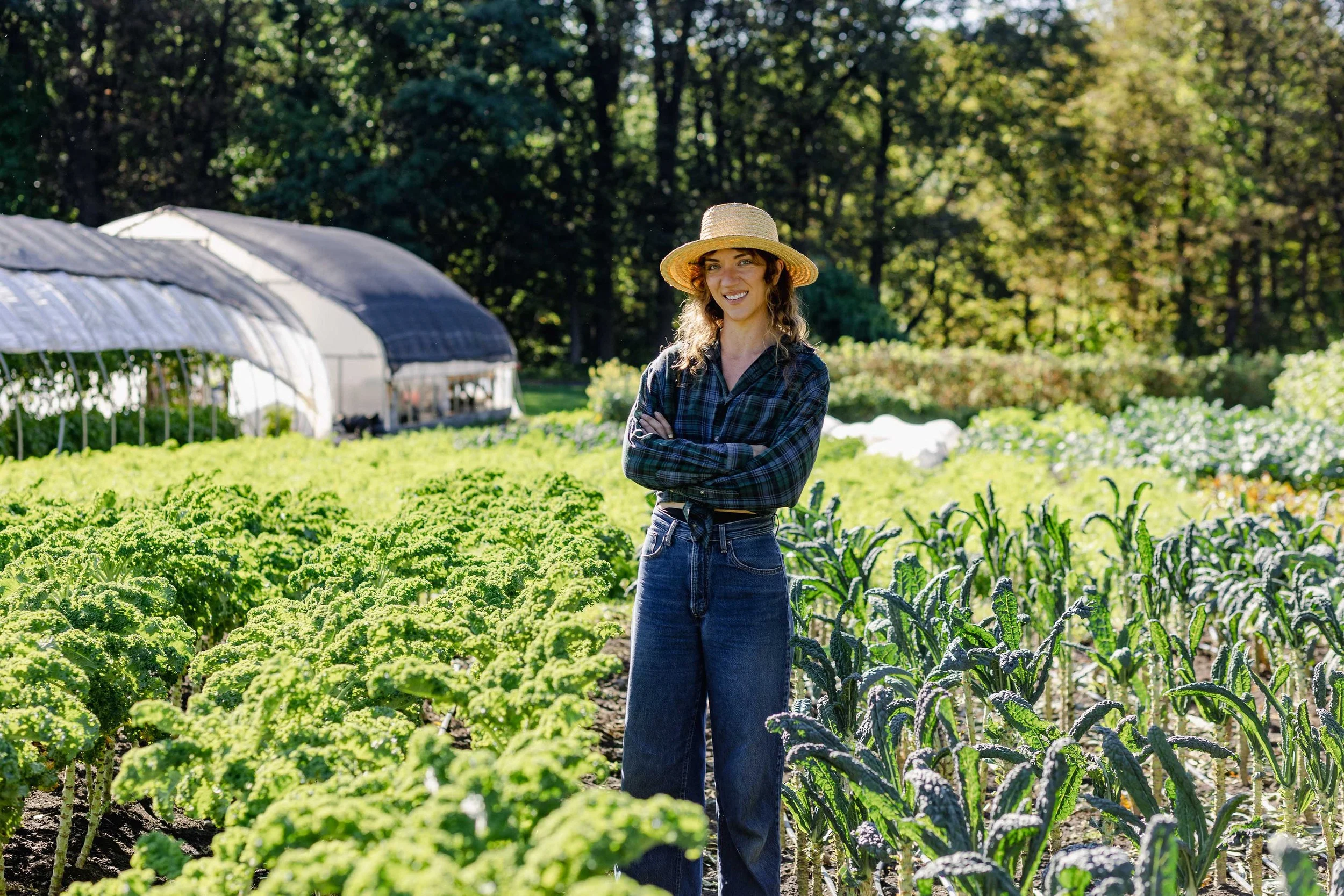
From fine art to farming and Boulder to Troy, Alicia Brown weaves land stewardship, motherhood + community into a regenerative urban farm created from scratch with her husband + son.
Interview: Susie Davidson Powell
Photos: Mise en Frame Photography/for The Dishing
Shoot location: Edible Uprising Farm, Troy, N.Y.
Tastemaker: Alicia Brown
Current Restaurant: Edible Uprising Farm
Hometown: Boulder, CO
Current city: Troy, NY
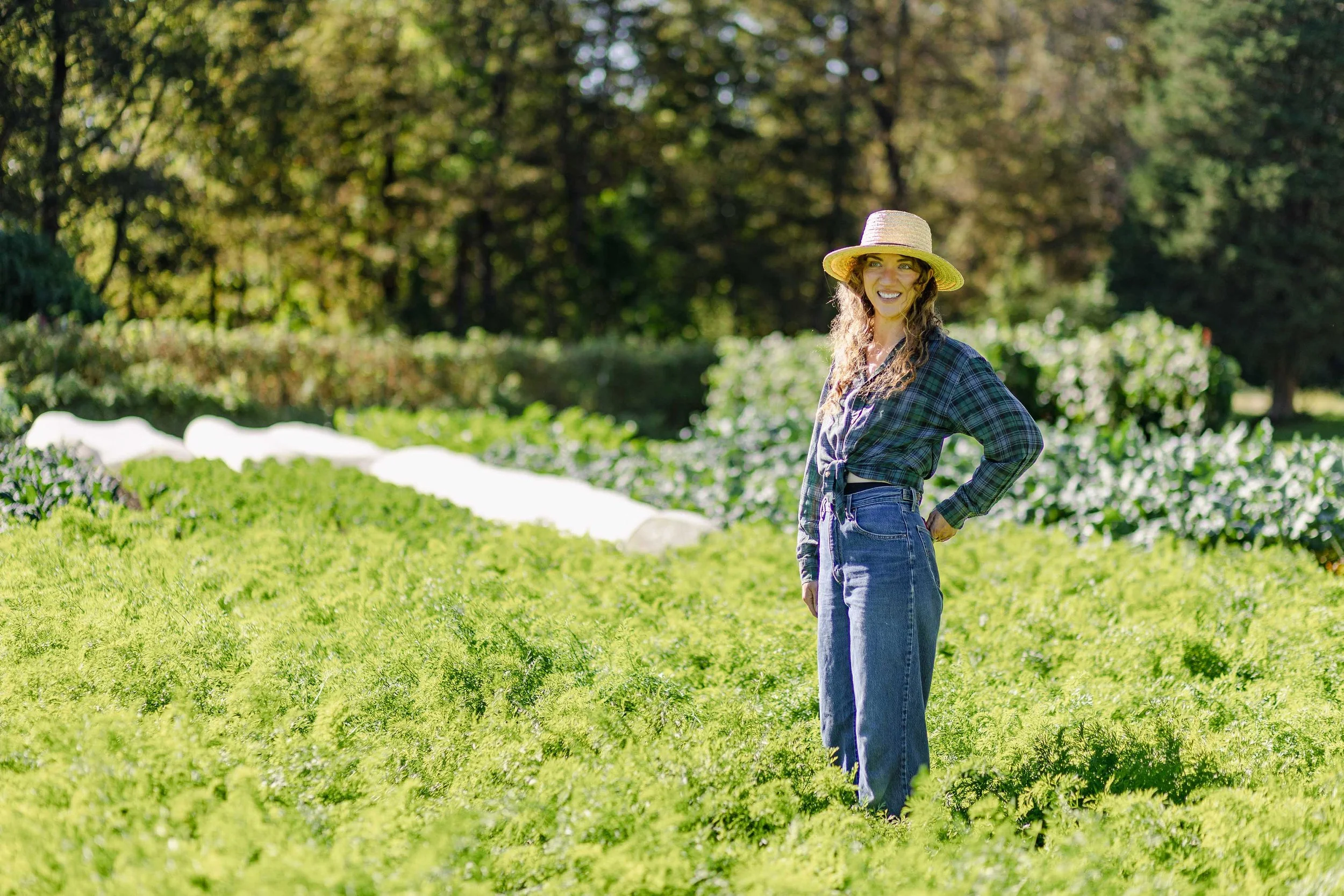
Personal style: I describe my farming outfits as “Amish-cowboy”
Listening to: This summer, The Cramps
Favorite spirit: Mezcal
Favorite classic cocktail (or non alc): Not a cocktail, but coffee is my passion
Favorite restaurant or bar ever: T. J. Buckley’s in Brattleboro, VT
Biggest industry influence: Elliot Coleman and Jean-Martin Fortier
Industry trend that should end: Growing on plastic!
The Dishing talks with tastemakers in the hospitality industry + trailblazers at the intersection of food, culture + art. Today we’re talking with farmer Alicia Brown, co-owner of Edible Uprising Farm, who is a farmer, mother, partner, and portrait artist endlessly coaxing life out of the farm + creating art. We met with Alicia on the farm and chatted about the path that led her to an urban farm in Troy.
Hey, Alicia! Great to talk with you! You and your partner, Ben Stein, started Edible Uprising in 2019 on an urban acre in the middle of Troy, literally set behind a baseball field. You grow over 200 varieties of heirloom vegetables and flowers on a little more than one acre of land. What did that first season actually look like — what did you get right, and what did you have to completely rethink?
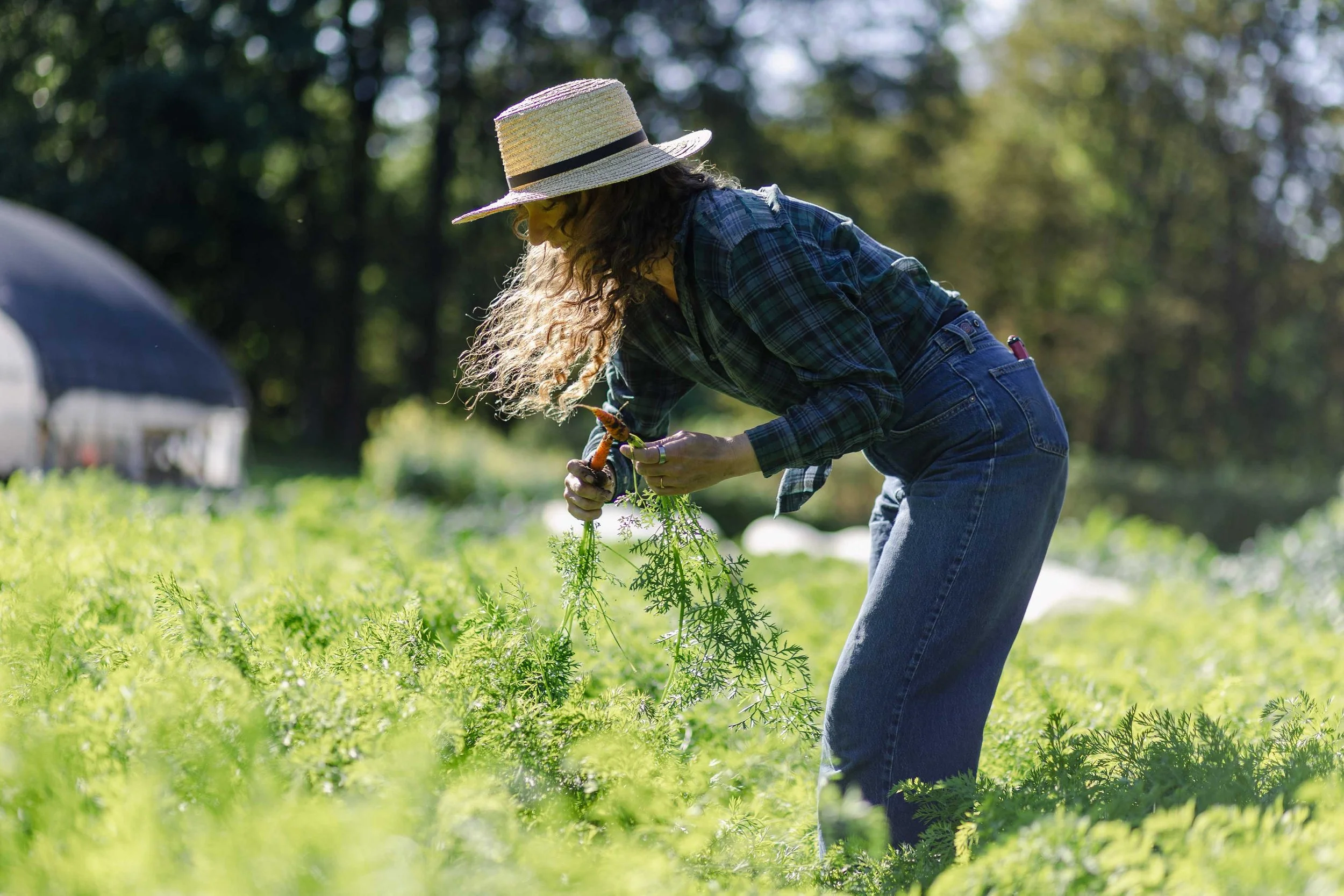
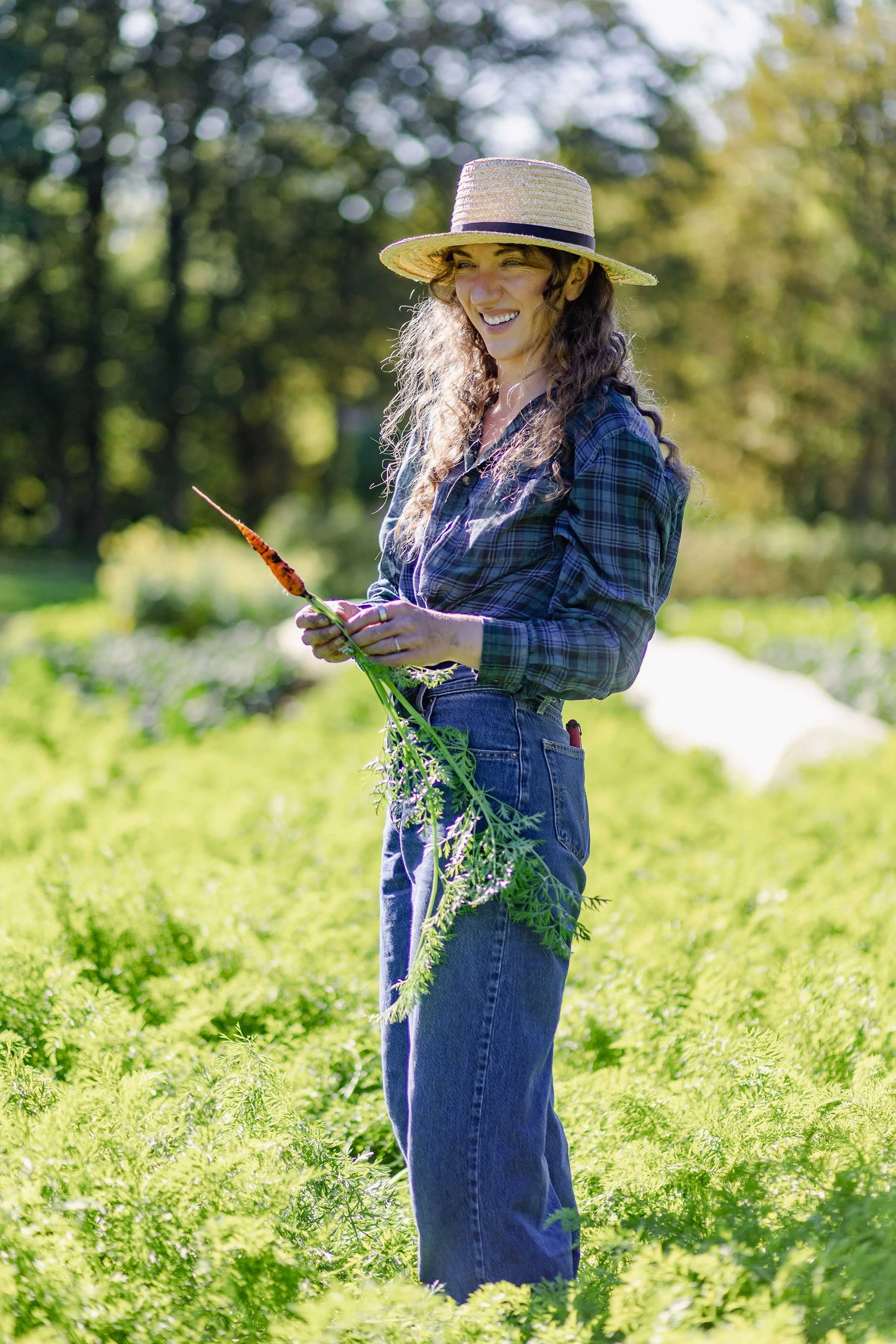
AB: We were really starting a farm from scratch, in a place we had just moved to where we only knew one person, so it was a pretty intimidating task we had set for ourselves. In just a few months, with the help of our best friend Shae, we established a one-acre farm, built a walk-in cooler, a large shed that served as our farmstand and wash/pack space, a caterpillar tunnel and a propagation tunnel. It was thrilling to see our hard work yield such beautiful food in such a short amount of time. We had 20 CSA members and a couple of restaurants on board, and we were so passionate about growing food that it all felt incredibly meaningful.
Looking back, though, my years of farming have taught me that good things take time. If I were to do it again, I would have spent at least a year on the land and in the community getting to know the nuances of both before making assumptions and diving in. We have young, aspiring farmers visit the farm every season, and this is always the advice I give them: get to know the land, get to know the community, and let them guide you from there. I wish someone had told us the same thing.
You and Ben have actually known each other since high school in Boulder, Colorado where you grew up. You moved to the east coast for university + Ben followed you ending up in Vermont to study agriculture. What kept you in Vermont + how did you come to Troy?
AB: Vermont is a really special place because, in our experience, it has a culture that is deeply centered around agriculture and the natural world. We loved living there, but we desperately wanted to start our own farm and struggled to find affordable land. Another challenge was that Vermont has a relatively small population but a huge number of farms. We wanted to grow food for people in a place that really needed it, and it felt like Vermont was already well served by so many incredible vegetable farms.
It was also discouraging to visit farms and ask how people could possibly afford the land they were on, only to learn that it was often family land they had inherited. It made our dream of starting a farm feel even more out of reach.
We came to visit a friend in Troy in 2018 while we were looking for land in Vermont. She showed us this large, grassy field tucked behind a baseball field in South Troy. It was completely hidden and such a surprise in an otherwise dense, urban neighborhood. The owner had always thought it would be a great spot for a small farm and offered us a lease. We turned it down—we had always envisioned ourselves farming 100 acres in rural Vermont and couldn't imagine living or farming in a city. But as we drove away, we started thinking about how densely populated the area was, how much good food was needed in that neighborhood, and how leasing land would allow us to start farming without having to buy property. So we decided to jump in and give it a try. We packed everything we owned into the back of our red pickup truck and moved to Troy, breaking ground as soon as the ground thawed on March 24, 2019. By May 19, we were harvesting our first crops.
You and Ben run Edible Uprising as true partners. How do you divide the work, and where do your instincts as a farmer differ from his?
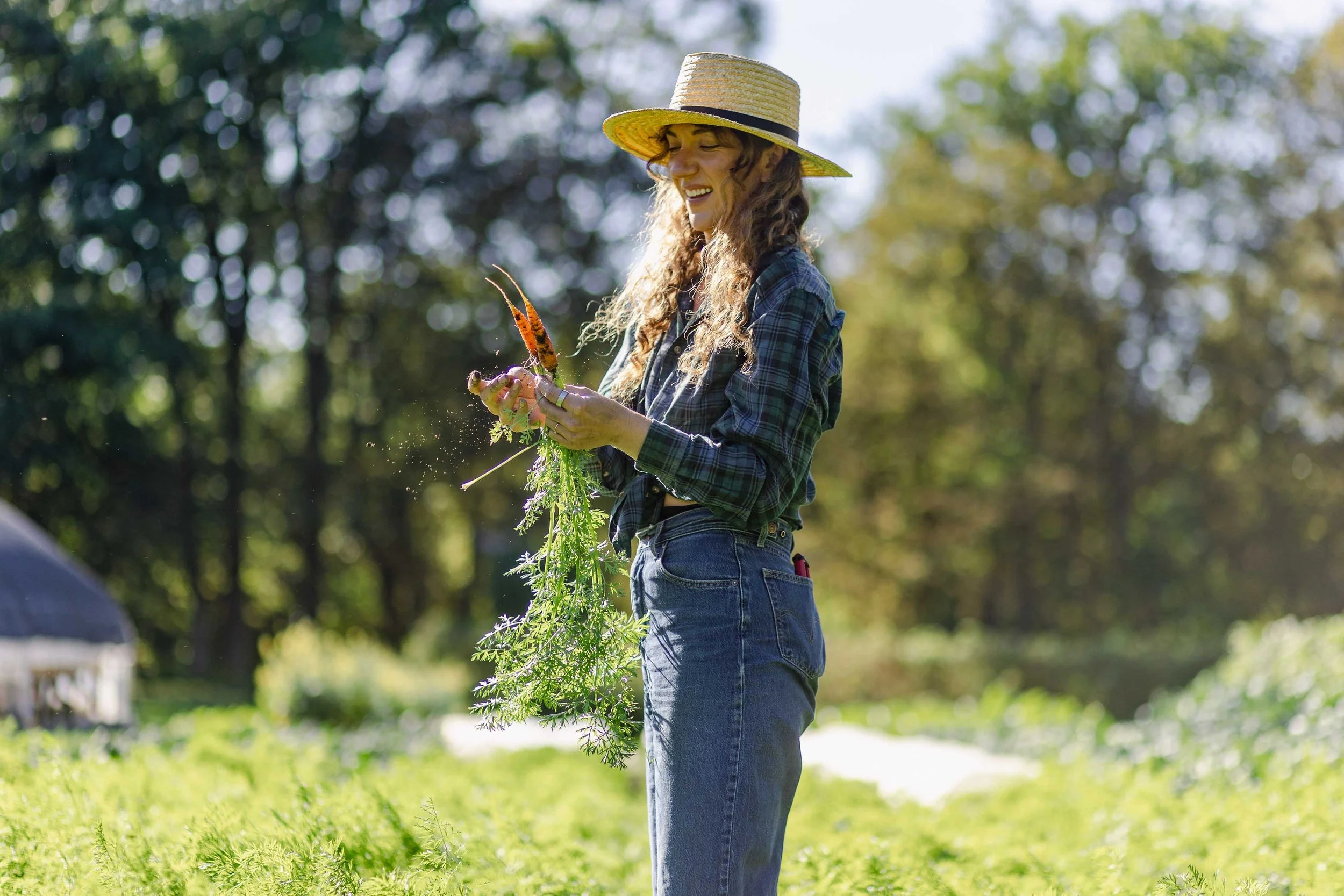
AB: Ben oversees the execution of our crop plan—a giant spreadsheet of planting, seeding and harvesting that we build over the winter. He also oversees all of our wholesale accounts and works closely with the chefs in the area, as well as managing the day-to-day work of our employees. I handle the website, mailing lists, social media, CSA and Virtual Farmstand, along with all of our design work. In the field, I do all of the cultivation and oversee our flower production and Flower CSA. I also wash all of the produce and oversee the enormous amount of order fulfillment we do for restaurants, CSA and the Virtual Farmstand.
We share plenty of responsibilities, but definitely have our own distinct roles, which works really well. My background is more in homestead gardening and his is in larger scale organic farming, so we’re constantly battling between scale, efficiency and approach. Each of our viewpoints are really valuable and have shaped the farm into what it is today.
You came to farming through fine art and design as a student at Rhode Island School of Design, and not through a traditional ag program. What was the moment for you that pulled you from studio work toward growing food?
AB: In my work as an artist, I was constantly trying to create something that had meaning and purpose beyond the walls of a gallery, but I felt limited in my ability to do that. I became increasingly drawn away from the traditional oil painting I was trained in and more towards traditional arts and crafts—printmaking, bookbinding, woodworking, quilting—and loved making things with my hands that then had a life beyond their creation.
That eventually led me toward other traditions of making that aren't as commonly learned anymore, including growing food. From the moment I started my first garden, I was confronted with this whole world of knowledge that was completely new to me, and I was fascinated by it. Once I started farming, it felt like I had found what I'd spent all those years in the art world searching for: something made with my hands that could have an impact far beyond the moment of its creation. The rest is history. And yes, apparently my alternate life as a portrait painter in Paris never quite materialized!
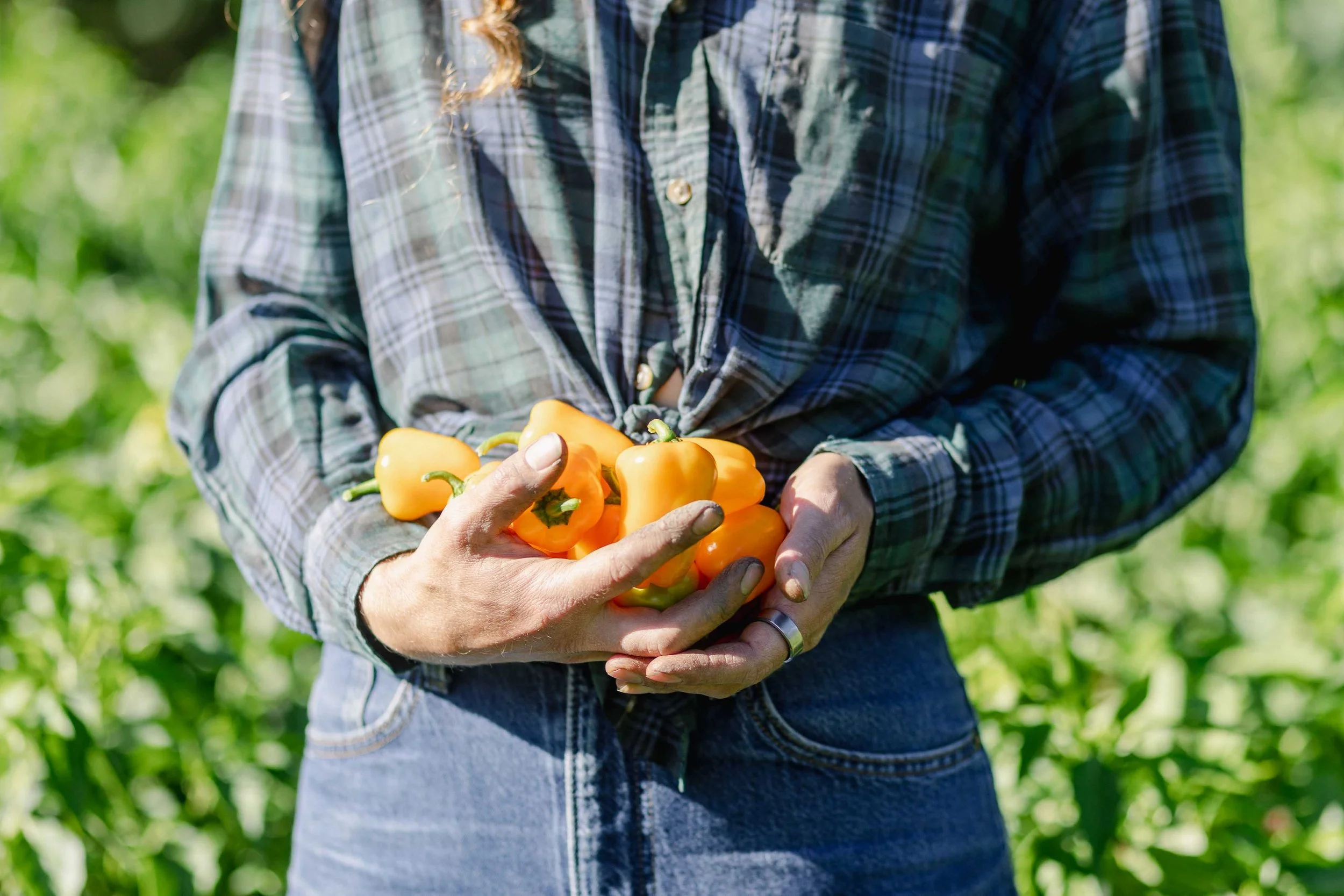
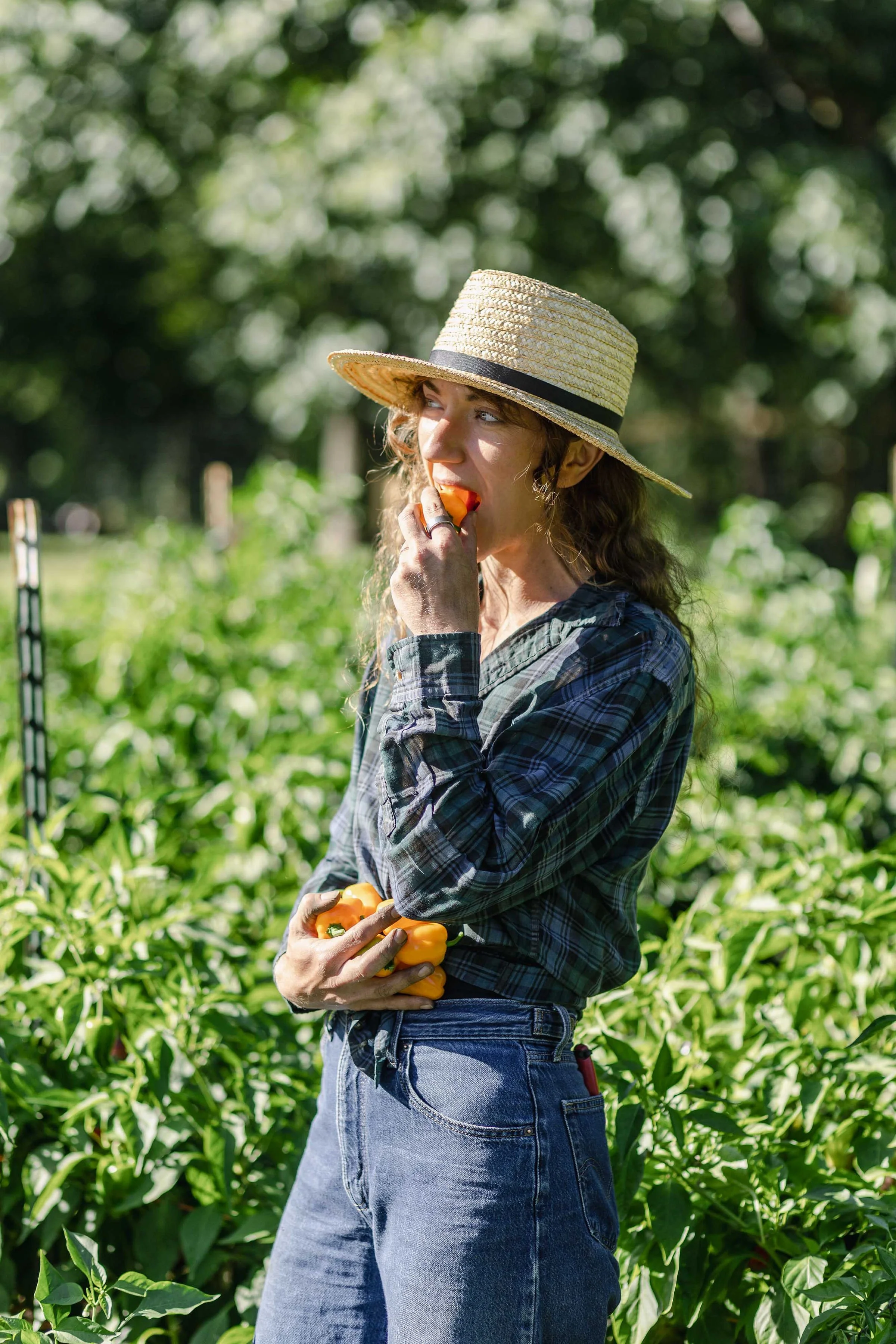
Many people know Edible Uprising as a small farm with a strong CSA member base as well as your restaurant clients. It sometimes feels as if the commitment to a season-long CSA can be a barrier in terms of upfront costs or the weekly commitment. Your virtual farmstand has really bridged that direct-to-consumer supply chain that was first impacted by the pandemic. Can you talk about why it was important to you to set up?
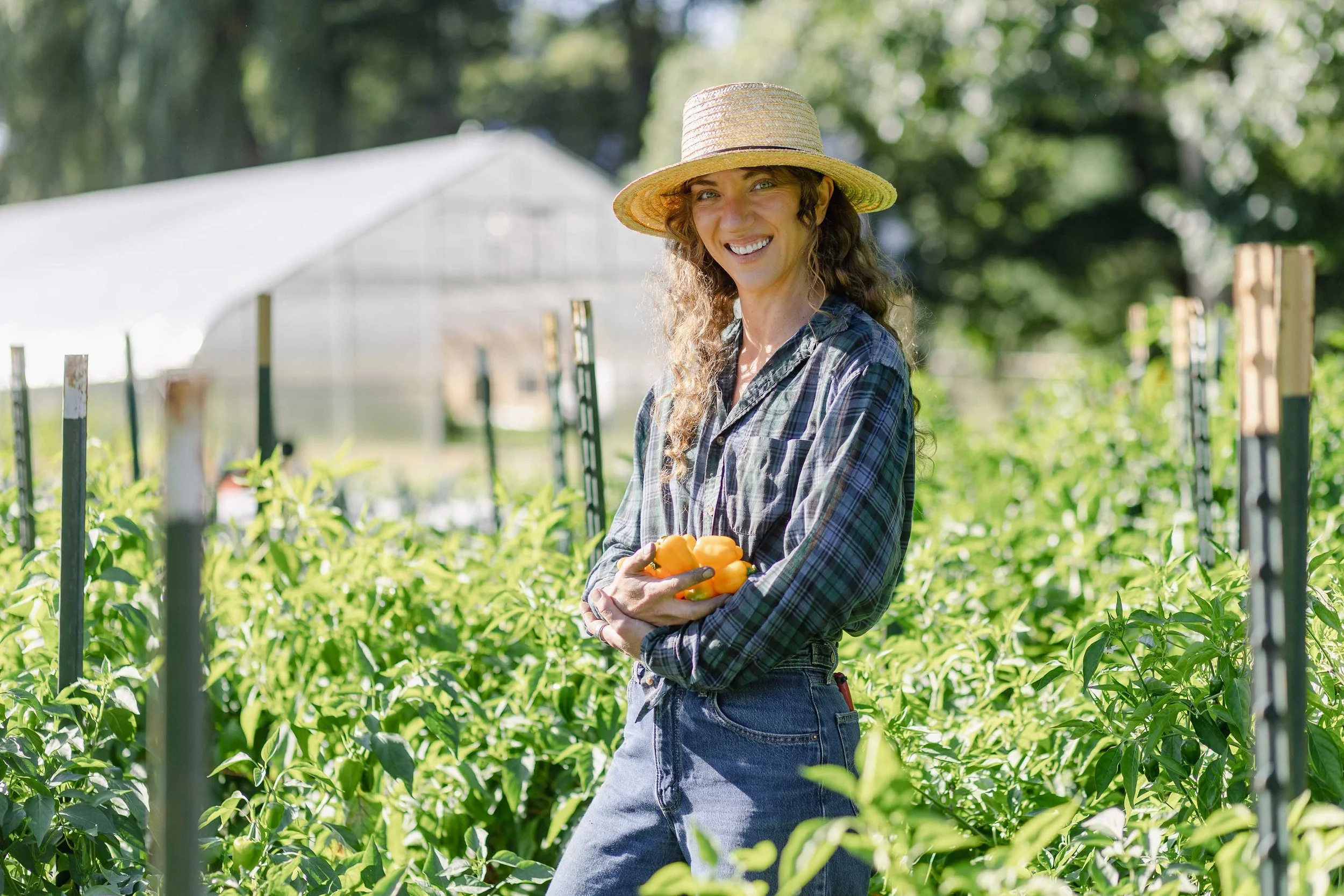
AB: One of our main motivations for starting the Virtual Farmstand was actually to reduce food waste. When you sell at a farmers market, you harvest a huge amount of food, put it out and hope it sells. Inevitably, you end up with produce left at the end of the day that has been sitting out and often goes to waste.
We wanted to flip that model on its head and only harvest what had already been sold. People can browse what's available in the field, preorder their vegetables, and then we harvest everything fresh the day before they receive it. It means we're not left with a mountain of unsold produce at the end of the day. It's grown every year and demand has consistently outpaced our ability to keep up, which we're incredibly grateful for. I also love that people can use it on their own schedule—they don't have to commit to a season-long CSA and can pause their orders whenever they need to.
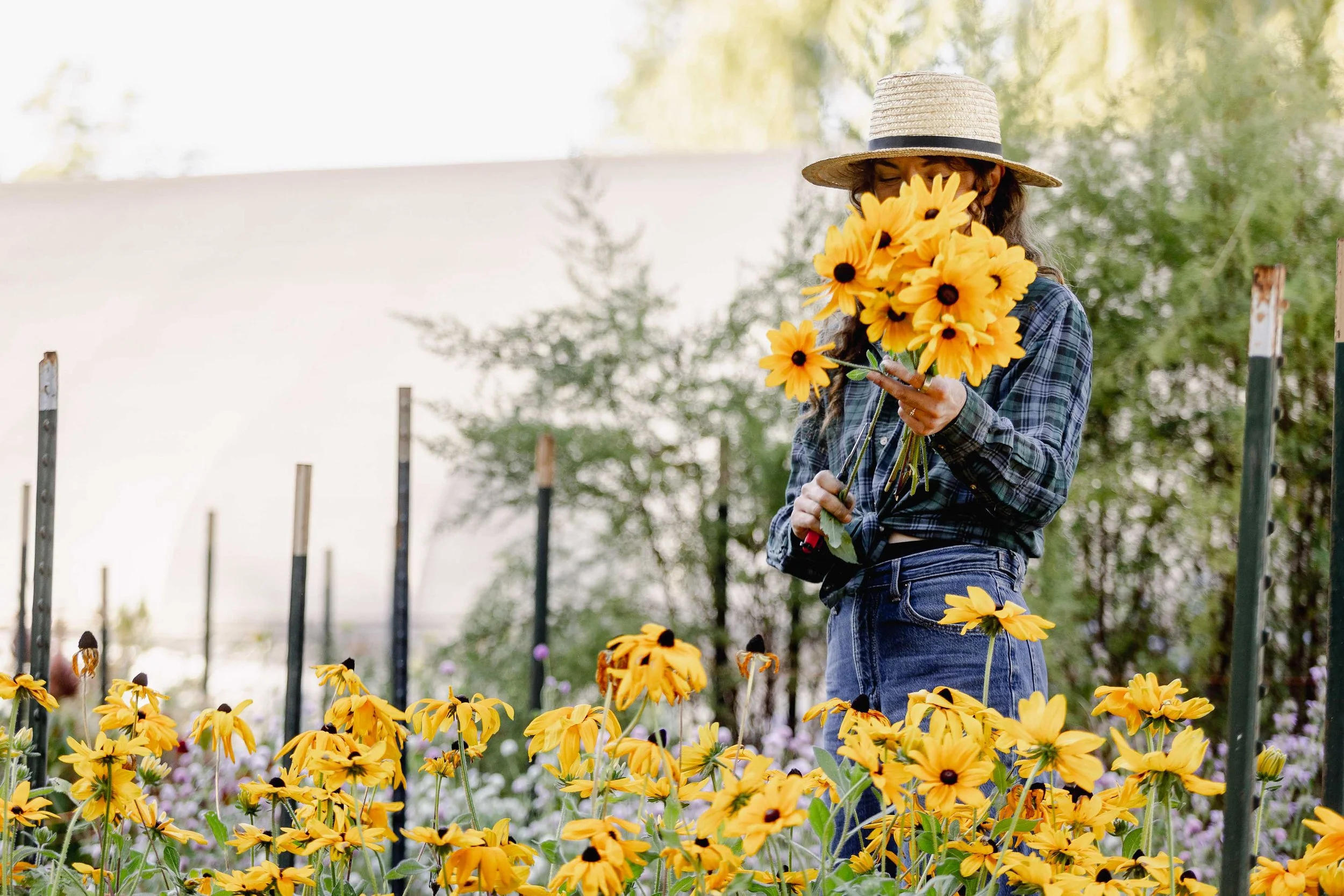
This year, you had a truly horrific incident when you were attacked out of nowhere by two pitbulls. I know you have physically healed but how are you doing in the aftermath of that, and has it changed anything about the way you or your team work in the field?
AB: After so many seasons farming in an urban setting, we're no strangers to the unusual things that can happen around us. We've had everything from fires in the woods surrounding the farm to stabbings and shootings in the park next door and even multiple cold-case murder investigations taking place on our property. Being attacked by two roaming dogs, though, was never something I imagined we'd have to deal with.
Since the attack, we all carry pepper spray and have safety plans in place for emergencies like this. I feel much more equipped now to handle something like the nightmare that happened to me.
I've physically healed, but I experienced some pretty severe post-traumatic stress afterward and have gone through intensive trauma therapy, which has helped tremendously. The support I received from our community was also incredibly healing. Friends, CSA members and people from all over Troy and beyond showed up for me when I was in a very fragile place. I feel incredibly grateful to live in a place with such a strong community.
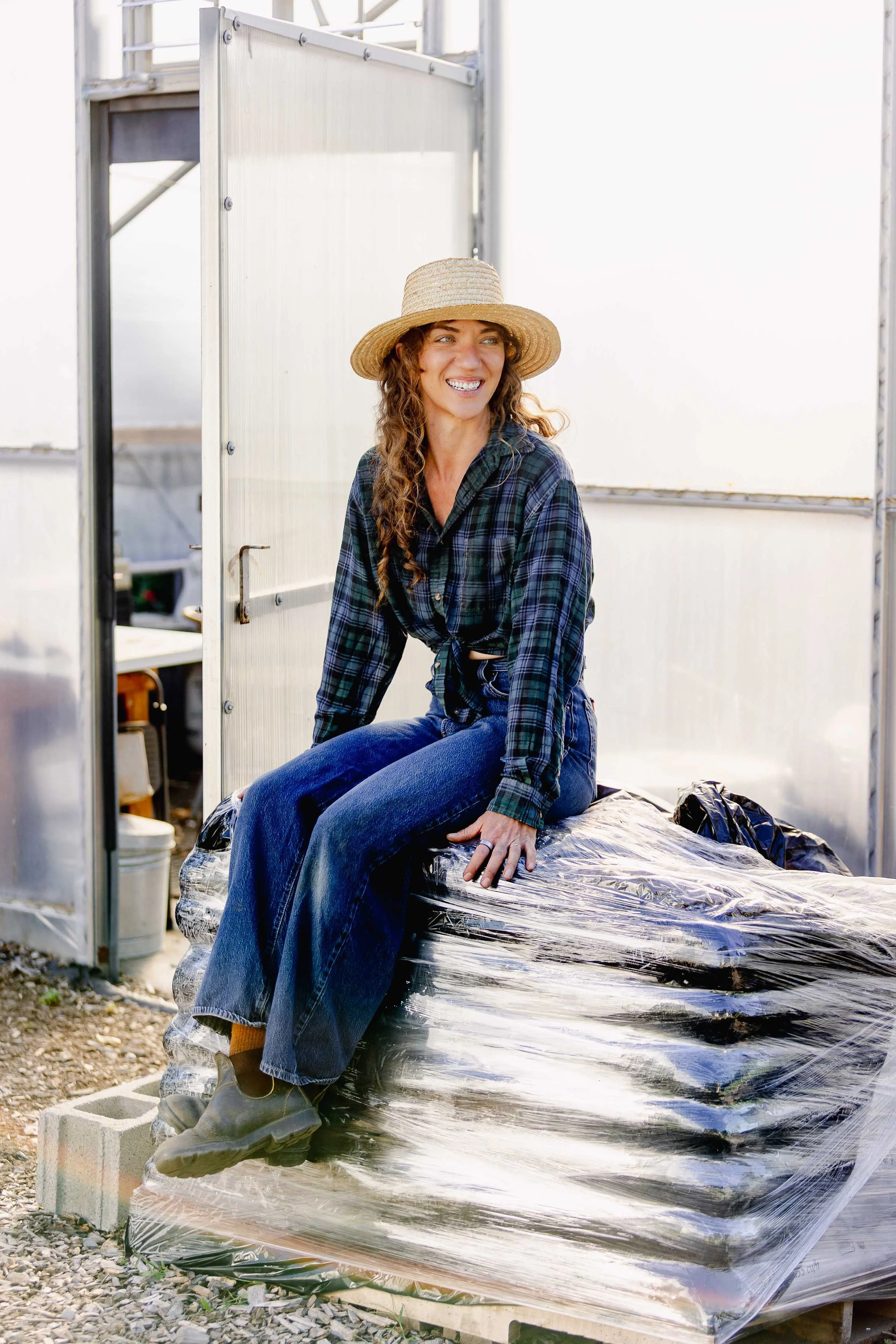
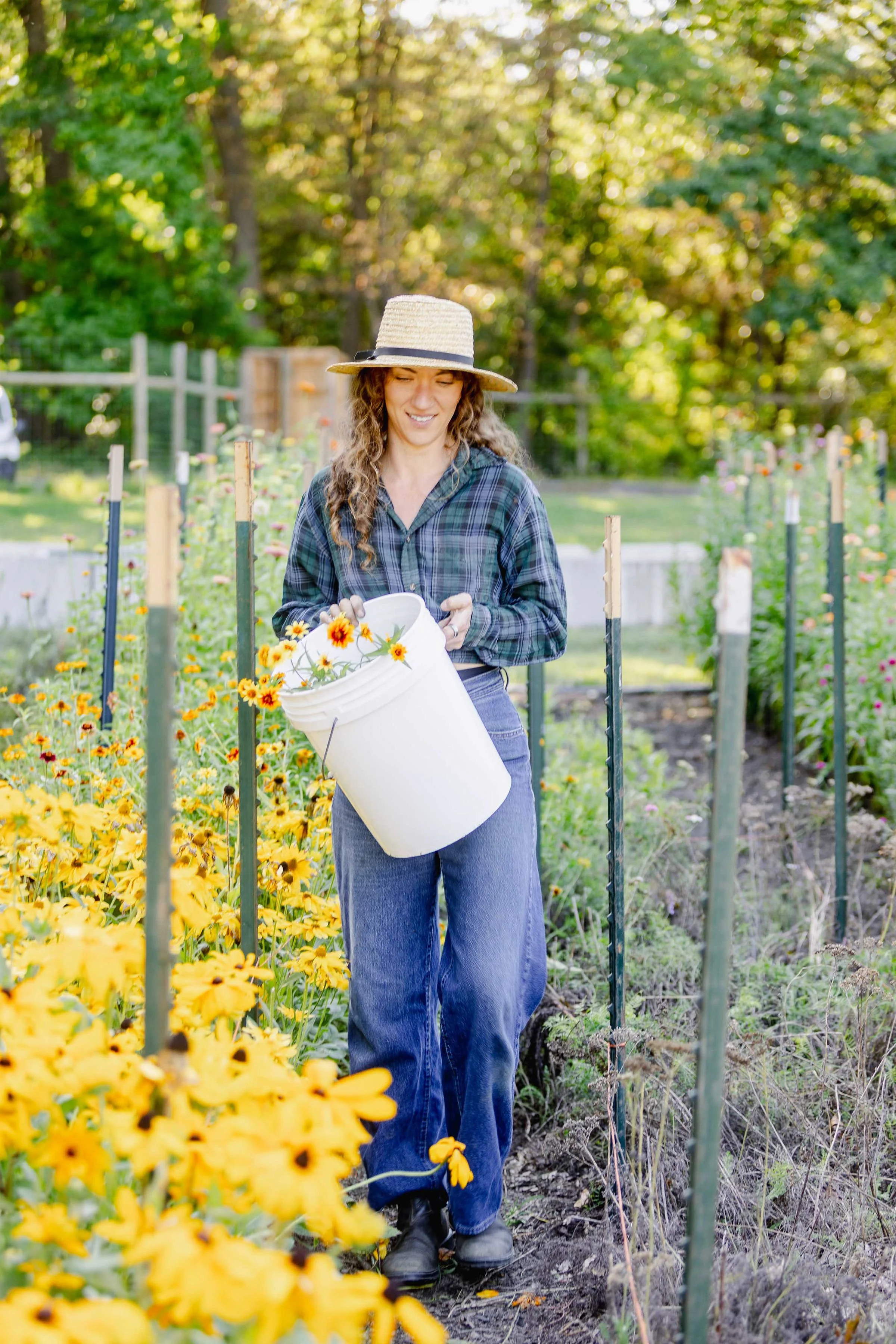
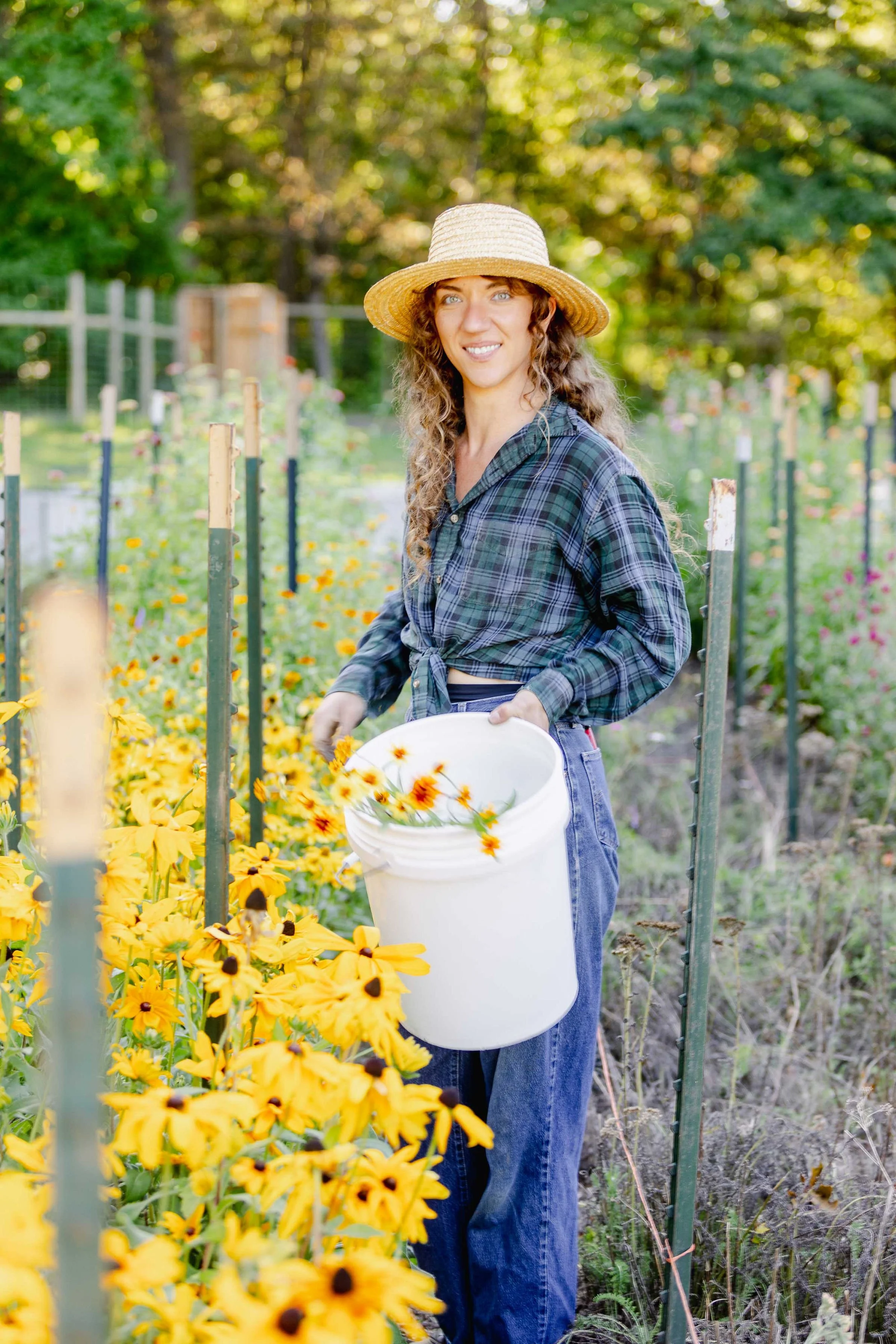
You've talked about food sovereignty and social justice as much as growing vegetables and food access. Do those ideas show up in the daily decisions of running an urban farm: who you sell to, how you price things, access?
AB: When we started the farm, we wanted access to our vegetables to be a priority regardless of income. We created our Community Funded Farm Share model, where CSA members and the public can contribute money to fund shares for people in our community who couldn't otherwise afford them. Every year, we provide memberships to families through that program. We also regularly donate to the Free Food Fridges in Troy, and through the Virtual Farmstand we reserve community boxes that we can give away. There are a lot of barriers to accessing fresh food in Troy and Albany, so being able to grow food specifically for our community in this way has been incredibly fulfilling—for us and for the people who help make it possible.
Your primary farm is the 1-acre in Troy, but you also bought an additional larger plot of 32 acres not far away. When or why did you add that?
AB: When we started the farm, we were leasing the land, and not having the security of owning the ground we farmed was always a concern. In 2020, we came across a vacant piece of farmland just outside Troy and decided to purchase it as a potential future location for the farm in case we ever lost our lease.
The land had been in corn for decades and the soil was severely depleted, so we spent several years rebuilding it. Eventually it improved enough to grow crops there, and our garlic, winter squash and potatoes did surprisingly well.
Having two properties feels a little like an insurance policy. With storms, pests and diseases threatening crops every season, it's reassuring to know that if something affects one property, we have another. Today, we grow most of our garlic, onions, leeks, winter squash and potatoes there.
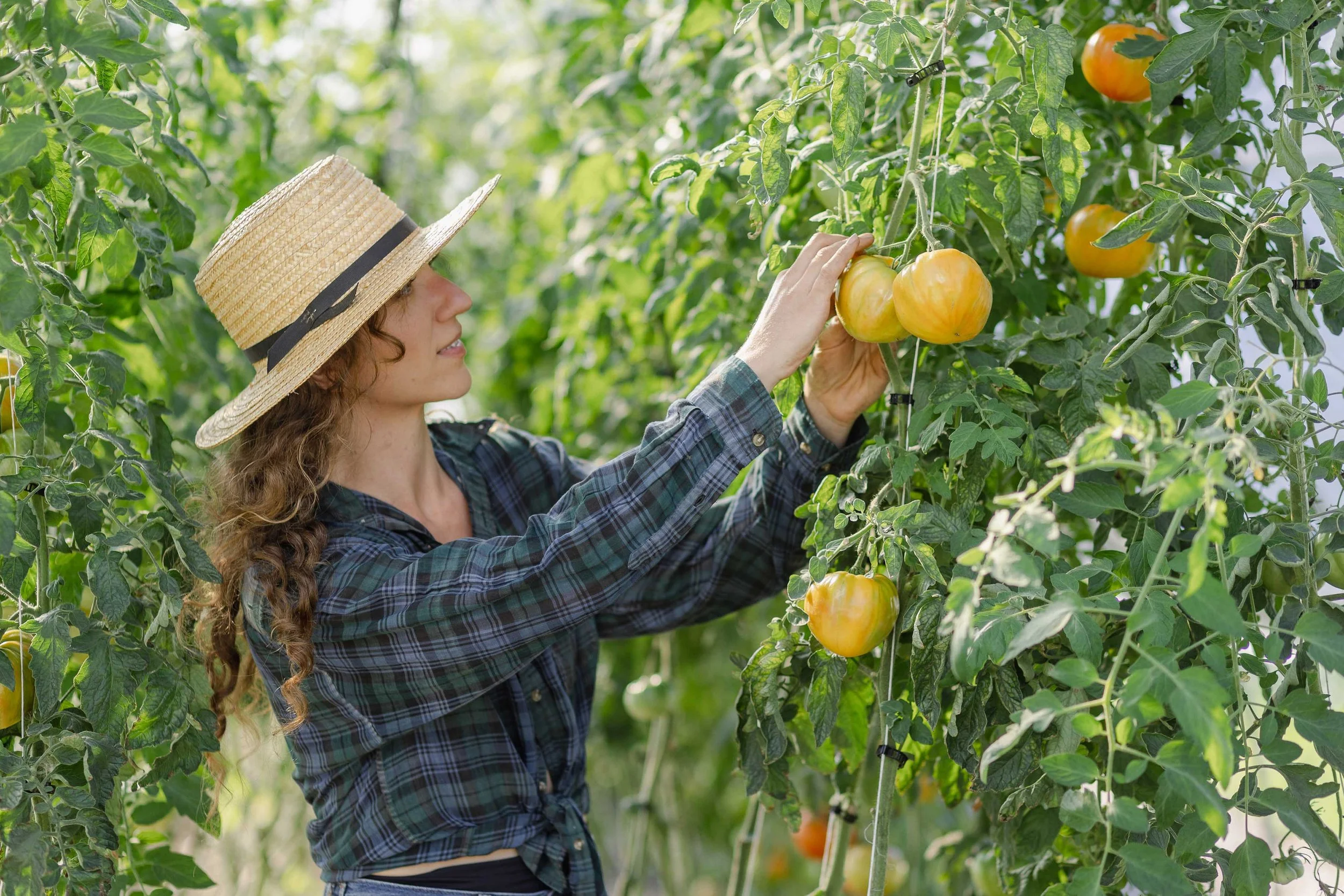
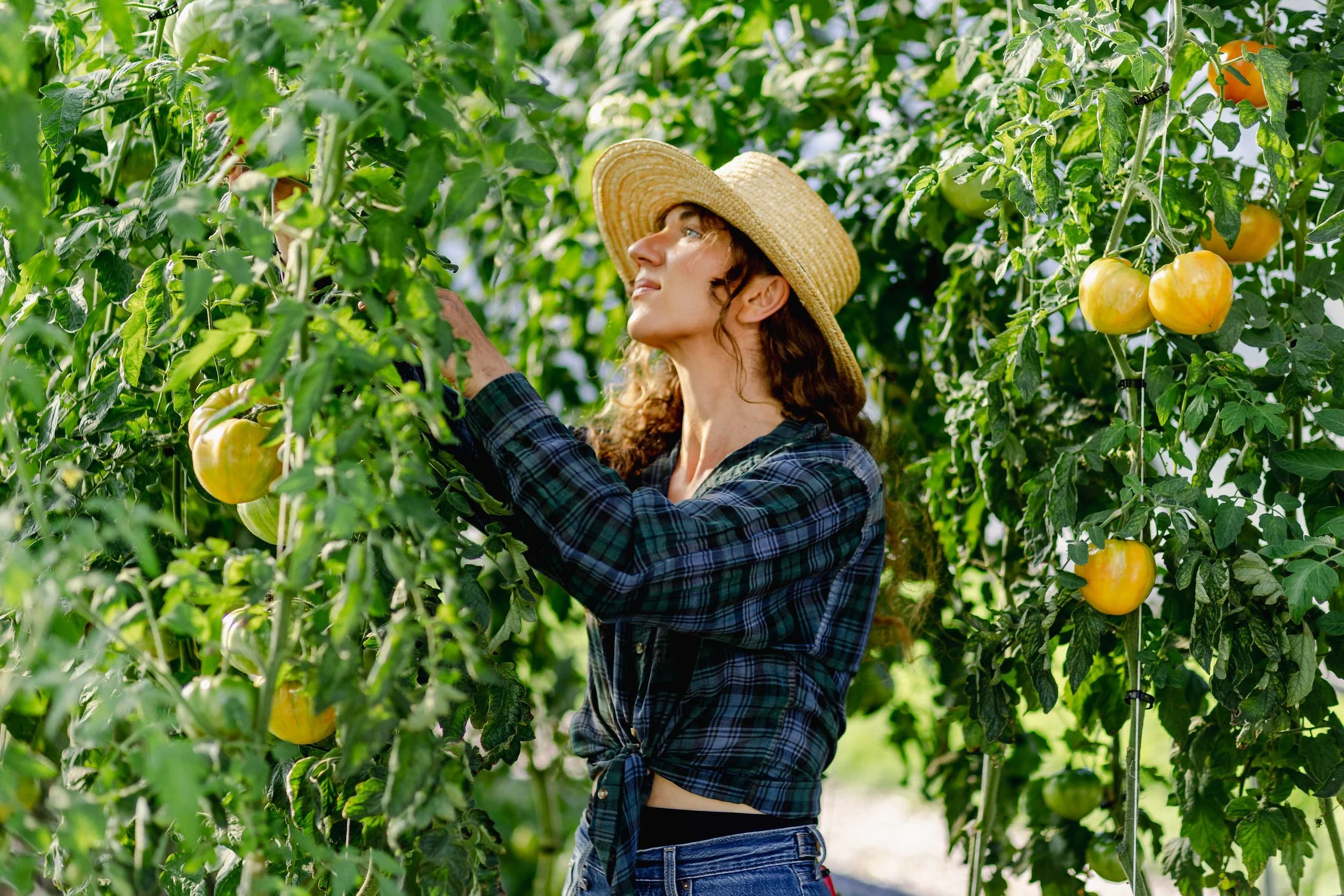
There are a lot of labels when it comes to farming or vineyard from biodynamic to organic. Your regenerative, low-till, hyper-dense planting on an acre in a city must be quite different than farming open land as you did in Vermont on 80 acres. Have you had to adapt to fit where you're located?
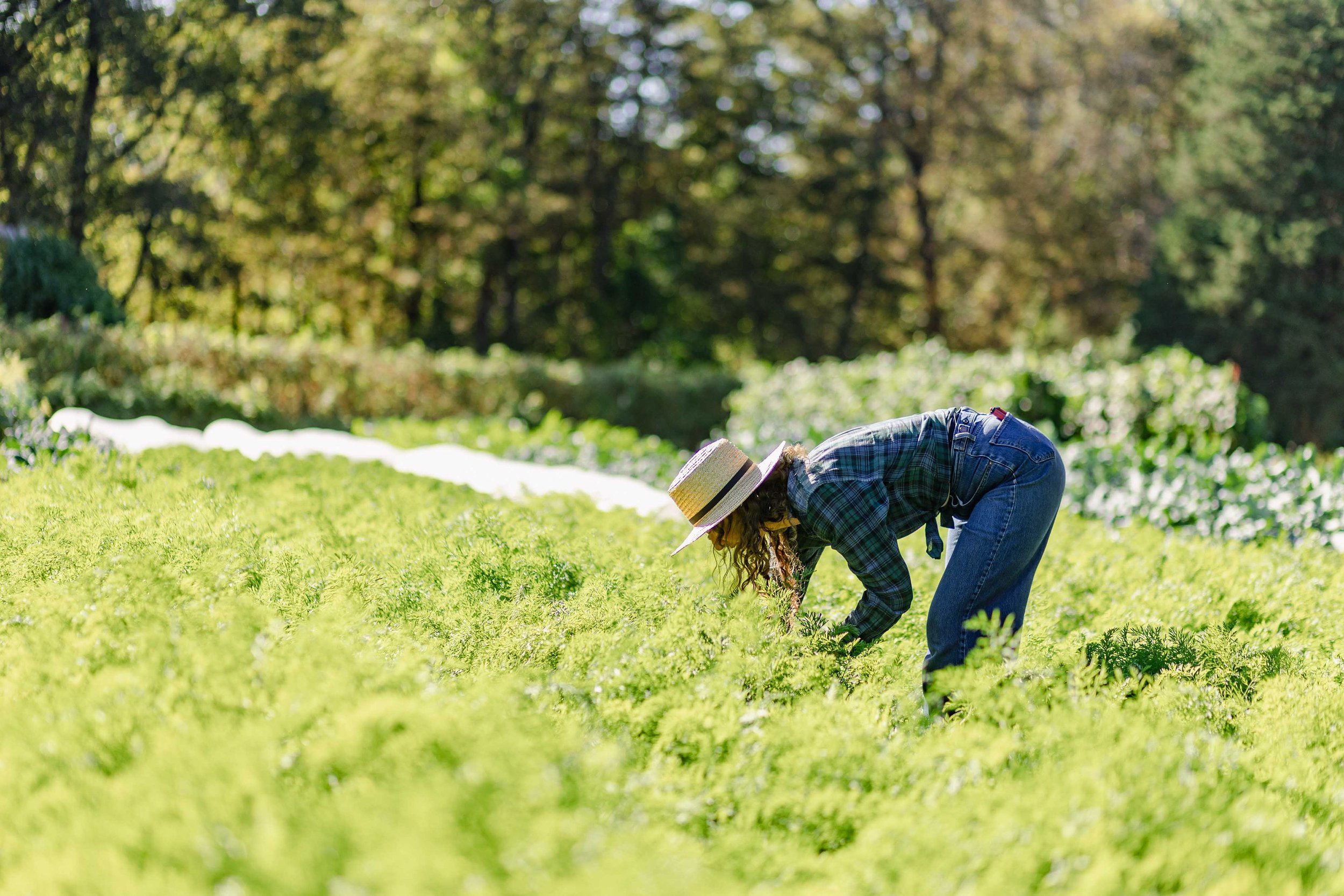
AB: The small size of our farm dictated a lot of our growing practices, and we're actually grateful for that. Because we have to make use of every possible foot in Troy, tractors don't really make sense, so the farm is almost entirely hand-tended. We also interplant and pack an incredible amount of diversity into a very small space.
The result is a farm that is incredibly diverse, low-till and very focused on soil health. We've always found that constraints can lead to beautiful and creative results, and I think our farm is a good example of that. There has definitely been a lot of trial and error along the way, but much of what we do now is also very intentional.
Actually, has any crop or a technique failed on your farm or failed before it worked?
AB: We've lost several sweet potato plantings over the years because of poor-quality slips, which was a pretty devastating blow. We've also lost a lot of crops to pests, especially woodchucks and deer. We eventually built a deer fence around the Troy farm, but we still regularly lose winter squash to deer at our other property.
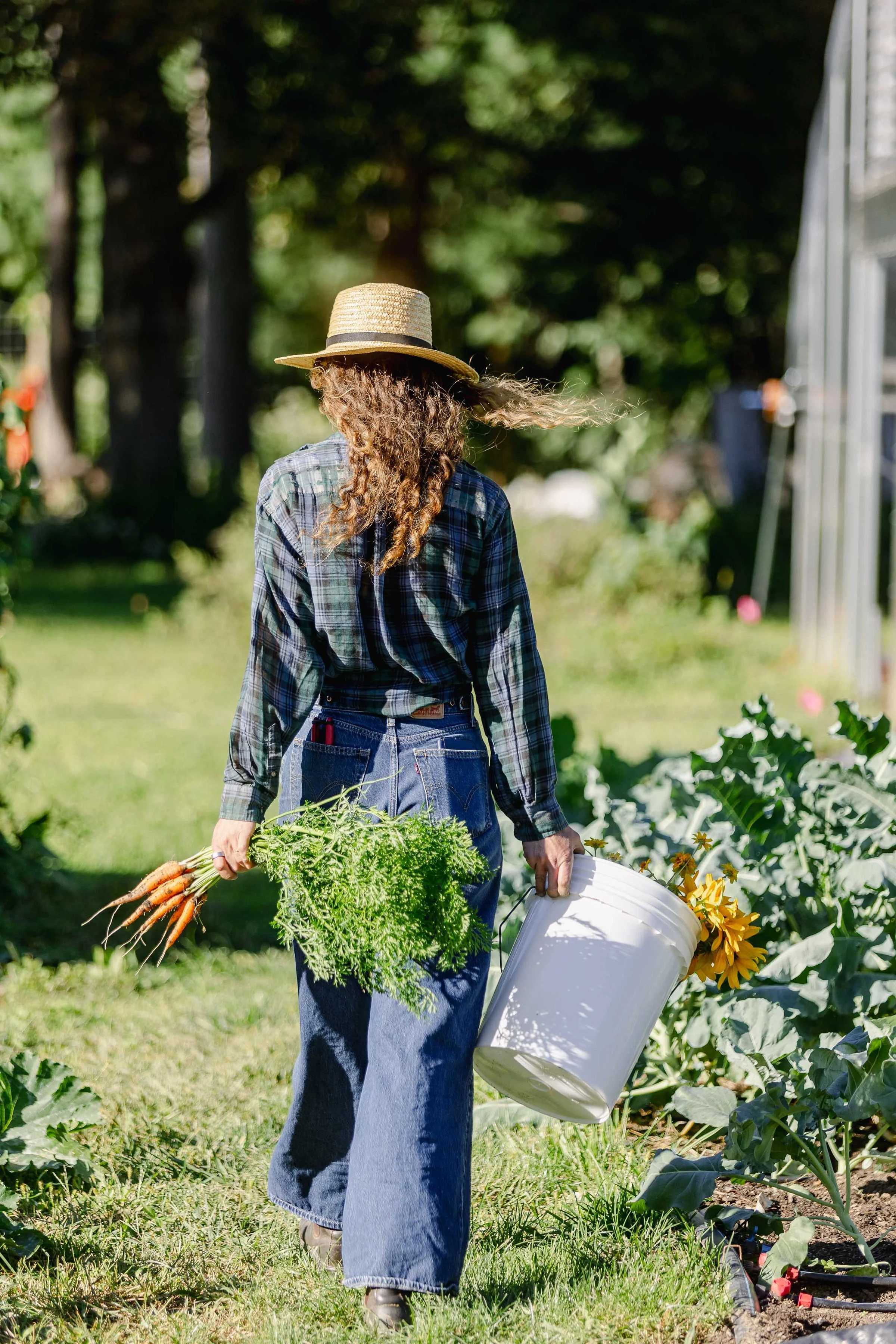
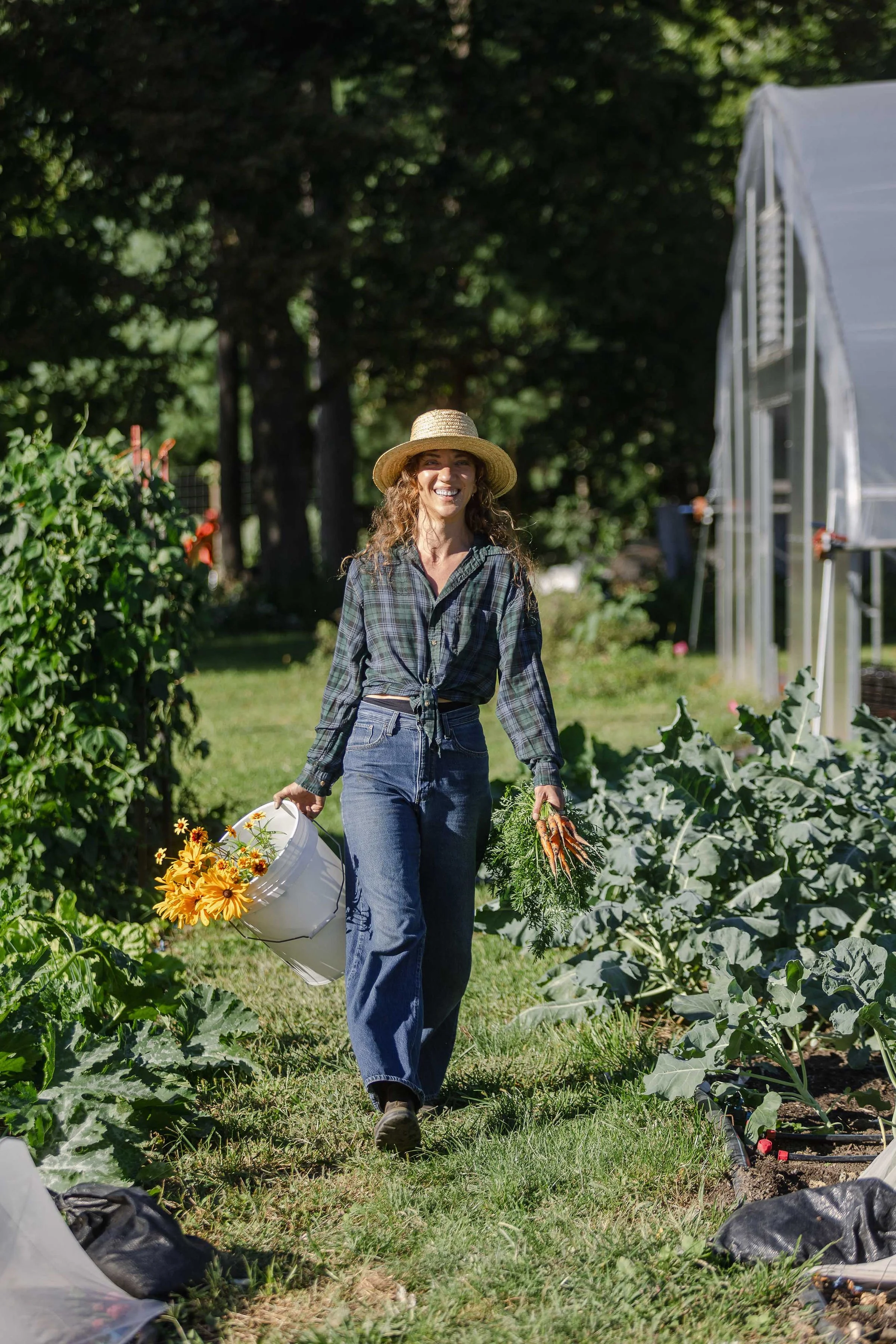
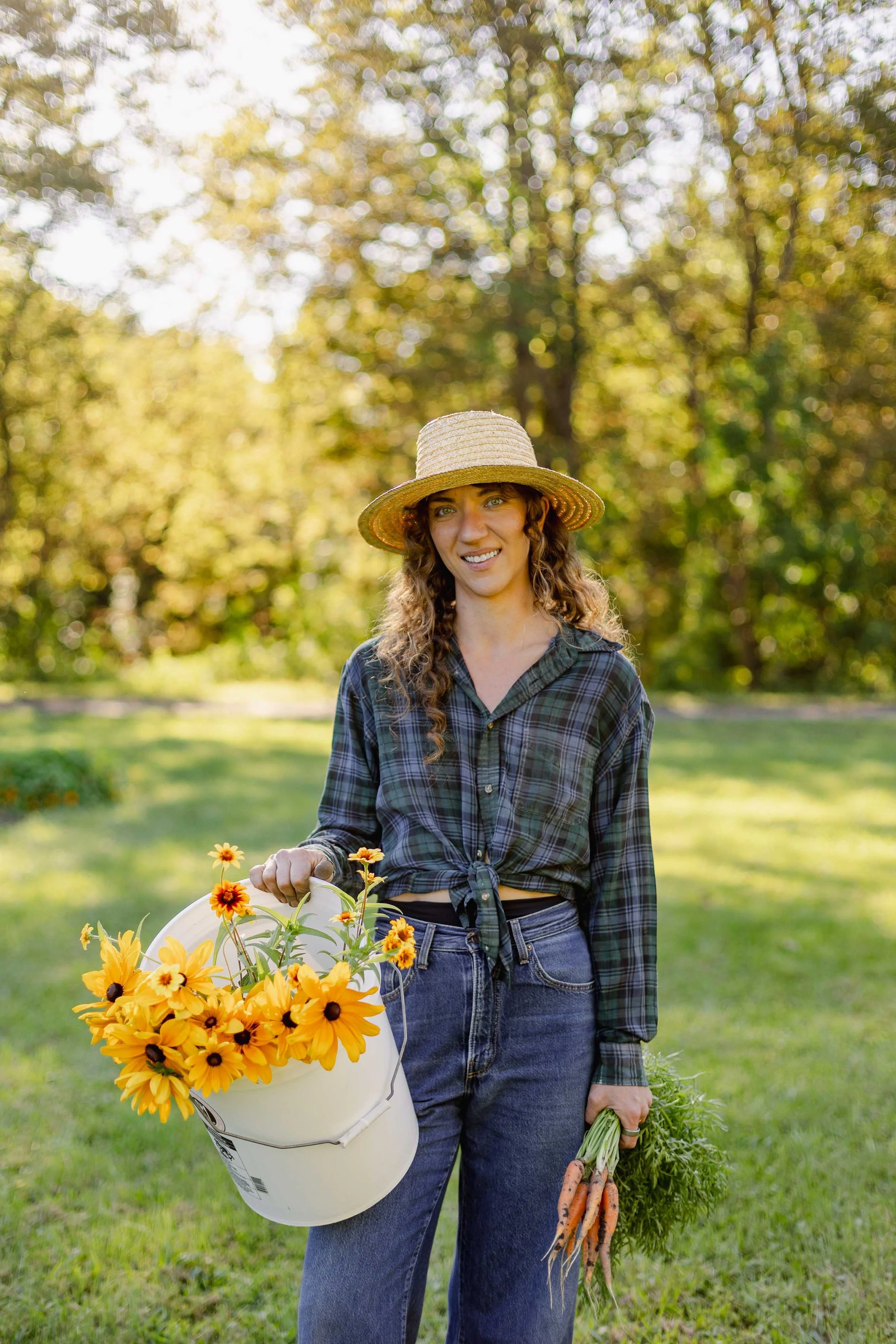
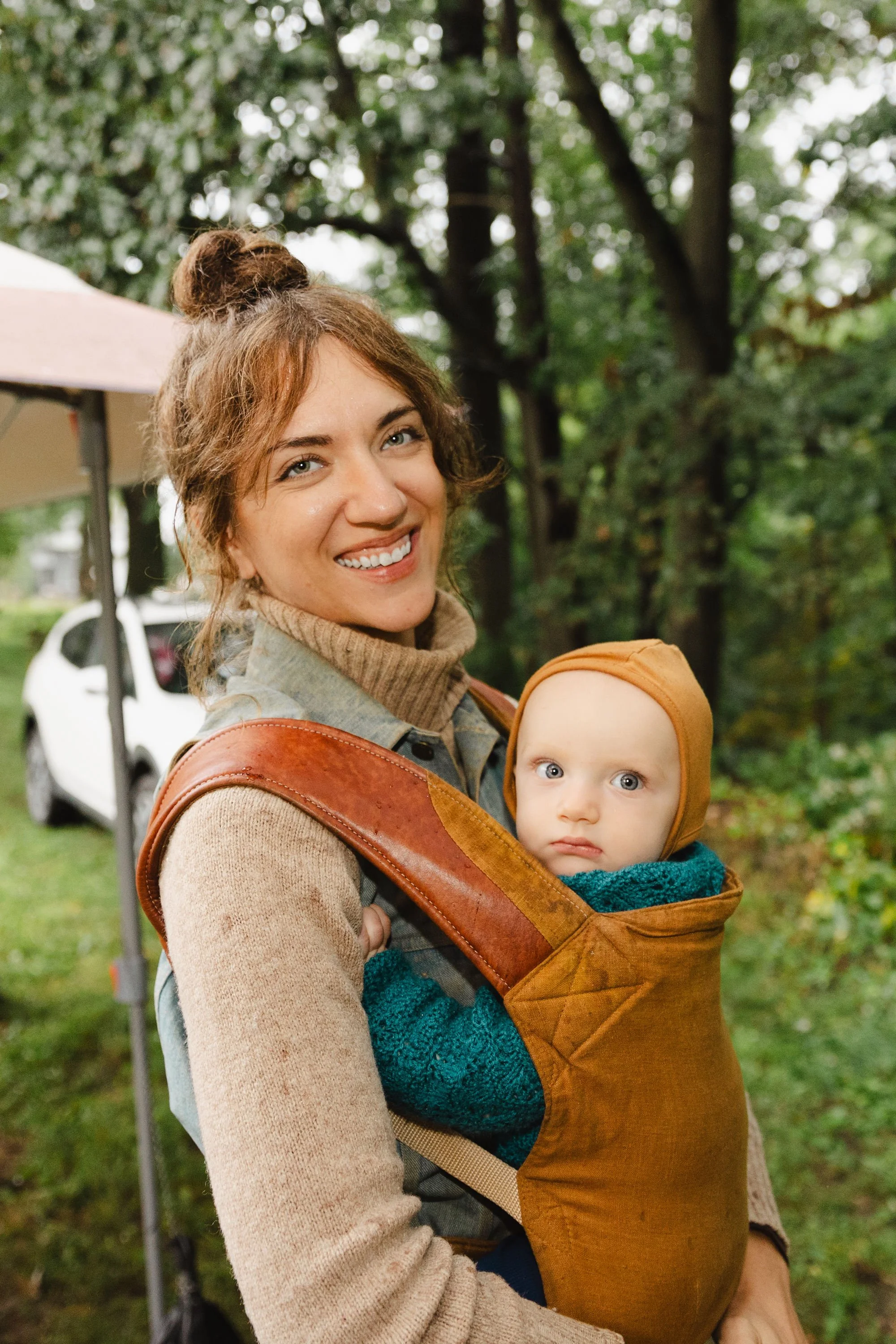
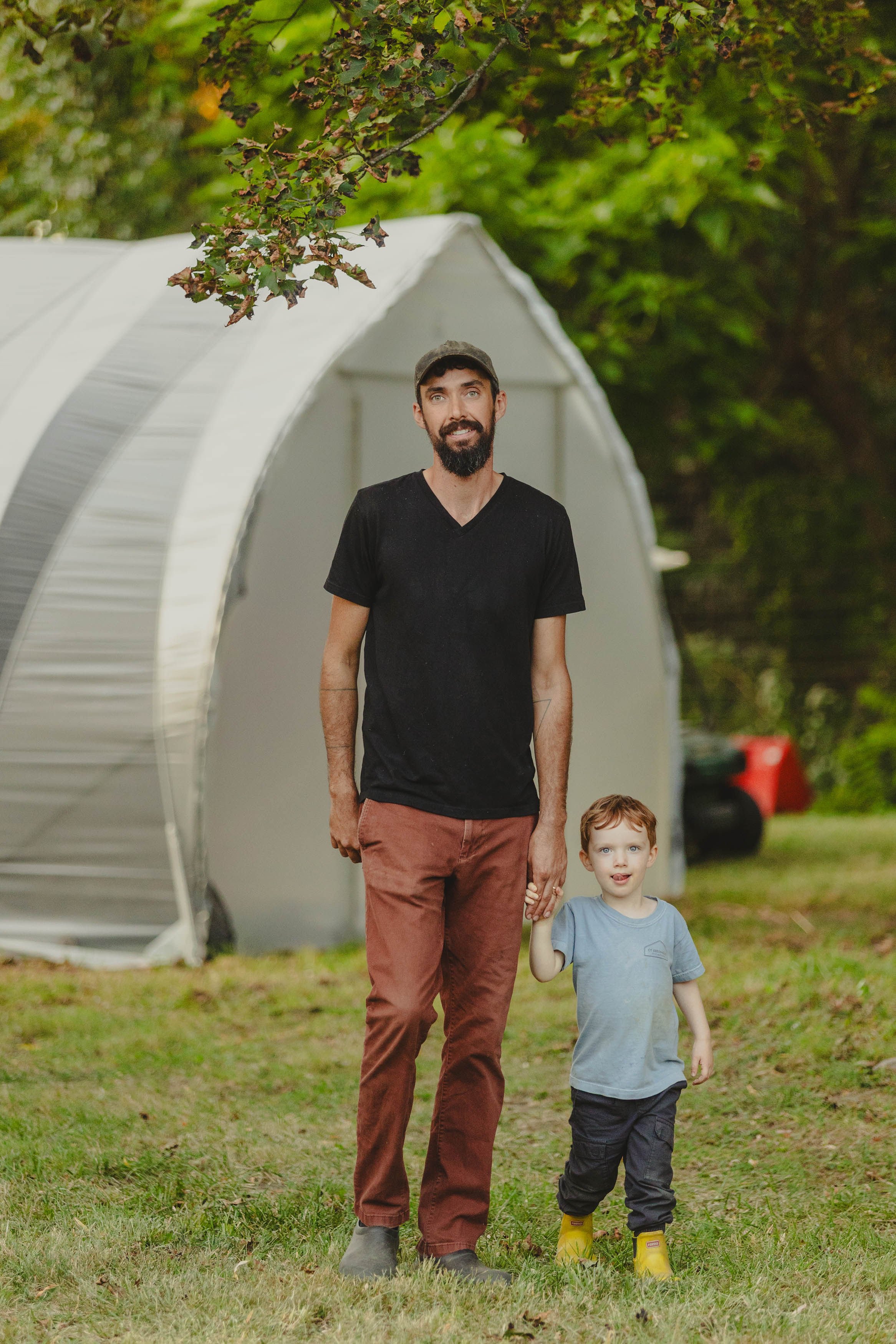
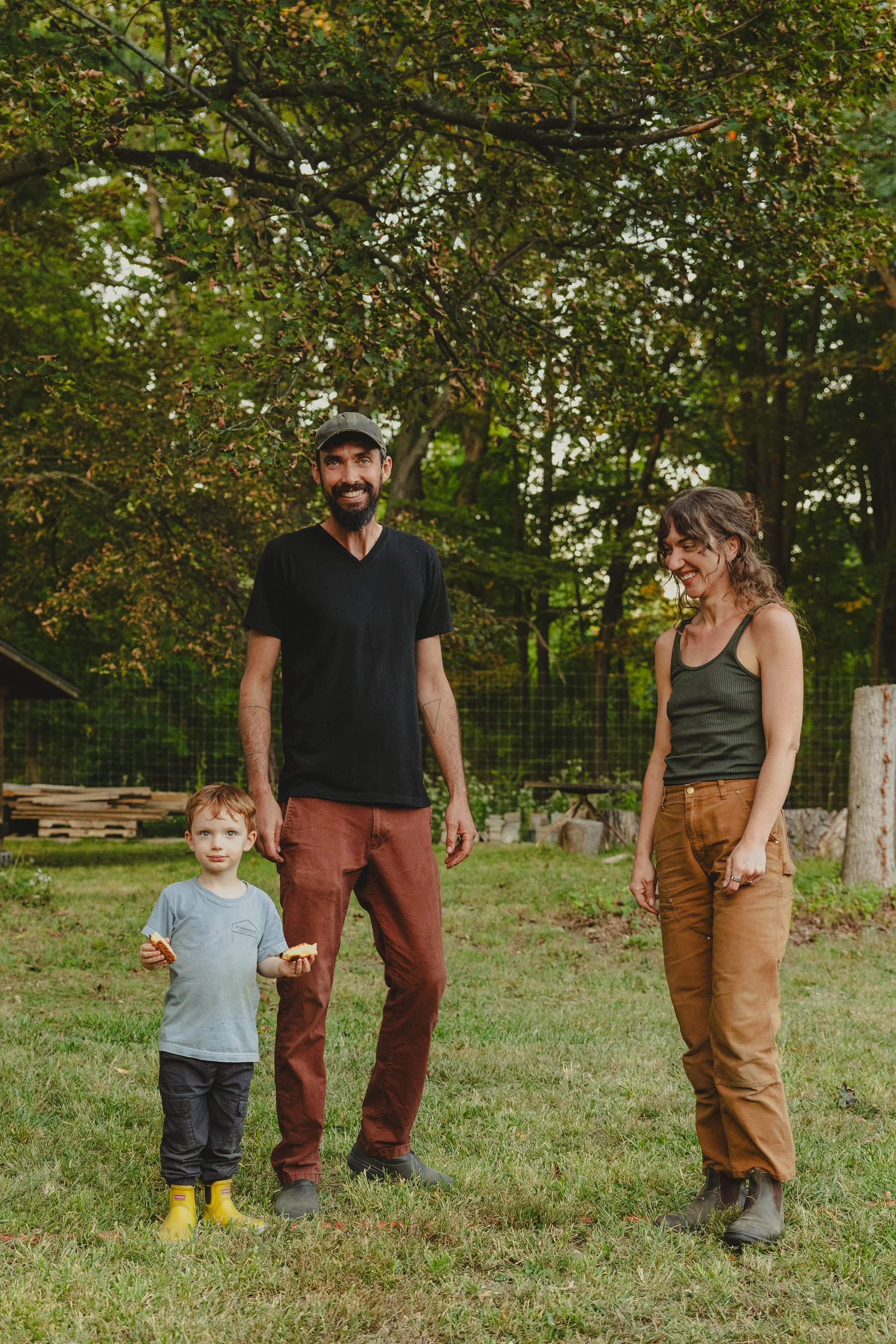
In 2022, you welcomed your son Levi and he has literally grown up on the farm, first physically strapped to you as you sowed seeds or harvested and later snacking on what's growing in the rows. You are farmer and mother – two intense roles. How do you balance that?
AB: Amazingly, having a baby on the farm felt pretty integrated into the work at first. Levi was strapped to either Ben or me, or toddling around nearby while we worked, for the first two years of his life.
Having a toddler with very strong opinions about what he does and doesn't want to do is a different story. In 2025, I ended up stepping away from field work entirely and spent that year home with him. It was hard watching the farm from the sidelines and not being an active participant, but these early years with him on the farm have been such a joy. Watching him grow up here and become an intense vegetable lover has been really rewarding.
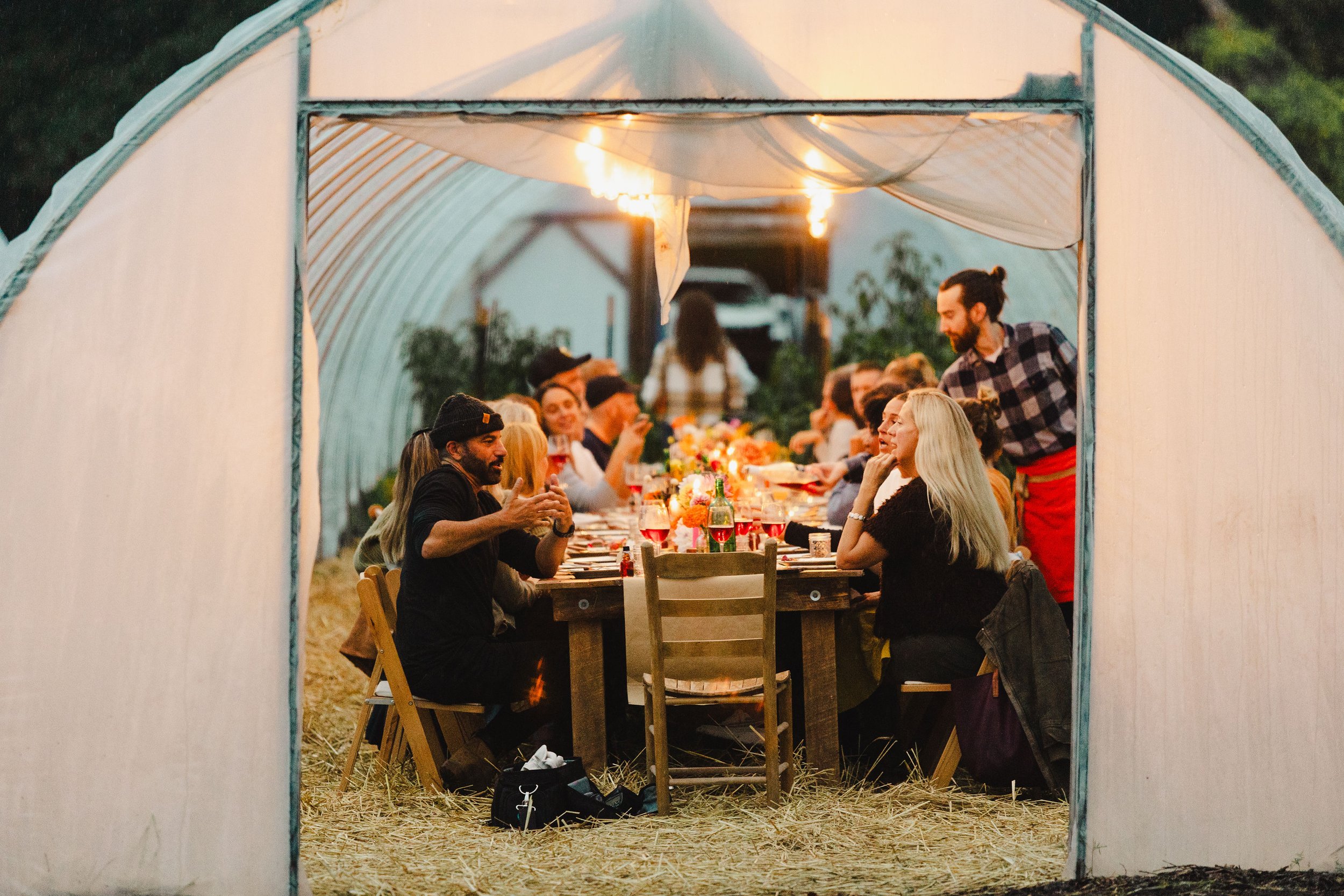
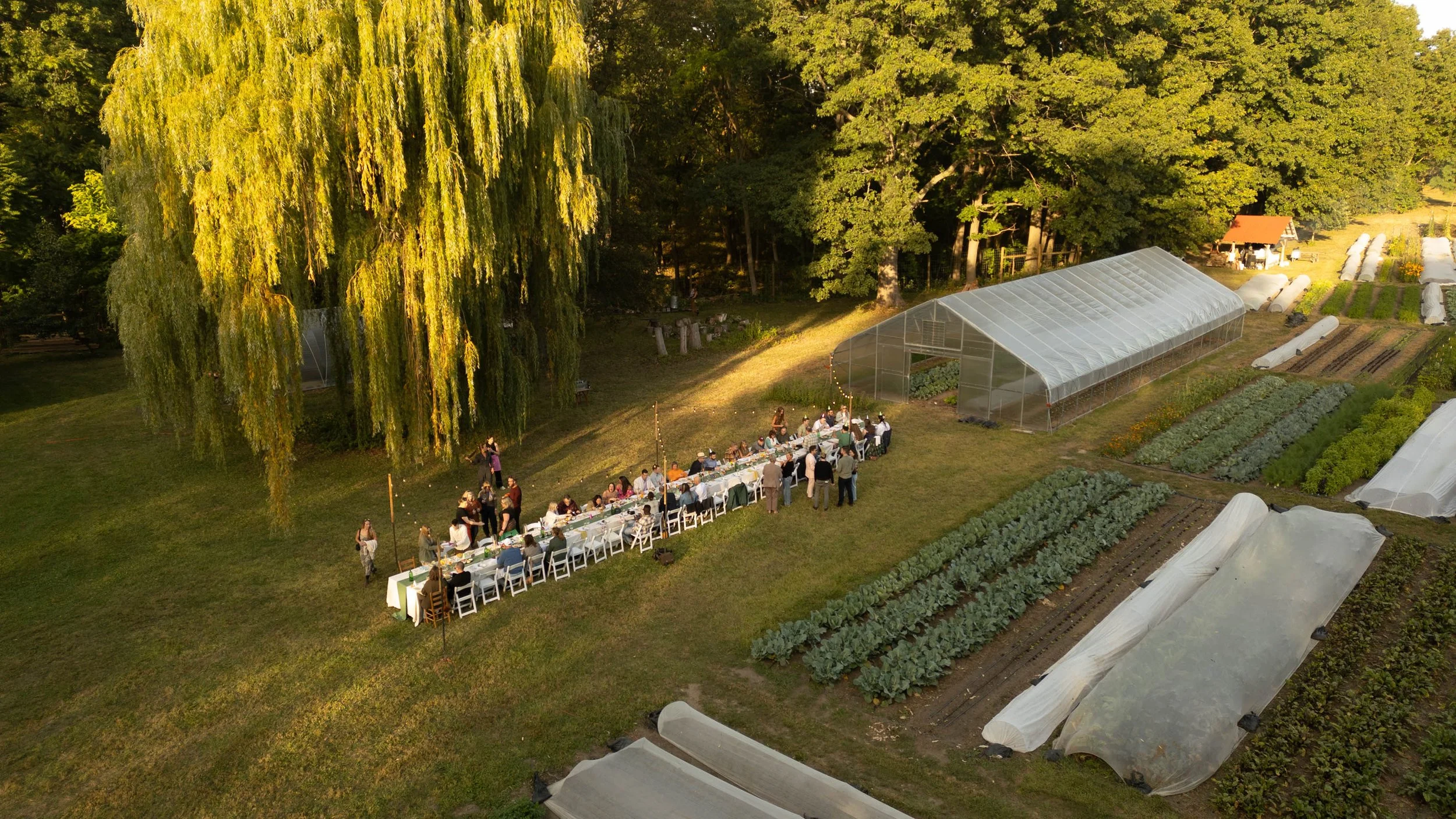
People may also know your farm as the site of some incredible farm dinners. Since 2023, you have collaborated with Paula and Tony of The Pony Show putting on these beautiful farm dinners. I’ve been to one in a polytunnel when there was a threat of rain, and one last year outside under your huge weeping willow. It feels like the perfect set up and you even have an outdoor pizza oven… Can you talk about this extension where the table literally comes to the farm?
AB: Collaborating with The Pony Show on these dinners has been a dream come true for Ben and me. We became farmers because of our intense love of food, and being able to combine growing food with creating a dining experience right here on the farm feels like the perfect marriage of those two passions. We feel so lucky to work with chefs like Paula and Tony, who take what we grow and let the seasonal flavors really shine. There's also something incredibly special about watching people eat a meal just a few feet from where that food was grown.
In late 2024, you were able to buy the Edible Uprising land and the barn where you live. Does this feel as if your roots are now permanent here?
AB: Yes, we really feel rooted in Troy and on this land in a way that we never have before. We've always felt connected to and dedicated to this soil and community, but knowing that our hard work will continue to benefit this place for the foreseeable future allows us to approach farming in a different way. We've started planting perennials, investing more heavily in the infrastructure and thinking much more long-term about every decision we make here.
Troy has changed a lot in the years you've been here + you significantly expanded from 40 to 140 CSA members. What does the next chapter look like: More land, more hands, or doubling down on what you've already built?
AB: We don't really see our next phase as getting bigger. Our small size is one of our strengths because it allows us to stay true to our values and be intentional about how we grow food. With the renovation of the old barn on the property, we'll have space for future farming and gardening workshops, which is something that feels really exciting to me. I'd love for the farm to become even more of a place where people can come to learn and connect with growing food.
We’ve also started collaborating with other farmers–this year we leased a portion of our other property to two farmers to grow organic strawberries, and they also planted a chestnut orchard on the land as well. We’ve realized the more we can join forces with others who are passionate about this work, the better the outcome for everyone.
We always ask our tastemakers where they eat. I know you supply a number of restaurants so we hate to ask for favorites, but if you had guests or a rare day off, where would you go for breakfast, lunch and dinner?
AB: Our favorite spot in Troy for breakfast or brunch is definitely Nighthawks. For lunch, we frequently get La Capital when we're working and want something really delicious and filling. And for dinner and cocktails, our favorite is Hamlet & Ghost in Saratoga Springs.
After the long growing season, you do have winters off. You used to take art commissions as well as illustrating The Arrow journal in addition to your role as its creative director. How do you spend winters now? Do you travel? Is art still the way you unwind?
AB: I used to spend the winters working full-time as an artist, designer and creative director, but since becoming a parent I've stepped back from those roles. Now winter is really a time to recover from the intensity of the farming season. I spend a lot of time spinning, knitting, sewing, doing leatherwork and drawing.
I also try to use the winter to deepen my knowledge as a farmer, so I do a lot of reading and research about new science and techniques in agriculture. And we travel quite a bit because we're pretty glued to the farm during the growing season. Our favorite winter trips are out West, visiting our favorite hot springs in Colorado and New Mexico.
Lastly, is there one memorable meal or dining experience you’ve had?
AB: Ben and I lived in Vermont for years and had the privilege of dining at T. J. Buckley's in Brattleboro, which is probably the most moving dining experience I've ever had. It's a tiny restaurant in a converted 1925 Worcester Dining Car, with a very limited number of seats and a menu that changes daily based on what's being grown locally.
The kitchen is completely open, and watching chef Michael Fuller prepare each dish with so much care was incredibly inspiring. I remember watching him make a salad, hand-selecting each perfect leaf and creating this incredible dish through sheer attention and discernment. It was moving to me not only as someone who loves to eat, but also as someone who loves to grow food.
Thanks for talking with us, Alicia. Your farm is so beautiful and we love what you have brought to the community not only in terms of food but incredible access to your farm and your work.