MEET: CHEF TAYO, EBI-AYO SUPPER CLUB, N.Y.C
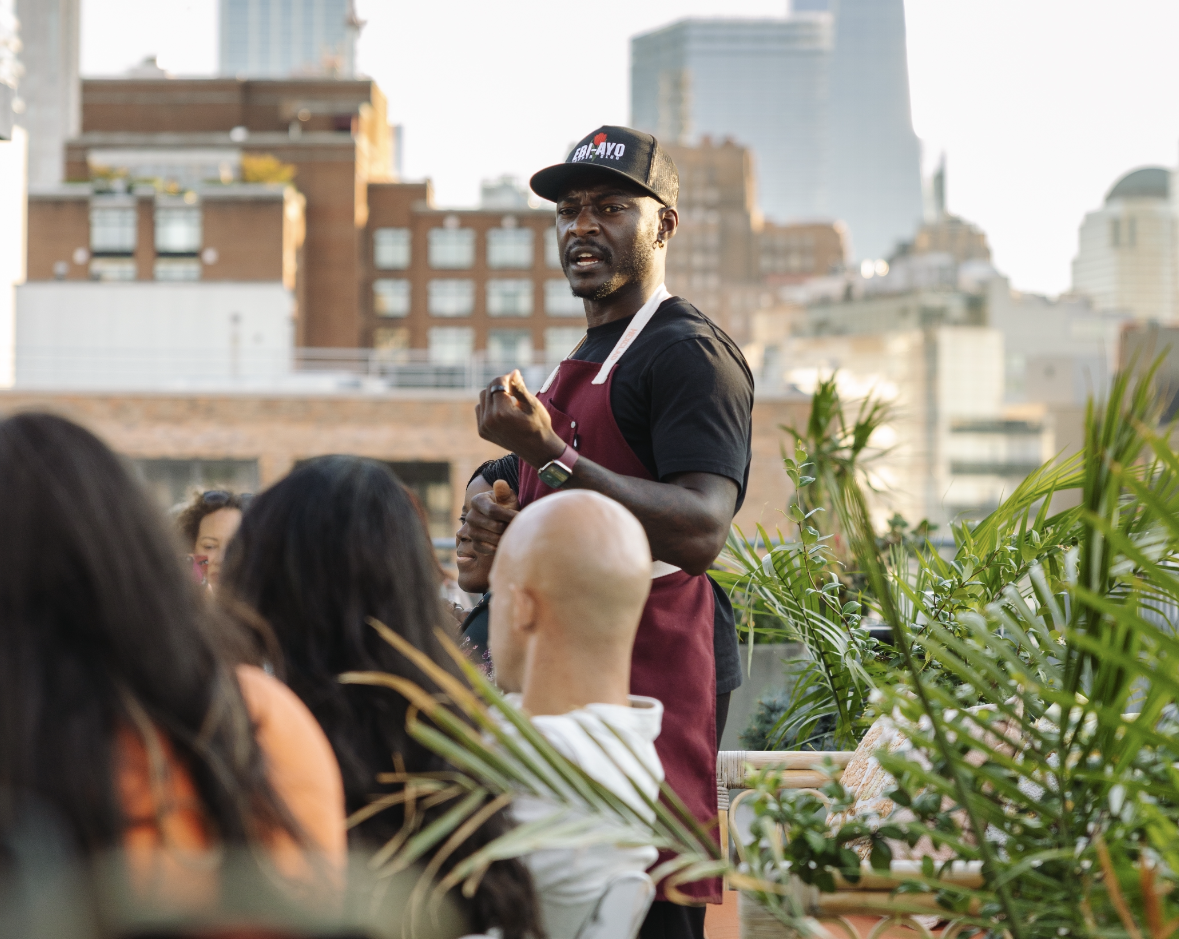
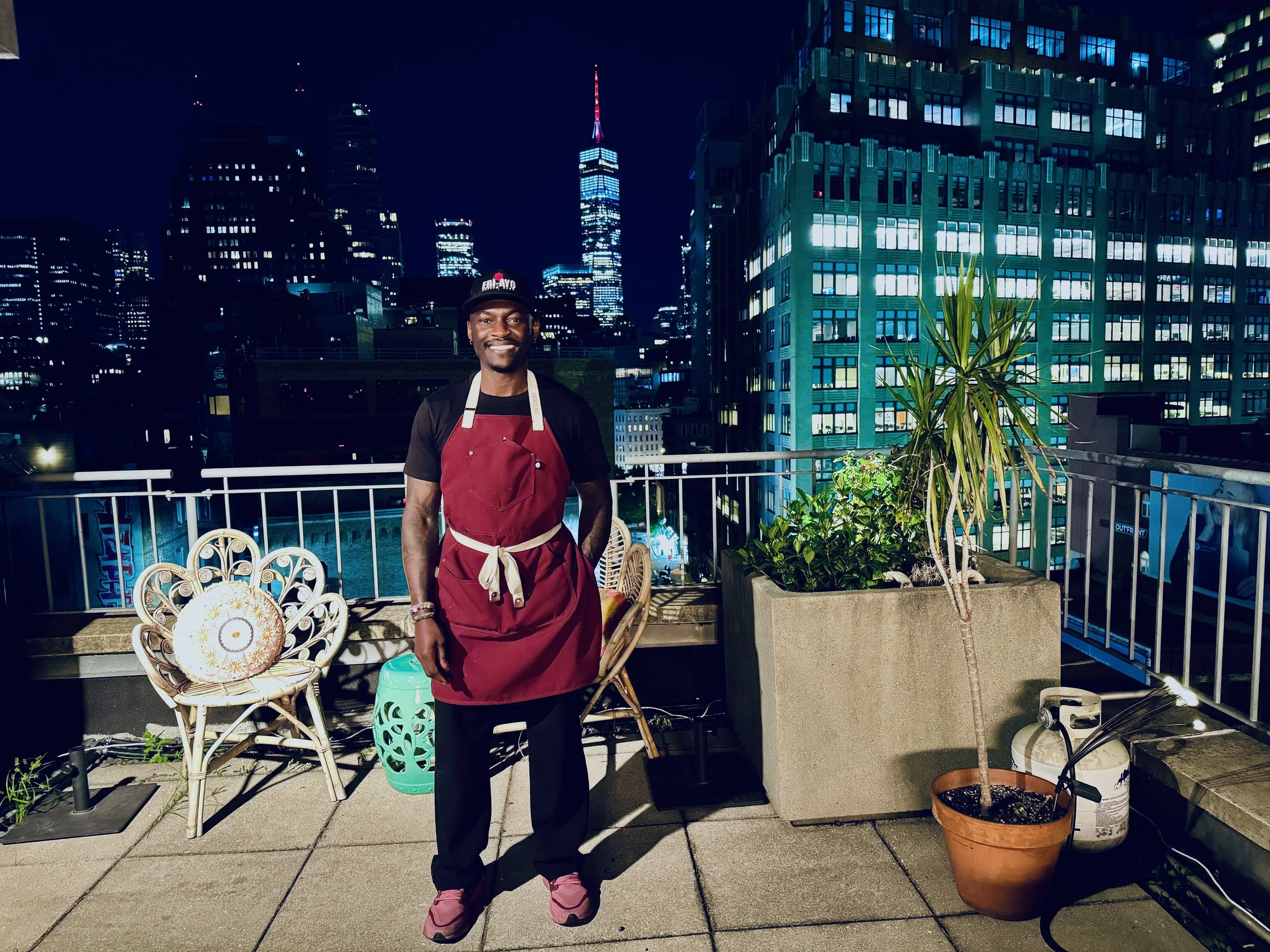
Chef Tayo Ola of Ebi-Ayo Supper Club, NYC | Photo: Adrian Lewis/for The Dishing
Nigerian Chef, Tayo Ola, talks about growing up in America, culinary identity + bringing his Nigerian-Italian Supper Club from L.A. to the East Coast.
Interview : Susie Davidson Powell
Photos: Adrian Lewis/special to The Dishing
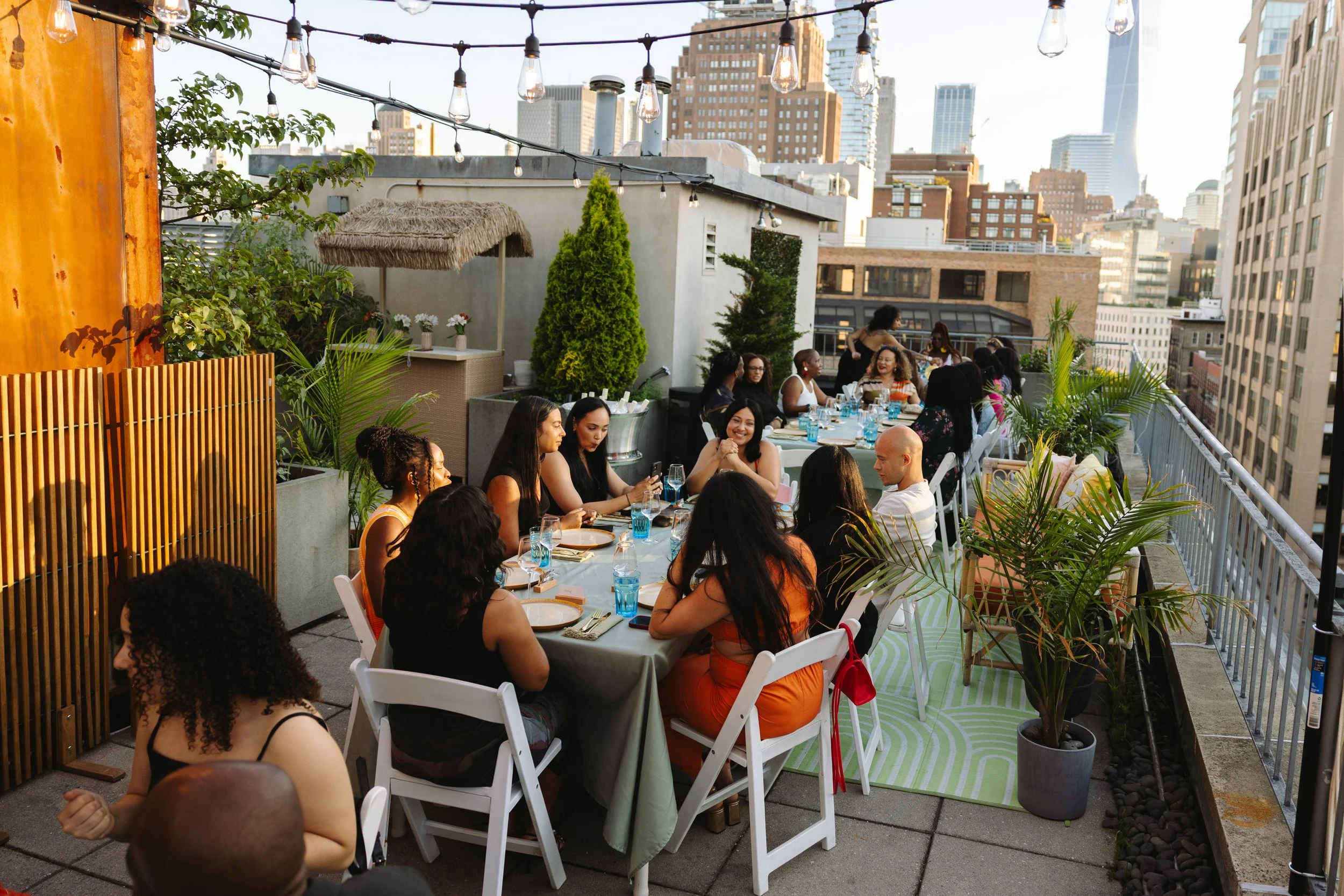
Location: Flaweless House, Manhattan, N.Y.C.
Tastemaker: Chef Tayo Ola | IG: @chef.tayo
Current Project/Business: Ebi-Ayo Supper Club | IG: @ebiayosupperclub
Hometown: Abeokuta, Ogun State, Nigeria
Current city: Newark, N.J.
Personal style: Relaxed, intentional, thoughtful
Listening to: A lot of Brazilian music lately.
Favorite classic cocktail or non-alc drink: Pineapple-guava juice
Coffee or tea – and what’s your order: Either — or it depends on my mood
Biggest professional industry influence(s): Anthony Bourdain
Industry trend that should end: Food experiences that prioritize aesthetics over soul and storytelling
Favorite thing about supper clubs: The intimacy: Strangers arriving and leaving as community
Ingredient/flavor/trend/wine that you are most interested in right now: South African Wine
Three words that describe your cooking style: Nostalgic, thoughtful, soulful
Welcome to The Dishing’s Quick Serve interviews where we talk matters of taste with tastemakers in the hospitality industry and trailblazers at the intersection of food, culture and art. Today, we’re talking with Chef Tayo Ola of the Nigerian-Italian Ebi-Ayo Supper Club in NYC. We were introduced to Chef Tayo by Albany-based fashion designer, Mo Rabui of So’ Radical, who was inspired by the chef’s fusion approach to honoring Nigerian roots with his culinary experiences in the U.S.
Chef Tayo re-located from the West Coast, bringing his L.A. Supper Club concept to the East Coast, where Mo and I were invited to attend a rooftop supper club event. With Mo tied up finalizing her collection for London Fashion Week, I attended the supper club with guitarist (Atlantic Starr) and Brooklyn-based photographer, Adrian Lewis, who grew up around Selkirk and Troy, N.Y.
In this interview, Chef Tayo connects the dots as he talks about growing up in America, cultural identity, wine and balancing a supper club with a day job at HBO Max.
Thanks for talking with The Dishing, Chef! Let’s get into it. You were based on the West Coast when I first came across your Nigerian-Italian fusion Ebi-Ayo Supper Club, so I was excited when you brought it to New York. For those who haven’t been, how would you describe the atmosphere of your supper club? And do you plan to keep alternating between the two coasts?
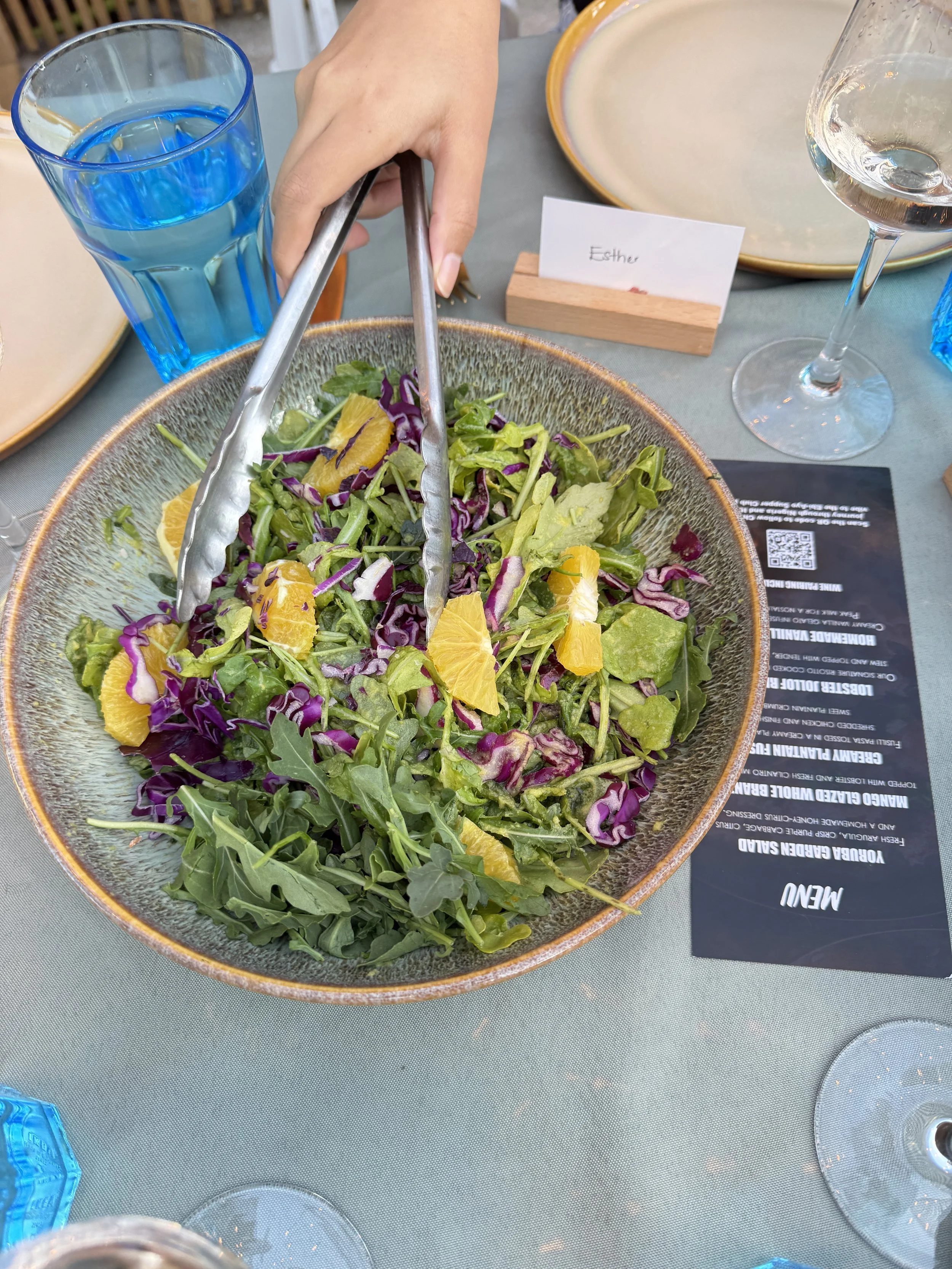
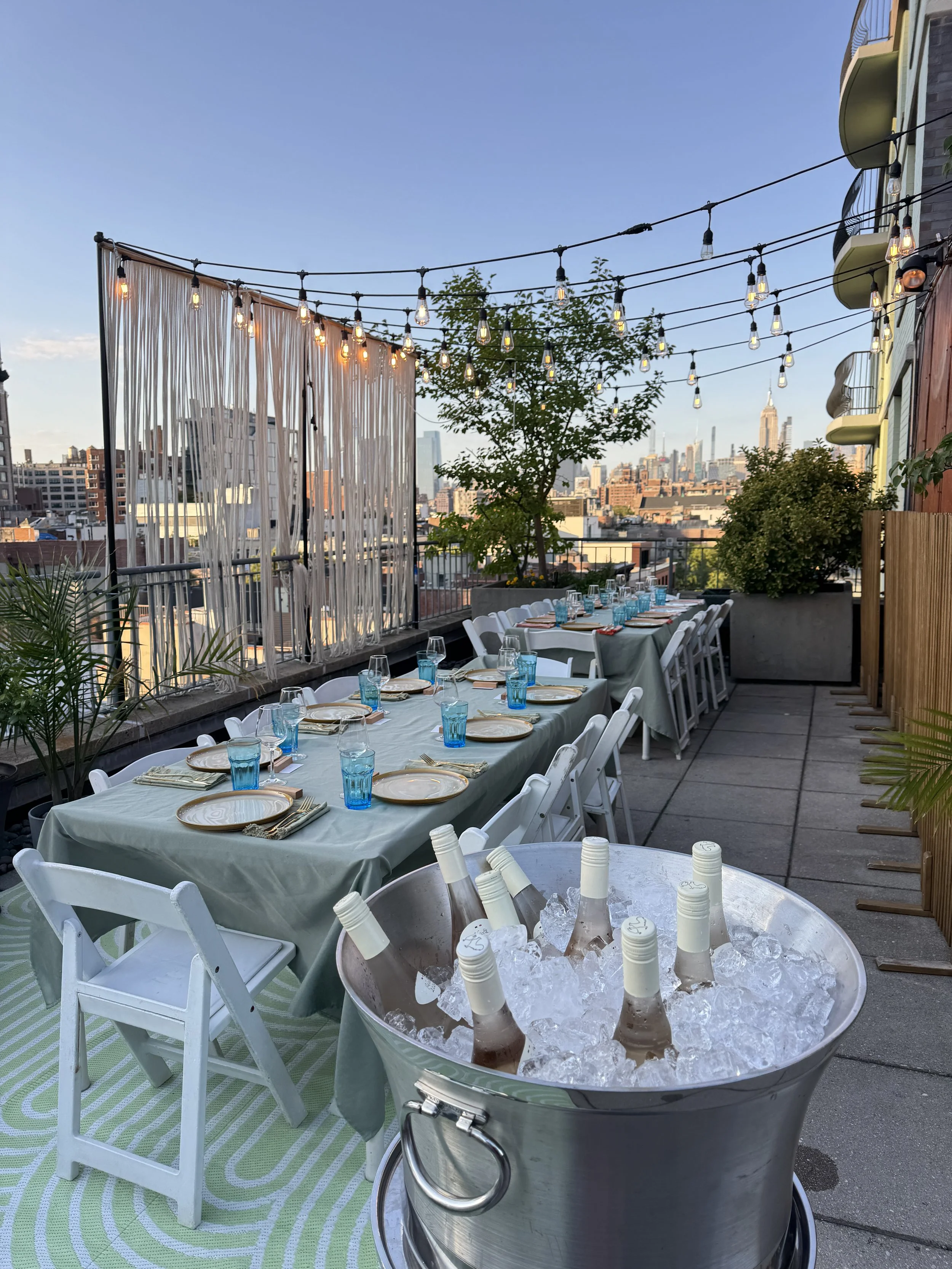
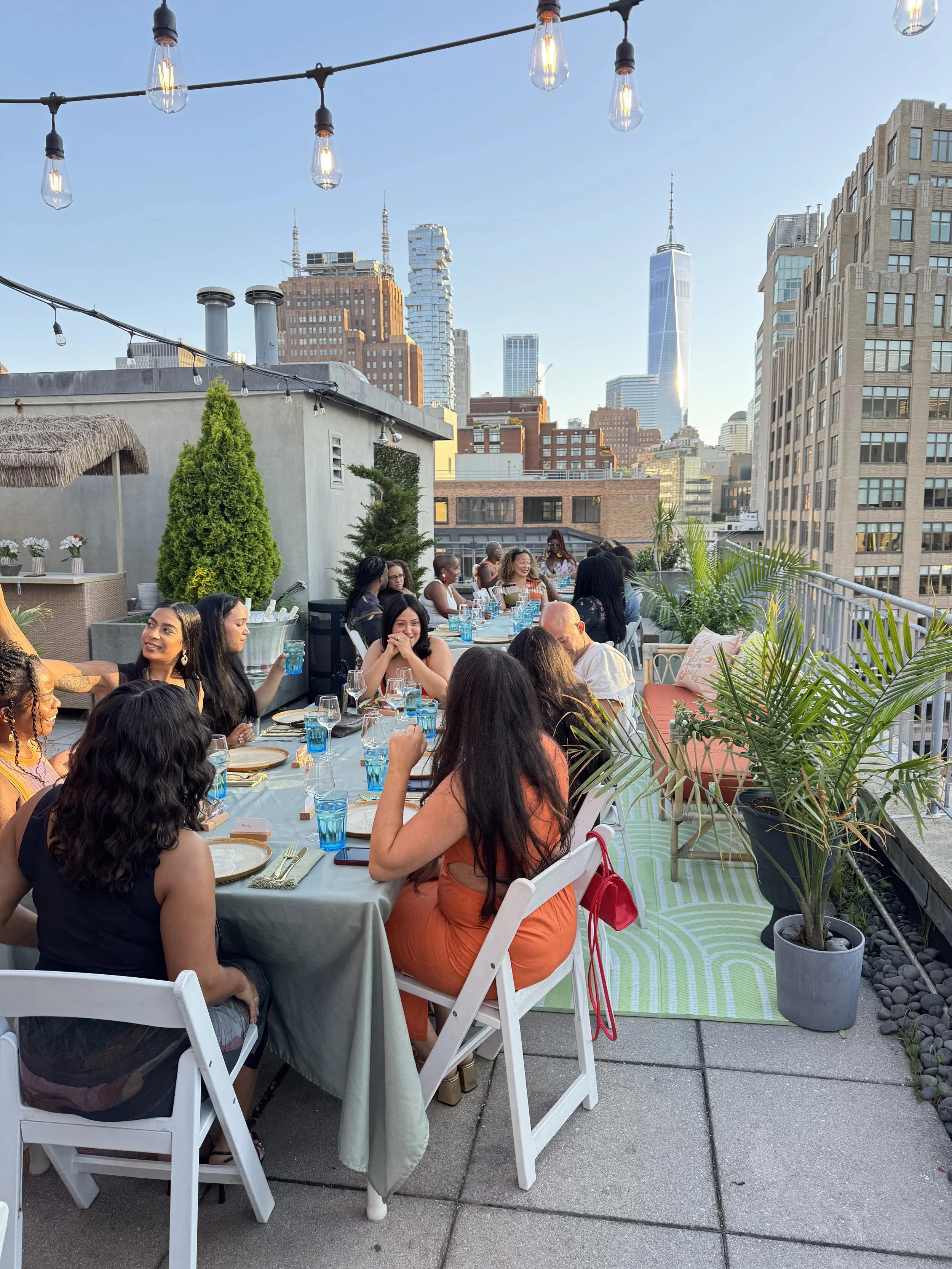
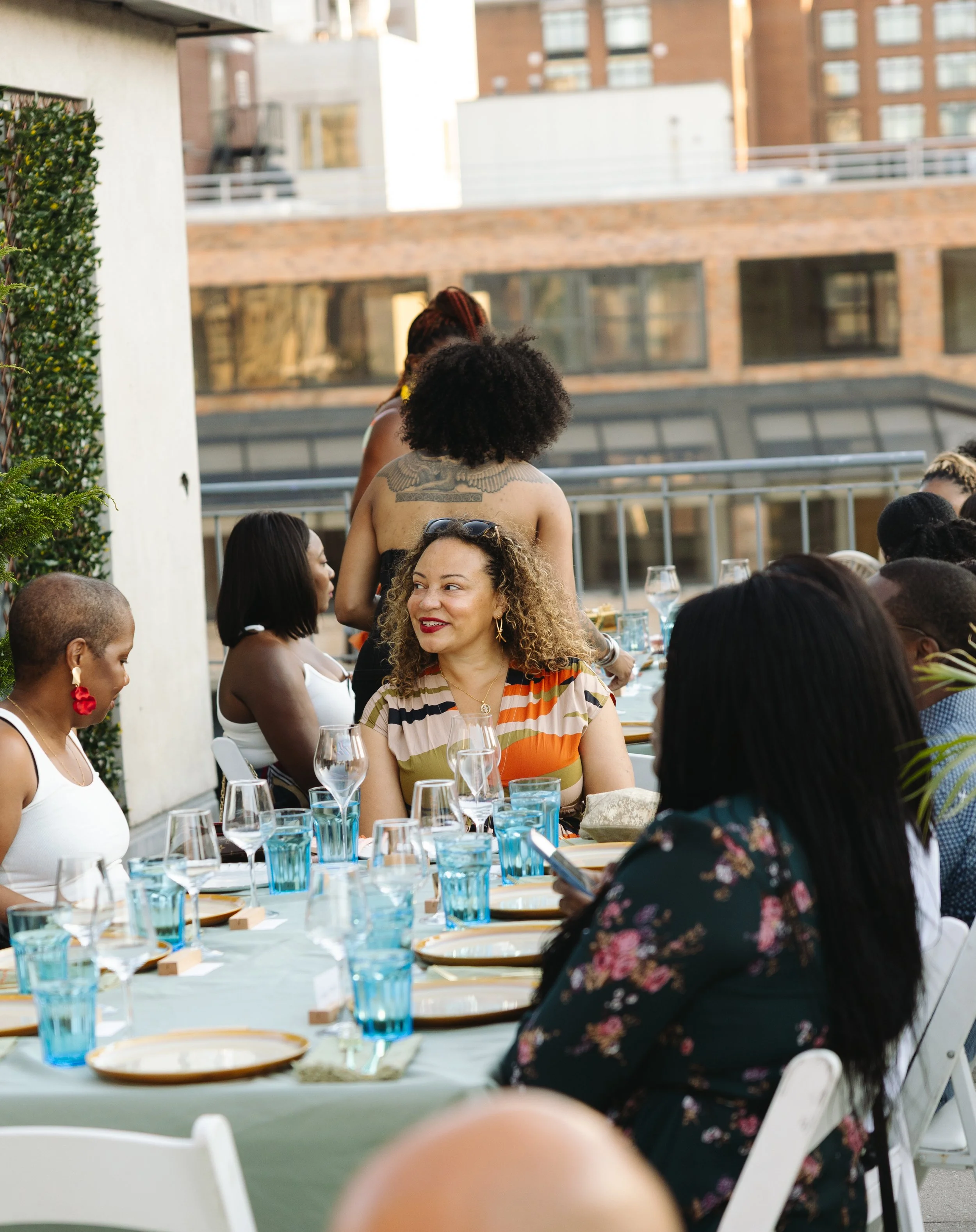
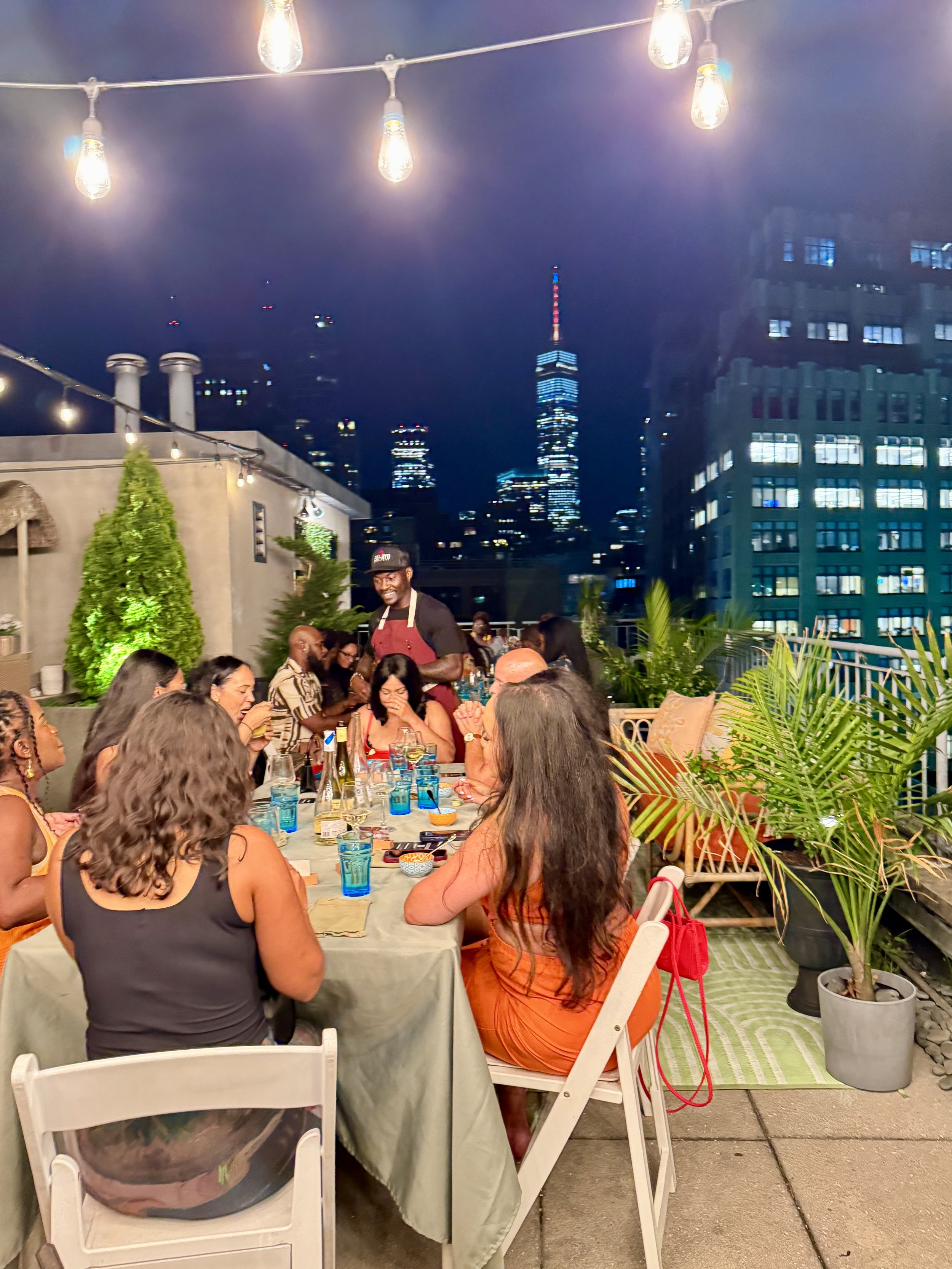
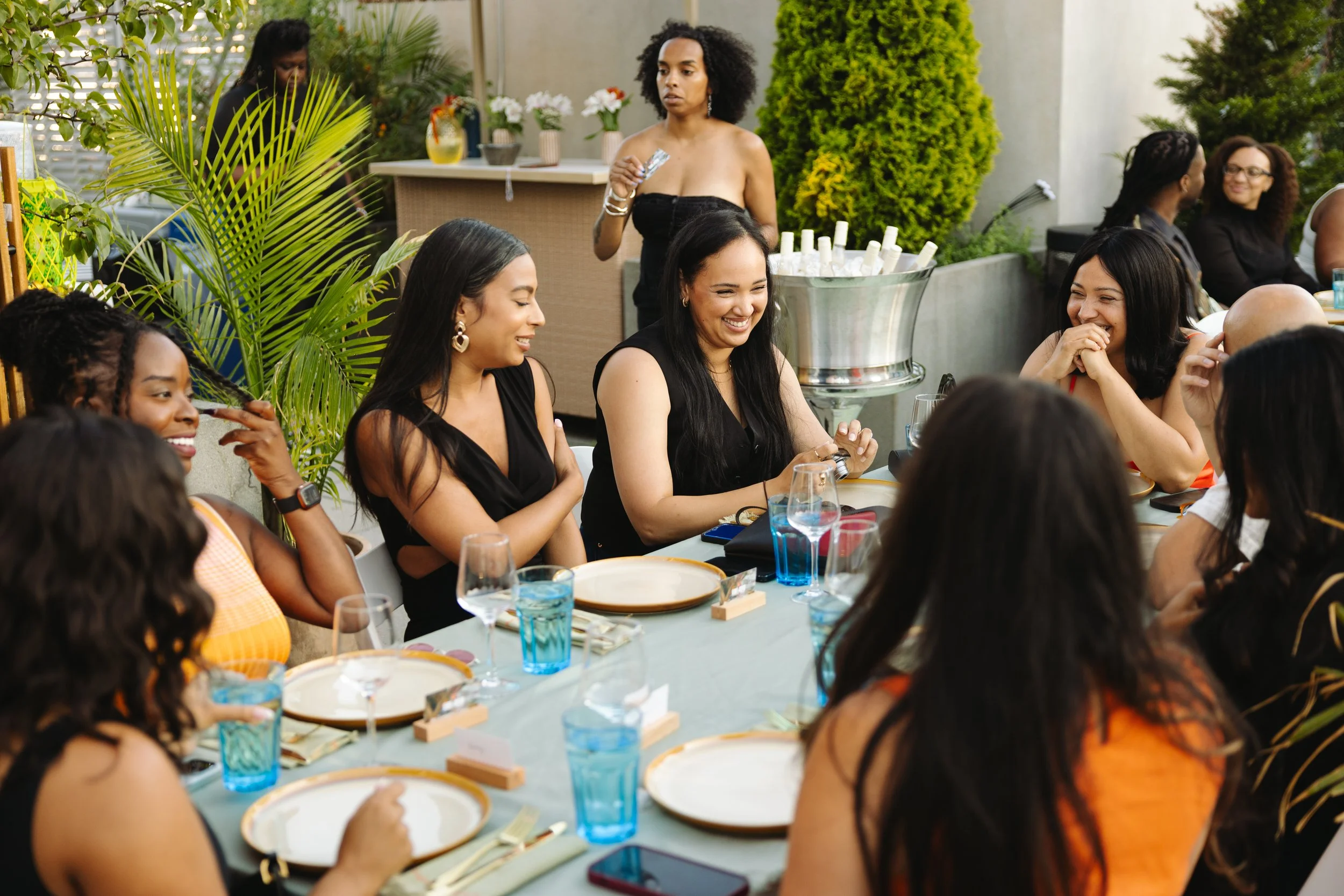
Ebi-Ayo is warm, intimate, and intentional. It feels like being invited into someone’s home rather than attending a traditional restaurant experience. Guests are seated family-style, encouraged to talk to one another, and the evening moves at a human pace — no rushing, no distractions.
I do plan to keep moving between coasts. We’re currently hosting dinners in New York, Los Angeles, and Washington, DC, and the goal is to continue expanding thoughtfully while maintaining that same intimate feeling, no matter the city.
You were born in Nigeria and when your family relocated to Columbia, Missouri, in 1998, your first dinner in America was Italian. Can you talk about that meal and what resonated so much that it would ultimately lead to your Nigerian-Italian supper club?
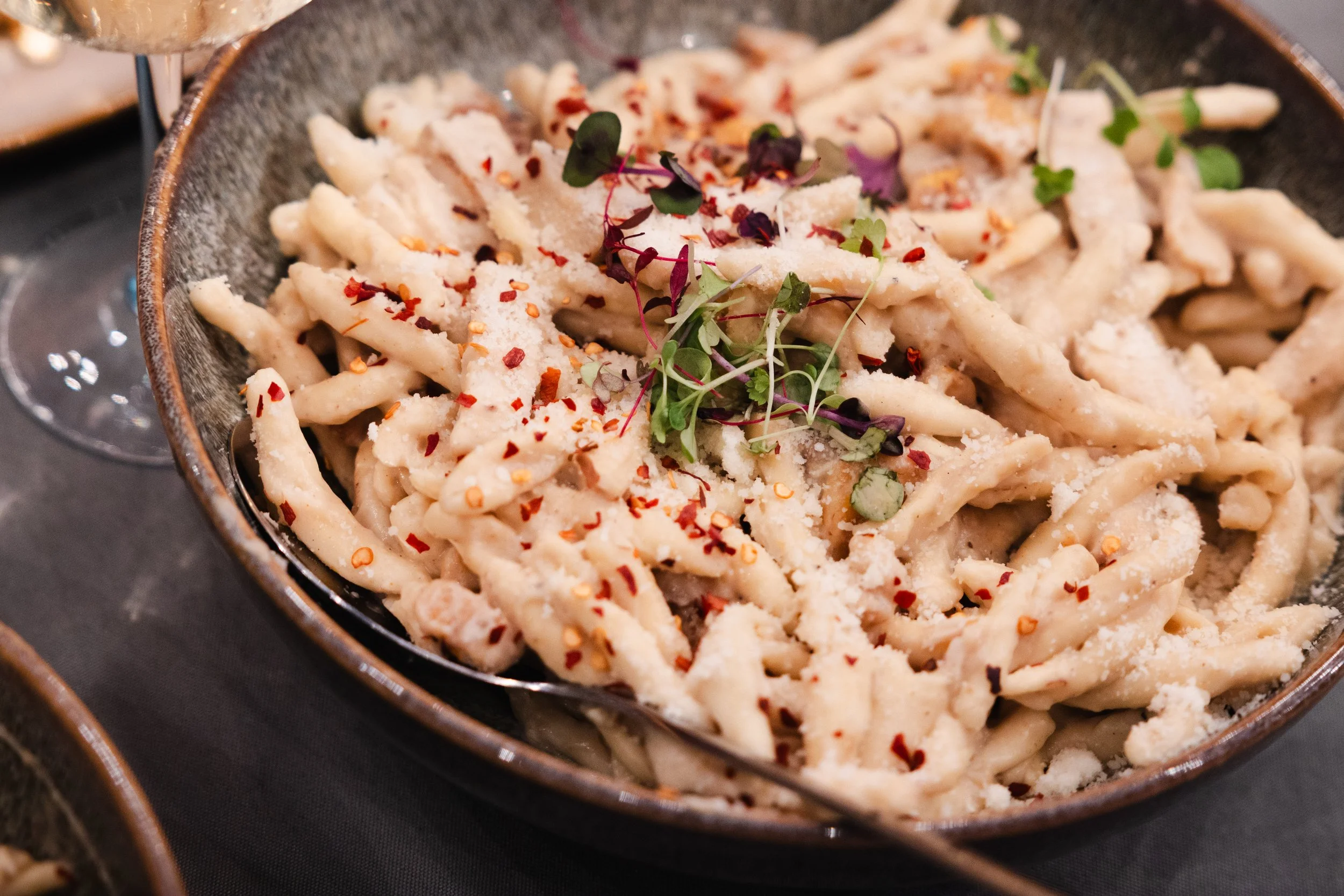
That first meal was simple but unforgettable — pasta, bread, sauce, and everyone eating together at the table. Coming from Nigeria, where meals are deeply communal, that sense of gathering felt familiar even in a new country.
I didn’t realize it at the time, but that meal planted a seed. Years later, I recognized how naturally Nigerian and Italian food cultures align — both value family, generosity, and food as a language of care. Ebi-Ayo grew from that realization.
You studied finance at university in New Jersey and moved into entertainment media as a producer for HBO Max. Are you working towards Ebi-Aya being your full-time career and what sort of expansion might that look like?
Yes — Ebi-Ayo is absolutely the long-term vision. I’m being very intentional about building it sustainably. Expansion looks like entering more cities, forming deeper brand partnerships, and eventually creating a permanent space that feels like a home rather than a traditional restaurant. I’m also deeply interested in food science as a way to continue evolving our menus — ensuring that guests leave not only satisfied, but nourished in mind, body, and soul.

Growing up between Nigerian and American cultures, was there a moment you realized food could be a bridge between worlds for you personally? And is that what you try to convey in the supper club dishes you create?
Absolutely. Food helped me connect with new people in America early on. From my upbringing to years of traveling as an adult, I’ve always been open to experiencing different cultures through cuisine. I naturally began noticing the similarities — how flavors, techniques, and traditions across cultures often trace back to something familiar in my Nigerian roots. Food is one of the most powerful ways to understand people, their history, and their traditions. No matter who we are or where we come from, food has a way of revealing our shared humanity. That’s exactly what I aim to convey through Ebi-Ayo Supper Club — food as a bridge, not a divider.
What role did food play in your childhood and how did you learn to cook?
Food was central. My mother, aunts, and extended family cooked constantly; meals were how we gathered, celebrated, and checked in on one another. I learned first by watching; I was a foodie all my life and eventually I started to experiment on my own as an adult.
Ebi-Ayo blends the Yoruba words for “family” and “joy” — how does that name reflect the experience you want guests to have?
The name is the mission. I want guests to feel like family from the moment they sit down and to leave with a sense of joy — whether that’s through conversation, memory, or simply feeling seen and cared for.
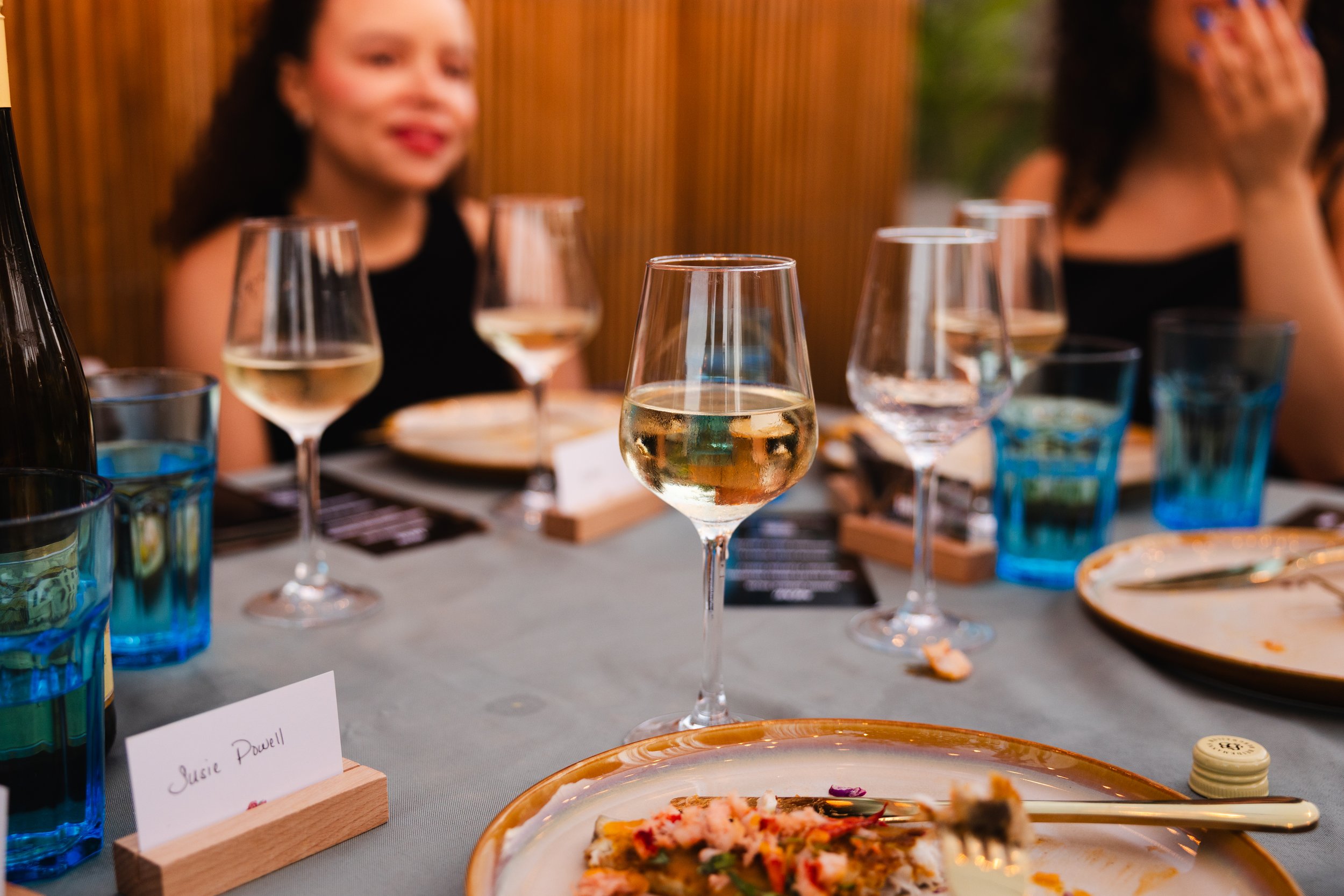
In 2025, you took a wine certification course and are currently pursuing WSET level 1. Is this changing the way you think about your menus or pairings?
Definitely. Wine education has made me more intentional about the wine pairing for each item on our menu. I think more about acidity, texture, and how wine can elevate a dish without overpowering it. What region I want to highlight, etcetera.
You’re well traveled – 29 countries and counting! How did your travels to Italy deepen your appreciation for Italian cuisine and have you had any similar response to other cuisines?
Italy taught me patience and respect for ingredients. The simplicity, the seasonality, and the pride in local food really resonated with me. I’ve felt similar inspiration traveling through places like South America, Mexico and parts of the Caribbean — cultures where food is deeply tied to history and identity.
We always ask chefs, bartenders and industry tastemakers how they balance work/life and their health/mental health. You’re juggling a full-time job with the supper club series. How do you make time for yourself or rest?
I’ve learned to protect my quiet moments — early mornings, praying, workouts, travel, and saying no when needed.
Rest is part of the work.
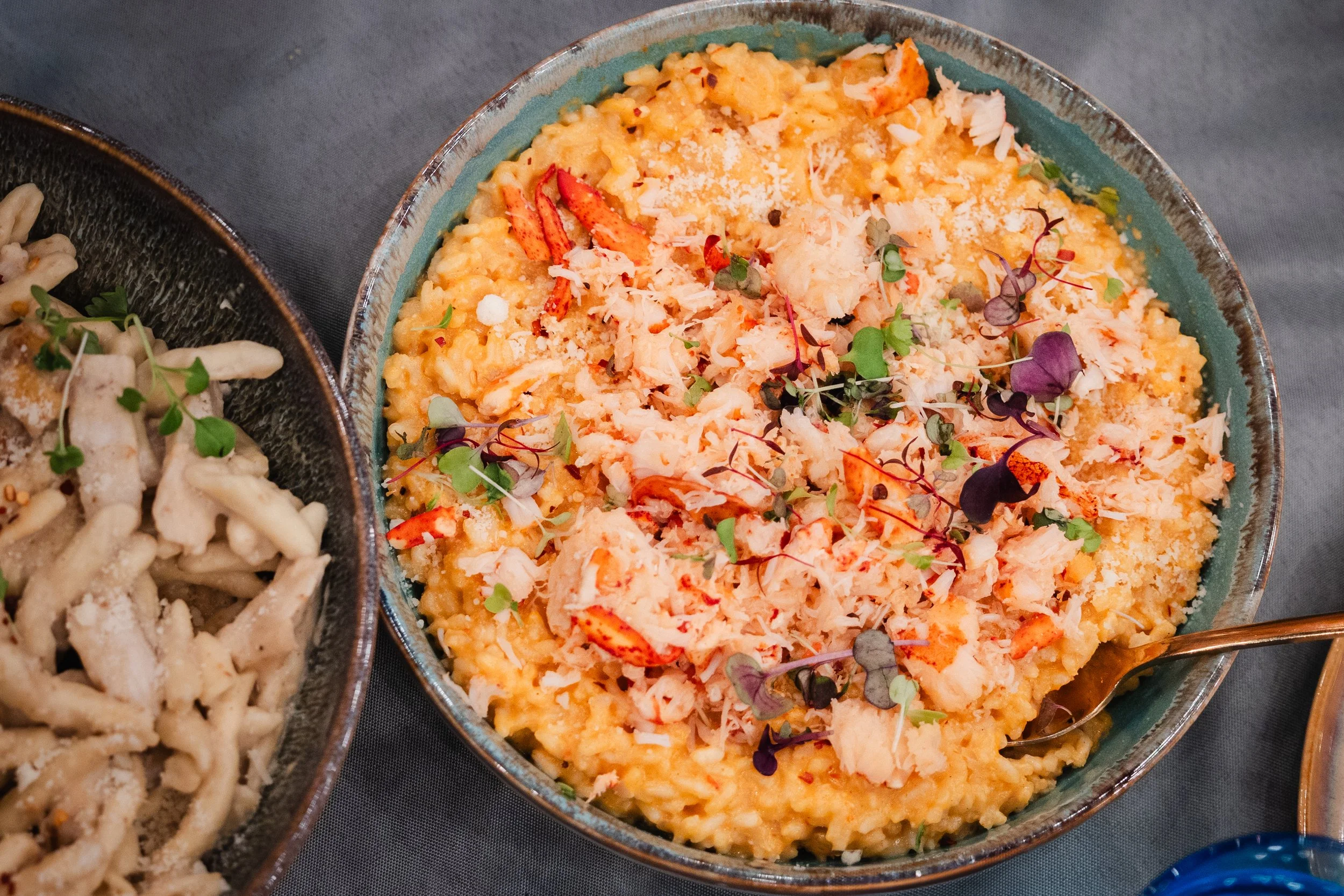
Thinking about the philosophy behind West African flavors + Italian cooking, how did you conceptualize a dish like Goat Cheese Jollof Risotto?
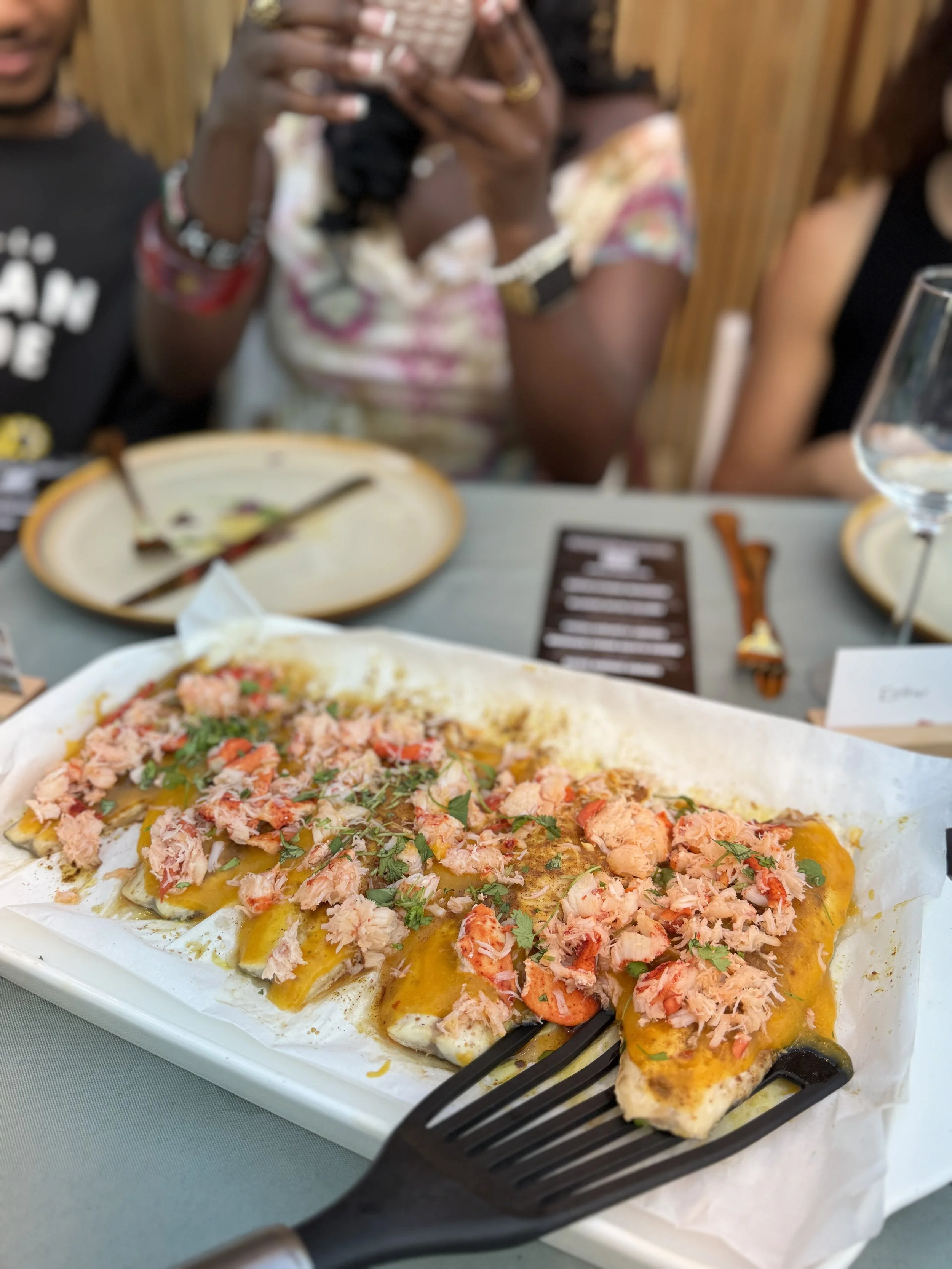
It starts with texture and comfort. Both jollof rice and risotto require patience, attention, and technique. I kept the soul of jollof — the tomato-based stew, spice, and warmth — and applied it through the method of risotto. The addition of goat cheese came after time spent in Barbados, where I learned the technique from Chef Damian. Its tang and creaminess help bridge both cuisines in a way that feels natural rather than forced.
You said that in Nigeria, “sharing a meal is how people check in on one another, build trust, and strengthen bonds.” You also connected the Yoruba saying “se o jeun?” (“Have you eaten?”) to the Italian tradition of gathering at the table. What is it about the cultures or rituals that feels aligned?
In both cultures, the kitchen and the table are the heart of the home. Meals aren’t rushed — they’re intentional, communal, and deeply relational. You sit together, talk, laugh, debate, and reconnect. Asking “se o jeun?” is less about the food itself and more about care — it’s a way of checking in. That mirrors the Italian tradition of gathering around the table, where food becomes a vessel for storytelling, memory, laughing, arguing and overall being present. My culinary philosophy is rooted in that shared ritual — food as care, as conversation, and as a way to strengthen bonds.
What Nigerian-Italian dish are you most proud of to date and are there dishes you look forward to evolving next season?
The Goat Cheese Jollof Risotto will always be special, but I’m excited to continue evolving our menu based on other countries I’ve been; dishes that lean into seasonality and bring us all together.
Ok, let’s talk about personal tastes. Obviously you are somewhat bi-coastal these days, but can you tell us three of your favorite places where you like to eat, or take guests, for breakfast, lunch and dinner?
Breakfast: Fleur Café in Downtown Los Angeles
Lunch: A Vietnamese spot called Little Sister in El Segundo, CA.
Dinner: The Tyger in NYC.
If you could travel with only three ingredients or spices in your bag, what would they be and why?
Chicken bouillon seasoning, red pepper flakes, and allspice — they cover flavor, heat, and digestion. With those three, I can build a foundation almost anywhere in the world.
Imagine your dream dinner anywhere in the world, with no cost or reservation issues — where would it be, who’s there, and what’s on the menu?
Somewhere in Kenya on a safari at sunset, with family, friends, and everyone I love. As for the menu honestly, anything good and made with love.
What’s one thing you hope guests take away from an Ebi-Ayo Supper Club dinner?
That they felt at home. Nourished not just by the food, but by the conversations, the energy, and the people at the table.
Thanks for chatting with us, Chef. In our tastemaker interview, Nigerian fashion designer, Mo Rabiu, named you as one of her culinary inspirations and we’re looking forward to cooking up some future events with you!
Meanwhile, if you’re interested in joining one of Chef Tayo’s Supper Club evenings in NYC for a 5-course meal, click this link.